






HumanoidInsight
  • Home
  • Spotlight
    Why Are Robotics Companies Waging an All-Out Talent War Against Big Tech and Academia?

    Why Are Robotics Companies Waging an All-Out Talent War Against Big Tech and Academia?

    Can Humanoid Robots Truly Be Artists, Musicians, or Chefs, or Is Creativity Uniquely Human?

    Can Humanoid Robots Truly Be Artists, Musicians, or Chefs, or Is Creativity Uniquely Human?

    The “Spinal Cord” Chip: Neuromorphic Processors for Low-Power, Reflex-Level Control

    The “Spinal Cord” Chip: Neuromorphic Processors for Low-Power, Reflex-Level Control

    Startup Spotlight: Apptronik – Betting on a General-Purpose Upper Body for Multiple Applications

    Startup Spotlight: Apptronik – Betting on a General-Purpose Upper Body for Multiple Applications

    How Is a Neuroscientist Using Brain Science to Transform Robot Motor Control and Enable Fluid, Adaptive Movements?

    How Is a Neuroscientist Using Brain Science to Transform Robot Motor Control and Enable Fluid, Adaptive Movements?

    Interview: Boston Dynamics’ CEO on the Commercialization of Atlas and the Future of Parkour

    Interview: Boston Dynamics’ CEO on the Commercialization of Atlas and the Future of Parkour

  • Future Scenarios
    Why Are Humanoid Robots Becoming the Essential Workforce for Building Off-World Habitats?

    Why Are Humanoid Robots Becoming the Essential Workforce for Building Off-World Habitats?

    The Demographics Solution: Can Humanoids Solve the Crisis of Aging Populations?

    The Demographics Solution: Can Humanoids Solve the Crisis of Aging Populations?

    Is Universal Basic Income the Inevitable Solution to Widescale Robotic Automation?

    Is Universal Basic Income the Inevitable Solution to Widescale Robotic Automation?

    Analysis: Why Did Hyundai Double Down on Boston Dynamics? A Strategic Look Beyond Spot and Atlas

    Analysis: Why Did Hyundai Double Down on Boston Dynamics? A Strategic Look Beyond Spot and Atlas

    The Psychological Uncanny Valley: How Lifelike Robots Could Trigger Social Anxiety and Identity Crises

    The Psychological Uncanny Valley: How Lifelike Robots Could Trigger Social Anxiety and Identity Crises

    Who Should Be Held Responsible When a Humanoid Robot Causes Harm?

    Who Should Be Held Responsible When a Humanoid Robot Causes Harm?

  • Industry Pulse
    Title: Major Stumble: What the Failure of a High-Profile Humanoid Startup Teaches the Industry

    Title: Major Stumble: What the Failure of a High-Profile Humanoid Startup Teaches the Industry

    Why Are Robotics Companies Waging an All-Out Talent War Against Big Tech and Academia?

    Why Are Robotics Companies Waging an All-Out Talent War Against Big Tech and Academia?

    Will the “Robotics as a Service” Model Become the Dominant Path for Humanoid Deployment?

    Will the “Robotics as a Service” Model Become the Dominant Path for Humanoid Deployment?

    The Demographics Solution: Can Humanoids Solve the Crisis of Aging Populations?

    The Demographics Solution: Can Humanoids Solve the Crisis of Aging Populations?

    Analysis: Why Did Hyundai Double Down on Boston Dynamics? A Strategic Look Beyond Spot and Atlas

    Analysis: Why Did Hyundai Double Down on Boston Dynamics? A Strategic Look Beyond Spot and Atlas

    Who Should Be Held Responsible When a Humanoid Robot Causes Harm?

    Who Should Be Held Responsible When a Humanoid Robot Causes Harm?

  • Insight Reports
    Title: Major Stumble: What the Failure of a High-Profile Humanoid Startup Teaches the Industry

    Title: Major Stumble: What the Failure of a High-Profile Humanoid Startup Teaches the Industry

    Will the “Robotics as a Service” Model Become the Dominant Path for Humanoid Deployment?

    Will the “Robotics as a Service” Model Become the Dominant Path for Humanoid Deployment?

    Is Universal Basic Income the Inevitable Solution to Widescale Robotic Automation?

    Is Universal Basic Income the Inevitable Solution to Widescale Robotic Automation?

    The Psychological Uncanny Valley: How Lifelike Robots Could Trigger Social Anxiety and Identity Crises

    The Psychological Uncanny Valley: How Lifelike Robots Could Trigger Social Anxiety and Identity Crises

    The Environmental Payback: Modeling the Carbon Footprint Reduction of a Robot-Led Workforce

    The Environmental Payback: Modeling the Carbon Footprint Reduction of a Robot-Led Workforce

    How Are Photorealistic Simulation and Domain Randomization Closing the Gap Between Virtual and Real-World Humanoid Robotics?

    How Are Photorealistic Simulation and Domain Randomization Closing the Gap Between Virtual and Real-World Humanoid Robotics?

  • Tech Frontiers
    Why Are Humanoid Robots Becoming the Essential Workforce for Building Off-World Habitats?

    Why Are Humanoid Robots Becoming the Essential Workforce for Building Off-World Habitats?

    The End of the Frontline? Reimagining Military Strategy in an Era of Robot Soldiers

    The End of the Frontline? Reimagining Military Strategy in an Era of Robot Soldiers

    How Are Photorealistic Simulation and Domain Randomization Closing the Gap Between Virtual and Real-World Humanoid Robotics?

    How Are Photorealistic Simulation and Domain Randomization Closing the Gap Between Virtual and Real-World Humanoid Robotics?

    The “Spinal Cord” Chip: Neuromorphic Processors for Low-Power, Reflex-Level Control

    The “Spinal Cord” Chip: Neuromorphic Processors for Low-Power, Reflex-Level Control

    Are Fuel Cells the Future of Untethered, All-Day Humanoid Robot Operation, or Will Batteries Remain King?

    Are Fuel Cells the Future of Untethered, All-Day Humanoid Robot Operation, or Will Batteries Remain King?

    Beyond Reinforcement Learning: The Rise of Large Behavior Models (LBMs) for Robot Training

    Beyond Reinforcement Learning: The Rise of Large Behavior Models (LBMs) for Robot Training

HumanoidInsight
  • Home
  • Spotlight
    Why Are Robotics Companies Waging an All-Out Talent War Against Big Tech and Academia?

    Why Are Robotics Companies Waging an All-Out Talent War Against Big Tech and Academia?

    Can Humanoid Robots Truly Be Artists, Musicians, or Chefs, or Is Creativity Uniquely Human?

    Can Humanoid Robots Truly Be Artists, Musicians, or Chefs, or Is Creativity Uniquely Human?

    The “Spinal Cord” Chip: Neuromorphic Processors for Low-Power, Reflex-Level Control

    The “Spinal Cord” Chip: Neuromorphic Processors for Low-Power, Reflex-Level Control

    Startup Spotlight: Apptronik – Betting on a General-Purpose Upper Body for Multiple Applications

    Startup Spotlight: Apptronik – Betting on a General-Purpose Upper Body for Multiple Applications

    How Is a Neuroscientist Using Brain Science to Transform Robot Motor Control and Enable Fluid, Adaptive Movements?

    How Is a Neuroscientist Using Brain Science to Transform Robot Motor Control and Enable Fluid, Adaptive Movements?

    Interview: Boston Dynamics’ CEO on the Commercialization of Atlas and the Future of Parkour

    Interview: Boston Dynamics’ CEO on the Commercialization of Atlas and the Future of Parkour

  • Future Scenarios
    Why Are Humanoid Robots Becoming the Essential Workforce for Building Off-World Habitats?

    Why Are Humanoid Robots Becoming the Essential Workforce for Building Off-World Habitats?

    The Demographics Solution: Can Humanoids Solve the Crisis of Aging Populations?

    The Demographics Solution: Can Humanoids Solve the Crisis of Aging Populations?

    Is Universal Basic Income the Inevitable Solution to Widescale Robotic Automation?

    Is Universal Basic Income the Inevitable Solution to Widescale Robotic Automation?

    Analysis: Why Did Hyundai Double Down on Boston Dynamics? A Strategic Look Beyond Spot and Atlas

    Analysis: Why Did Hyundai Double Down on Boston Dynamics? A Strategic Look Beyond Spot and Atlas

    The Psychological Uncanny Valley: How Lifelike Robots Could Trigger Social Anxiety and Identity Crises

    The Psychological Uncanny Valley: How Lifelike Robots Could Trigger Social Anxiety and Identity Crises

    Who Should Be Held Responsible When a Humanoid Robot Causes Harm?

    Who Should Be Held Responsible When a Humanoid Robot Causes Harm?

  • Industry Pulse
    Title: Major Stumble: What the Failure of a High-Profile Humanoid Startup Teaches the Industry

    Title: Major Stumble: What the Failure of a High-Profile Humanoid Startup Teaches the Industry

    Why Are Robotics Companies Waging an All-Out Talent War Against Big Tech and Academia?

    Why Are Robotics Companies Waging an All-Out Talent War Against Big Tech and Academia?

    Will the “Robotics as a Service” Model Become the Dominant Path for Humanoid Deployment?

    Will the “Robotics as a Service” Model Become the Dominant Path for Humanoid Deployment?

    The Demographics Solution: Can Humanoids Solve the Crisis of Aging Populations?

    The Demographics Solution: Can Humanoids Solve the Crisis of Aging Populations?

    Analysis: Why Did Hyundai Double Down on Boston Dynamics? A Strategic Look Beyond Spot and Atlas

    Analysis: Why Did Hyundai Double Down on Boston Dynamics? A Strategic Look Beyond Spot and Atlas

    Who Should Be Held Responsible When a Humanoid Robot Causes Harm?

    Who Should Be Held Responsible When a Humanoid Robot Causes Harm?

  • Insight Reports
    Title: Major Stumble: What the Failure of a High-Profile Humanoid Startup Teaches the Industry

    Title: Major Stumble: What the Failure of a High-Profile Humanoid Startup Teaches the Industry

    Will the “Robotics as a Service” Model Become the Dominant Path for Humanoid Deployment?

    Will the “Robotics as a Service” Model Become the Dominant Path for Humanoid Deployment?

    Is Universal Basic Income the Inevitable Solution to Widescale Robotic Automation?

    Is Universal Basic Income the Inevitable Solution to Widescale Robotic Automation?

    The Psychological Uncanny Valley: How Lifelike Robots Could Trigger Social Anxiety and Identity Crises

    The Psychological Uncanny Valley: How Lifelike Robots Could Trigger Social Anxiety and Identity Crises

    The Environmental Payback: Modeling the Carbon Footprint Reduction of a Robot-Led Workforce

    The Environmental Payback: Modeling the Carbon Footprint Reduction of a Robot-Led Workforce

    How Are Photorealistic Simulation and Domain Randomization Closing the Gap Between Virtual and Real-World Humanoid Robotics?

    How Are Photorealistic Simulation and Domain Randomization Closing the Gap Between Virtual and Real-World Humanoid Robotics?

  • Tech Frontiers
    Why Are Humanoid Robots Becoming the Essential Workforce for Building Off-World Habitats?

    Why Are Humanoid Robots Becoming the Essential Workforce for Building Off-World Habitats?

    The End of the Frontline? Reimagining Military Strategy in an Era of Robot Soldiers

    The End of the Frontline? Reimagining Military Strategy in an Era of Robot Soldiers

    How Are Photorealistic Simulation and Domain Randomization Closing the Gap Between Virtual and Real-World Humanoid Robotics?

    How Are Photorealistic Simulation and Domain Randomization Closing the Gap Between Virtual and Real-World Humanoid Robotics?

    The “Spinal Cord” Chip: Neuromorphic Processors for Low-Power, Reflex-Level Control

    The “Spinal Cord” Chip: Neuromorphic Processors for Low-Power, Reflex-Level Control

    Are Fuel Cells the Future of Untethered, All-Day Humanoid Robot Operation, or Will Batteries Remain King?

    Are Fuel Cells the Future of Untethered, All-Day Humanoid Robot Operation, or Will Batteries Remain King?

    Beyond Reinforcement Learning: The Rise of Large Behavior Models (LBMs) for Robot Training

    Beyond Reinforcement Learning: The Rise of Large Behavior Models (LBMs) for Robot Training

HumanoidInsight
No Result
View All Result
Home Spotlight

Exclusive: A Day in the Life of a Figure AI Engineer – Building the Future, One Line of Code at a Time

November 30, 2025
in Spotlight, Tech Frontiers
Exclusive: A Day in the Life of a Figure AI Engineer – Building the Future, One Line of Code at a Time

The sun hasn’t yet risen over Sunnyvale, but the glow from the monitors inside the unassuming Figure AI headquarters is already bright. This is not the sterile, white lab of science fiction; it’s a sprawling, industrial space that smells faintly of ozone, coffee, and 3D-printed plastic. The air hums with the quiet whir of servers and the occasional, distinct sound of a servo motor coming to life. Here, a revolution is being built not with dramatic pronouncements, but with the quiet, relentless rhythm of agile sprints, code commits, and the painstaking iteration of hardware and software. What is it actually like to be an engineer at the epicenter of the humanoid robotics boom? To spend your days trying to solve problems that have stumped computer scientists for decades? This is a behind-the-scenes narrative of a day in the life of a Figure AI engineer, a glimpse into the culture, challenges, and moments of pure magic that define the quest to build a general-purpose humanoid.

The engineers here are a unique breed. They are not just coders or mechanical wizards; they are cross-disciplinary pioneers who operate in the blurred line between the digital and the physical. A single day can swing from the abstract heights of theoretical AI to the gritty reality of a stripped bolt on a prototype actuator. They are building the future, but they are doing it one line of code, one soldered connection, and one failed test at a time.

Morning Stand-up: Prioritizing the Path to Autonomy

By 8:30 AM, the “Manipulation Pod” is gathered around a large screen, half-empty coffee mugs in hand. This is the daily stand-up, a ritual familiar to tech companies worldwide, but here the stakes are palpably different. The team lead, Sarah, a veteran from a self-driving car company, runs through the Jira board.

“Okay, team. Priority one is still the ‘coffee machine’ pipeline,” she begins, referring not to making a latte, but to a complex sequence of tasks the robot is learning. “We need the ‘find_kettle’ perception model to be more robust to occlusion. If a person’s hand is in the way, the robot just gives up. That’s a fail.”

A software engineer chimes in, “We’re retraining with a new synthetic dataset we generated overnight. The sim team created a thousand variations of a hand partially obscuring a kettle. We should have a new build to test by noon.”

A hardware engineer adds, “We’ve also noticed a slight jitter in the wrist joint during the ‘pour’ motion that’s causing spillage. We’re looking at the torque feedback from the new actuators. Might be a firmware update.”

The conversation is a rapid-fire exchange of terms from robotics, machine learning, and mechanical engineering. The goals for the day are not abstract features, but tangible physical actions: improve grasp success rate on metallic objects by 3%, reduce the time to locate a common tool by 200 milliseconds, eliminate the 5-degree drift in the navigation system when turning. Every item on the board is a small step toward closing the gap between a scripted demo and genuine, unstructured autonomy. The mood is focused, collaborative, and devoid of hype. The only thing that matters here is measurable progress.

The Lab: A Ballet of Code and Motion

After stand-up, the team moves into the high-bay lab area—the heart of the operation. This is where the digital brain meets the physical body. The space is a controlled chaos of workbenches strewn with circuit boards and prosthetic hands, tangled nests of Ethernet cables, and, in the center, a clear “stage” where a Figure 01 robot stands poised.

Today, they are testing a new manipulation skill: retrieving a specific tool from a cluttered drawer. This is a deceptively simple task for a human, but a monumental challenge for a robot. It requires multi-step reasoning: identify the drawer handle, plan a trajectory to grasp it, open the drawer without applying excessive force, visually scan the cluttered contents, identify the target tool despite partial occlusion, plan a collision-free path to grasp it, and finally, execute the pick.

The test begins. The robot’s head, with its array of cameras, scans the drawer. In an adjacent control room, a real-time visualization of the robot’s “mind” is displayed on a massive screen. Point clouds of the environment render in a shimmering cloud of dots. A bounding box flickers uncertainly around the drawer handle.

“It’s hesitating,” a perception engineer murmurs, her eyes glued to the data stream. “The lighting from the east bay door is creating a specular highlight it’s interpreting as an edge.”

The robot’s arm lifts, but its movement is slightly jerky. It makes contact with the handle but doesn’t engage its grip correctly. The attempt fails.

There is no groan of disappointment, only a flurry of activity. “Log the point cloud data from the last five seconds,” Sarah says. “And let’s get the joint torque readings from the arm. I want to see if it was a perception error or a control policy failure.”

This is the core loop of their work: test, fail, analyze, iterate. A single failed test is not a setback; it is a data point. It is a question the robot has answered for them: “No, I cannot do it that way.” The engineers then work backward to understand why, tweaking a neural network’s weights, adjusting a physical parameter, or generating more simulated training data. The breakthrough moments are rarely dramatic “eureka” shouts; they are the quiet satisfaction of a graph trending upward, of a success rate climbing from 65% to 68% after a week of grinding work.

The Engineer’s Perspective: The Hurdle and The Hope

To understand the soul of this endeavor, we sit down with Ben, a senior controls engineer who has been with Figure since its early days. When asked about the single biggest technical hurdle, he doesn’t hesitate.

“It’s the ‘long tail’,” he says, taking a sip of coffee. “We can make the robot work perfectly 90% of the time. It’s that last 10%—the infinite number of edge cases in the real world—that is the true challenge. A black cable on a dark floor, a slightly oily tool, a person walking by unexpectedly, a reflection from a piece of glass… these are the things that break the system. Building robustness against the infinite chaos of human environments is an order of magnitude harder than achieving competence in a controlled lab.”

He elaborates, “In simulation, everything is perfect. In reality, a motor can be 0.1 degrees off, a camera can have a dead pixel, a floor can have a tiny slope. Our systems have to be not just intelligent, but also incredibly resilient and fault-tolerant. We’re not just building a robot; we’re building a system that can handle the messiness of reality.”

But when asked about his most exciting breakthrough, his face lights up. “It wasn’t a specific task,” he explains. “It was the moment we saw emergent behavior. We were training the robot on a simple ‘pick and place’ task, and during a test, an object fell over just as the robot was about to grasp it. Without any specific programming for that scenario, the robot paused, its hand reconfigured in mid-air, and it successfully picked up the object from its new, unstable position. It was a small thing, but it proved that the AI was not just memorizing motions; it was learning a deeper understanding of physical manipulation. It was learning how to learn. That’s the moment you feel like you’re not just coding, but you’re teaching something a new form of intelligence. That’s why we’re all here.”

Call to Action

A day at Figure AI is a testament to the fact that the path to the future is not a straight line. It is a zigzag of bugs, breakthroughs, and relentless debugging. The culture is one of profound pragmatism, where the grand vision of a robot in every home and workplace is broken down into thousands of tiny, solvable engineering problems. The engineers are the unsung heroes of this story, their days measured not in headlines, but in commit logs and test cycles. They are building the future, one line of code—and one successful manipulation—at a time.

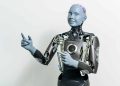
The energy and environment of the Figure AI lab are something that must be seen to be fully appreciated. The intricate prototypes, the focused engineers, and the robots in various states of assembly tell a story far richer than any press release. To step inside this world of creation, we invite you to check out our exclusive photo gallery, offering a rare visual journey into the heart of where the future of humanoid robotics is being forged.
Tags: behind the scenesday in the lifeFigure AIhumanoid robotrobotics engineertech culture
ShareTweetShare

Related Posts

Why Are Robotics Companies Waging an All-Out Talent War Against Big Tech and Academia?
Industry Pulse

Why Are Robotics Companies Waging an All-Out Talent War Against Big Tech and Academia?

December 15, 2025
Why Are Humanoid Robots Becoming the Essential Workforce for Building Off-World Habitats?
Future Scenarios

Why Are Humanoid Robots Becoming the Essential Workforce for Building Off-World Habitats?

December 14, 2025
Can Humanoid Robots Truly Be Artists, Musicians, or Chefs, or Is Creativity Uniquely Human?
Future Scenarios

Can Humanoid Robots Truly Be Artists, Musicians, or Chefs, or Is Creativity Uniquely Human?

November 30, 2025
The End of the Frontline? Reimagining Military Strategy in an Era of Robot Soldiers
Future Scenarios

The End of the Frontline? Reimagining Military Strategy in an Era of Robot Soldiers

November 30, 2025
How Are Photorealistic Simulation and Domain Randomization Closing the Gap Between Virtual and Real-World Humanoid Robotics?
Insight Reports

How Are Photorealistic Simulation and Domain Randomization Closing the Gap Between Virtual and Real-World Humanoid Robotics?

November 30, 2025
The “Spinal Cord” Chip: Neuromorphic Processors for Low-Power, Reflex-Level Control
Spotlight

The “Spinal Cord” Chip: Neuromorphic Processors for Low-Power, Reflex-Level Control

November 30, 2025
Leave Comment
  • Trending
  • Comments
  • Latest
Will Humanoid Robots Become Legal Citizens by 2050? Exploring Rights, Responsibilities, and the Future of Robotic Personhood

Will Humanoid Robots Become Legal Citizens by 2050? Exploring Rights, Responsibilities, and the Future of Robotic Personhood

October 13, 2025
Will Humans and Robots Coexist Seamlessly in 2040’s Smart Cities? Exploring the Rise of Symbiotic Urban Ecosystems

Will Humans and Robots Coexist Seamlessly in 2040’s Smart Cities? Exploring the Rise of Symbiotic Urban Ecosystems

October 13, 2025
Analysis: Why Did Hyundai Double Down on Boston Dynamics? A Strategic Look Beyond Spot and Atlas

Analysis: Why Did Hyundai Double Down on Boston Dynamics? A Strategic Look Beyond Spot and Atlas

December 12, 2025
The End of the Frontline? Reimagining Military Strategy in an Era of Robot Soldiers

The End of the Frontline? Reimagining Military Strategy in an Era of Robot Soldiers

November 30, 2025
Will Humanoid Robots Become Legal Citizens by 2050? Exploring Rights, Responsibilities, and the Future of Robotic Personhood

Will Humanoid Robots Become Legal Citizens by 2050? Exploring Rights, Responsibilities, and the Future of Robotic Personhood

A World Where Robots Are Teachers: Educational Ecosystem with Humanoids

A World Where Robots Are Teachers: Educational Ecosystem with Humanoids

Can Humanoid Robots Redefine Disaster Response? Exploring the Future of Rescue Robotics in Extreme Environments

Can Humanoid Robots Redefine Disaster Response? Exploring the Future of Rescue Robotics in Extreme Environments

The Great Robot Economy: Humanoids as Workers in All Sectors

The Great Robot Economy: Humanoids as Workers in All Sectors

Title: Major Stumble: What the Failure of a High-Profile Humanoid Startup Teaches the Industry

Title: Major Stumble: What the Failure of a High-Profile Humanoid Startup Teaches the Industry

December 15, 2025
Why Are Robotics Companies Waging an All-Out Talent War Against Big Tech and Academia?

Why Are Robotics Companies Waging an All-Out Talent War Against Big Tech and Academia?

December 15, 2025
Will the “Robotics as a Service” Model Become the Dominant Path for Humanoid Deployment?

Will the “Robotics as a Service” Model Become the Dominant Path for Humanoid Deployment?

December 14, 2025
Why Are Humanoid Robots Becoming the Essential Workforce for Building Off-World Habitats?

Why Are Humanoid Robots Becoming the Essential Workforce for Building Off-World Habitats?

December 14, 2025
HumanoidInsight

We provide a clear lens on the rapidly evolving world of humanoid robots through news interpretation, trend observation, and data-driven reports. Join our community to stay authoritatively informed about the next wave of automation and intelligence.

© 2025 humanoidinsight.com. contacts:[email protected]

No Result
View All Result
  • Home
  • Spotlight
  • Future Scenarios
  • Industry Pulse
  • Insight Reports
  • Tech Frontiers

© 2025 humanoidinsight.com. contacts:[email protected]

Welcome Back!

Login to your account below

Forgotten Password?

Retrieve your password

Please enter your username or email address to reset your password.

Log In