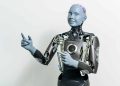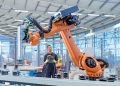



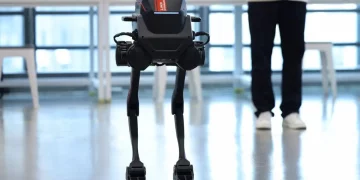



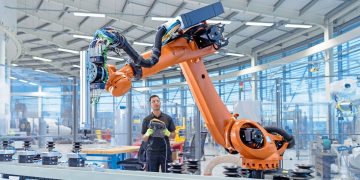
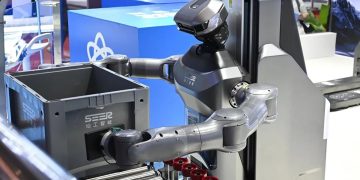



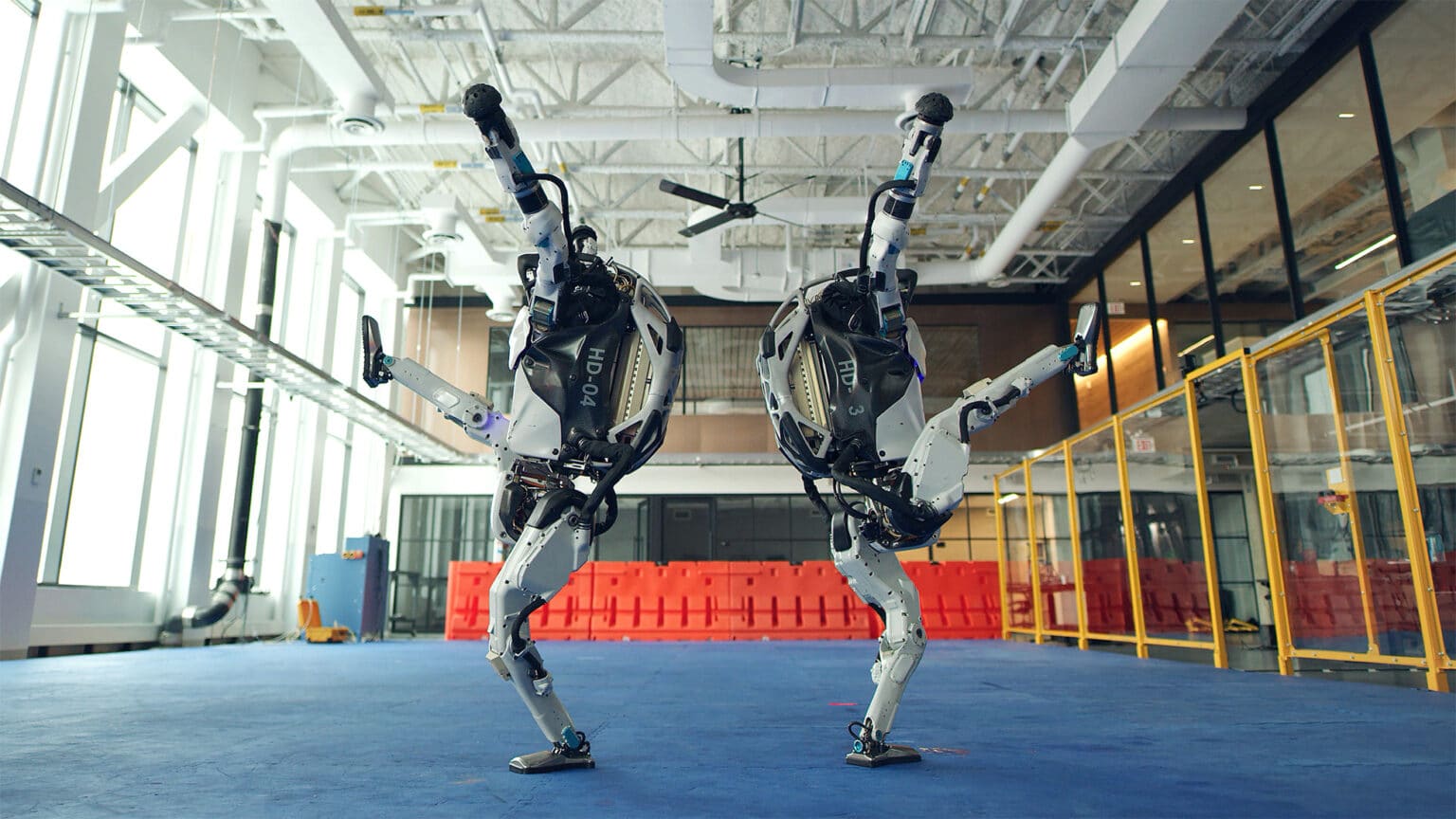
Humanoid robots are no longer just rigid mechanical structures programmed for limited motion — they are becoming dynamic, agile, and biomechanically synchronized with the world they inhabit. At the heart of this transformation lies a revolution in exoskeletal design. Borrowing inspiration from human anatomy and biomechanics, researchers are crafting robots whose movements don’t just imitate humans, but flow like them.
From torque control algorithms to bio-inspired actuators, the evolution of humanoid movement has become as much an art of engineering as it is a study of nature. But how exactly are exoskeletal innovations reshaping the way humanoids walk, balance, lift, and interact? To answer this, we’ll explore the evolution of motor control, spotlight cutting-edge research from MIT’s Biomimetic Robotics Lab, and look ahead to the next frontier — adaptive muscle fiber robotics.
The Evolution of Motor Control
The journey of humanoid motor control began with rigid-body mechanics, where robots moved via simple rotary joints powered by electric motors. Early humanoids like Honda’s ASIMO were marvels of balance and coordination for their time, but their movements were mechanical — segmented rather than fluid.
Then came compliant control systems, which allowed robots to dynamically adjust force and stiffness. This innovation enabled more natural motion and better interaction with unpredictable environments. Instead of precisely following pre-programmed joint trajectories, modern humanoids respond elastically, absorbing shocks and redistributing loads like biological limbs.
Key milestones include:
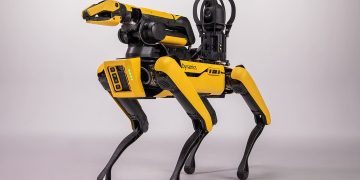
- Torque-Controlled Actuators: Pioneered by Boston Dynamics, these systems allow fine-grained force regulation in every joint, giving humanoids lifelike balance and stability even on rough terrain.
- Series Elastic Actuators (SEA): By embedding springs between the motor and load, SEAs add compliance and safety, protecting both the robot and humans nearby from harmful impacts.
- Whole-Body Control Algorithms: Developed in research centers like MIT and ETH Zurich, these algorithms allow humanoids to coordinate hundreds of degrees of freedom simultaneously, maintaining balance while performing complex multi-limb tasks.
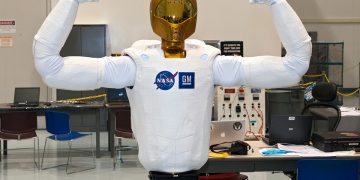
Today’s humanoids — like Agility Robotics’ Digit, Apptronik’s Apollo, and Figure AI’s Figure 02 — all rely on variants of these exoskeletal principles. Their goal is not just to walk upright, but to embody human-level dexterity — from gripping delicate tools to performing factory labor with endurance and grace.
Research Spotlight: MIT Biomimetic Robotics Lab
One of the most influential research centers driving this biomechanical evolution is the MIT Biomimetic Robotics Lab, led by Professor Sangbae Kim. The lab’s philosophy is simple but profound: “Design robots the way nature designs animals.”
Their early projects — like the Cheetah Robot — were not humanoids but quadrupeds designed to test theories of balance, muscle efficiency, and tendon elasticity. These experiments revealed fundamental truths about how muscle-tendon structures store and release energy, leading to breakthroughs now directly applied in humanoid robotics.
Recent work from the lab explores actuator-level intelligence — combining mechanical elasticity with AI-driven adaptive control. By integrating high-bandwidth proprioceptive sensors, these systems can “feel” internal stress and strain, allowing the robot to react autonomously to external forces in real time.
One particularly fascinating prototype, the Mini-Cheetah, introduced modular elastic actuators that can absorb impact and recover energy with biological efficiency. When scaled to humanoid form, this principle could enable robots to run, jump, and climb with human-like fluidity.
In interviews, Kim often emphasizes the goal of embodied intelligence:
“The key is not to make robots smarter in code, but to make their bodies smarter. Muscles, tendons, and sensors — these are all forms of intelligence that allow humans to move effortlessly. Robots should evolve the same way.”
The lab’s findings are already influencing startups and industrial leaders. Apptronik, for instance, has integrated compliant exoskeletal designs derived from biomimetic studies into its humanoid Apollo, combining lightweight structure with advanced torque control for power efficiency and safety.
Biomechanical Synchronization
True human-like movement isn’t achieved by hardware alone — it requires synchronization between mechanical and biological principles. Biomechanical synchronization refers to aligning robotic actuation and sensory feedback in ways that mirror the neuromuscular coordination of humans.
Modern humanoids use distributed control networks where sensors embedded in each joint continuously measure torque, angle, and resistance. This data feeds into a central learning model that predicts optimal responses, similar to how the human cerebellum fine-tunes muscle activity.
Core technologies enabling this include:
- Tactile Feedback Systems: Distributed pressure sensors mimic skin sensitivity, allowing humanoids to adjust grip force and posture in real-time.
- Proprioceptive Mapping: Internal “body maps” help robots maintain spatial awareness of limb position, ensuring balance during dynamic tasks.
- Dynamic Gait Adaptation: Algorithms such as Model Predictive Control (MPC) let humanoids anticipate motion changes milliseconds in advance, avoiding slips or missteps.
In effect, today’s exoskeletal robots are evolving toward motor intelligence. The synchronization of actuators and sensors enables humanoids to exhibit balance recovery reflexes nearly indistinguishable from those of humans.
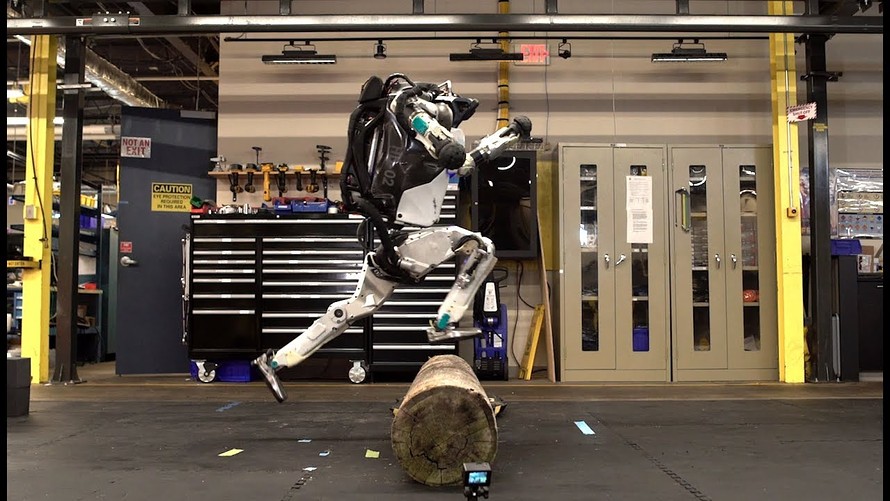
Consider Boston Dynamics’ Atlas performing parkour or backflips — each motion isn’t a simple programmed sequence, but the product of real-time biomechanical synchronization. The exoskeleton and controller work as one, creating an embodied feedback loop that adapts on the fly to shifting momentum, surface irregularities, and mechanical stress.
Safety and Fatigue Management
As humanoids take on physically demanding roles — from logistics to healthcare — safety and fatigue management have become essential design priorities. In both industrial and collaborative contexts, exoskeletal innovations serve a dual purpose: protecting the robot and ensuring human safety around it.
Key safety-oriented features include:
- Passive Compliance: Built-in mechanical flexibility that limits peak force during unexpected contact or collision.
- Overload Detection: Torque and current monitoring systems prevent actuators from overexerting, preserving structural integrity.
- Thermal Management: Advanced cooling in exoskeletal joints allows continuous operation without overheating — a key factor in sustaining humanoid endurance.
- Ergonomic Calibration: Adaptive motion algorithms learn the limits of stress and strain over time, minimizing internal fatigue and wear.
For example, UBTECH’s Walker X employs a multi-layer safety architecture that combines torque feedback, motion prediction, and environmental mapping to ensure stable operation in crowded environments. Similarly, Apptronik’s Apollo uses compliant actuators with force-limiting control, making it inherently safe for human-robot interaction.
In practical terms, these advancements mean humanoids can now operate continuously for longer periods while maintaining reliability and safety — essential for commercial-scale deployment in factories, warehouses, and service industries.
Next Frontier: Adaptive Muscle Fiber Robotics
The next major leap for humanoid exoskeletons will come from adaptive muscle fiber robotics — materials and actuators that behave like biological muscle tissue. These systems go beyond mechanical linkages to introduce soft, responsive muscle-like fibers that can contract, stretch, and self-heal.
Emerging technologies include:
- Electroactive Polymers (EAPs): Materials that change shape in response to electrical signals, offering high flexibility and responsiveness.
- Carbon Nanotube Artificial Muscles: Extremely strong and lightweight fibers capable of fast, powerful contractions at low voltages.
- Shape Memory Alloys (SMAs): Metals that return to a pre-set shape when heated, allowing compact, energy-efficient motion control.
- Fluidic Elastomer Actuators (FEAs): Soft actuators that use pressurized fluids to simulate the elasticity of human muscles and tendons.
Integrating these materials will allow humanoids to move organically — with smooth transitions, adaptive strength, and self-stabilizing mechanics. Robots will no longer just “mimic” humans; they will share the same physical logic of motion.
Looking forward, research is trending toward biohybrid systems, where artificial muscle fibers are coupled with living tissue or nanostructured cells for ultra-efficient energy conversion. Although still experimental, these advances hint at a future where humanoids are powered by living physics — energy-efficient, sustainable, and capable of emotional expressiveness through subtle body language.
Conclusion: From Mechanics to Motion Intelligence
The story of humanoid locomotion has always been a quest to capture life’s effortless grace in metal and code. Exoskeletal innovations are turning that dream into engineering reality — bridging the gap between mechanical precision and organic movement.
From the torque-controlled joints of Boston Dynamics to the biomimetic elasticity pioneered at MIT, humanoid motion is entering a new era — one defined not just by balance or power, but by intelligence embodied in motion.
The next generation of humanoids won’t just walk among us — they’ll move with us, adapting to our rhythms, understanding our gestures, and sharing our environments seamlessly. The boundary between biology and robotics is dissolving, one exoskeletal joint at a time.