











HumanoidInsight
  • Home
  • Spotlight
    Why Are Robotics Companies Waging an All-Out Talent War Against Big Tech and Academia?

    Why Are Robotics Companies Waging an All-Out Talent War Against Big Tech and Academia?

    Can Humanoid Robots Truly Be Artists, Musicians, or Chefs, or Is Creativity Uniquely Human?

    Can Humanoid Robots Truly Be Artists, Musicians, or Chefs, or Is Creativity Uniquely Human?

    The “Spinal Cord” Chip: Neuromorphic Processors for Low-Power, Reflex-Level Control

    The “Spinal Cord” Chip: Neuromorphic Processors for Low-Power, Reflex-Level Control

    Startup Spotlight: Apptronik – Betting on a General-Purpose Upper Body for Multiple Applications

    Startup Spotlight: Apptronik – Betting on a General-Purpose Upper Body for Multiple Applications

    How Is a Neuroscientist Using Brain Science to Transform Robot Motor Control and Enable Fluid, Adaptive Movements?

    How Is a Neuroscientist Using Brain Science to Transform Robot Motor Control and Enable Fluid, Adaptive Movements?

    Interview: Boston Dynamics’ CEO on the Commercialization of Atlas and the Future of Parkour

    Interview: Boston Dynamics’ CEO on the Commercialization of Atlas and the Future of Parkour

  • Future Scenarios
    Why Are Humanoid Robots Becoming the Essential Workforce for Building Off-World Habitats?

    Why Are Humanoid Robots Becoming the Essential Workforce for Building Off-World Habitats?

    The Demographics Solution: Can Humanoids Solve the Crisis of Aging Populations?

    The Demographics Solution: Can Humanoids Solve the Crisis of Aging Populations?

    Is Universal Basic Income the Inevitable Solution to Widescale Robotic Automation?

    Is Universal Basic Income the Inevitable Solution to Widescale Robotic Automation?

    Analysis: Why Did Hyundai Double Down on Boston Dynamics? A Strategic Look Beyond Spot and Atlas

    Analysis: Why Did Hyundai Double Down on Boston Dynamics? A Strategic Look Beyond Spot and Atlas

    The Psychological Uncanny Valley: How Lifelike Robots Could Trigger Social Anxiety and Identity Crises

    The Psychological Uncanny Valley: How Lifelike Robots Could Trigger Social Anxiety and Identity Crises

    Who Should Be Held Responsible When a Humanoid Robot Causes Harm?

    Who Should Be Held Responsible When a Humanoid Robot Causes Harm?

  • Industry Pulse
    Title: Major Stumble: What the Failure of a High-Profile Humanoid Startup Teaches the Industry

    Title: Major Stumble: What the Failure of a High-Profile Humanoid Startup Teaches the Industry

    Why Are Robotics Companies Waging an All-Out Talent War Against Big Tech and Academia?

    Why Are Robotics Companies Waging an All-Out Talent War Against Big Tech and Academia?

    Will the “Robotics as a Service” Model Become the Dominant Path for Humanoid Deployment?

    Will the “Robotics as a Service” Model Become the Dominant Path for Humanoid Deployment?

    The Demographics Solution: Can Humanoids Solve the Crisis of Aging Populations?

    The Demographics Solution: Can Humanoids Solve the Crisis of Aging Populations?

    Analysis: Why Did Hyundai Double Down on Boston Dynamics? A Strategic Look Beyond Spot and Atlas

    Analysis: Why Did Hyundai Double Down on Boston Dynamics? A Strategic Look Beyond Spot and Atlas

    Who Should Be Held Responsible When a Humanoid Robot Causes Harm?

    Who Should Be Held Responsible When a Humanoid Robot Causes Harm?

  • Insight Reports
    Title: Major Stumble: What the Failure of a High-Profile Humanoid Startup Teaches the Industry

    Title: Major Stumble: What the Failure of a High-Profile Humanoid Startup Teaches the Industry

    Will the “Robotics as a Service” Model Become the Dominant Path for Humanoid Deployment?

    Will the “Robotics as a Service” Model Become the Dominant Path for Humanoid Deployment?

    Is Universal Basic Income the Inevitable Solution to Widescale Robotic Automation?

    Is Universal Basic Income the Inevitable Solution to Widescale Robotic Automation?

    The Psychological Uncanny Valley: How Lifelike Robots Could Trigger Social Anxiety and Identity Crises

    The Psychological Uncanny Valley: How Lifelike Robots Could Trigger Social Anxiety and Identity Crises

    The Environmental Payback: Modeling the Carbon Footprint Reduction of a Robot-Led Workforce

    The Environmental Payback: Modeling the Carbon Footprint Reduction of a Robot-Led Workforce

    How Are Photorealistic Simulation and Domain Randomization Closing the Gap Between Virtual and Real-World Humanoid Robotics?

    How Are Photorealistic Simulation and Domain Randomization Closing the Gap Between Virtual and Real-World Humanoid Robotics?

  • Tech Frontiers
    Why Are Humanoid Robots Becoming the Essential Workforce for Building Off-World Habitats?

    Why Are Humanoid Robots Becoming the Essential Workforce for Building Off-World Habitats?

    The End of the Frontline? Reimagining Military Strategy in an Era of Robot Soldiers

    The End of the Frontline? Reimagining Military Strategy in an Era of Robot Soldiers

    How Are Photorealistic Simulation and Domain Randomization Closing the Gap Between Virtual and Real-World Humanoid Robotics?

    How Are Photorealistic Simulation and Domain Randomization Closing the Gap Between Virtual and Real-World Humanoid Robotics?

    The “Spinal Cord” Chip: Neuromorphic Processors for Low-Power, Reflex-Level Control

    The “Spinal Cord” Chip: Neuromorphic Processors for Low-Power, Reflex-Level Control

    Are Fuel Cells the Future of Untethered, All-Day Humanoid Robot Operation, or Will Batteries Remain King?

    Are Fuel Cells the Future of Untethered, All-Day Humanoid Robot Operation, or Will Batteries Remain King?

    Beyond Reinforcement Learning: The Rise of Large Behavior Models (LBMs) for Robot Training

    Beyond Reinforcement Learning: The Rise of Large Behavior Models (LBMs) for Robot Training

HumanoidInsight
  • Home
  • Spotlight
    Why Are Robotics Companies Waging an All-Out Talent War Against Big Tech and Academia?

    Why Are Robotics Companies Waging an All-Out Talent War Against Big Tech and Academia?

    Can Humanoid Robots Truly Be Artists, Musicians, or Chefs, or Is Creativity Uniquely Human?

    Can Humanoid Robots Truly Be Artists, Musicians, or Chefs, or Is Creativity Uniquely Human?

    The “Spinal Cord” Chip: Neuromorphic Processors for Low-Power, Reflex-Level Control

    The “Spinal Cord” Chip: Neuromorphic Processors for Low-Power, Reflex-Level Control

    Startup Spotlight: Apptronik – Betting on a General-Purpose Upper Body for Multiple Applications

    Startup Spotlight: Apptronik – Betting on a General-Purpose Upper Body for Multiple Applications

    How Is a Neuroscientist Using Brain Science to Transform Robot Motor Control and Enable Fluid, Adaptive Movements?

    How Is a Neuroscientist Using Brain Science to Transform Robot Motor Control and Enable Fluid, Adaptive Movements?

    Interview: Boston Dynamics’ CEO on the Commercialization of Atlas and the Future of Parkour

    Interview: Boston Dynamics’ CEO on the Commercialization of Atlas and the Future of Parkour

  • Future Scenarios
    Why Are Humanoid Robots Becoming the Essential Workforce for Building Off-World Habitats?

    Why Are Humanoid Robots Becoming the Essential Workforce for Building Off-World Habitats?

    The Demographics Solution: Can Humanoids Solve the Crisis of Aging Populations?

    The Demographics Solution: Can Humanoids Solve the Crisis of Aging Populations?

    Is Universal Basic Income the Inevitable Solution to Widescale Robotic Automation?

    Is Universal Basic Income the Inevitable Solution to Widescale Robotic Automation?

    Analysis: Why Did Hyundai Double Down on Boston Dynamics? A Strategic Look Beyond Spot and Atlas

    Analysis: Why Did Hyundai Double Down on Boston Dynamics? A Strategic Look Beyond Spot and Atlas

    The Psychological Uncanny Valley: How Lifelike Robots Could Trigger Social Anxiety and Identity Crises

    The Psychological Uncanny Valley: How Lifelike Robots Could Trigger Social Anxiety and Identity Crises

    Who Should Be Held Responsible When a Humanoid Robot Causes Harm?

    Who Should Be Held Responsible When a Humanoid Robot Causes Harm?

  • Industry Pulse
    Title: Major Stumble: What the Failure of a High-Profile Humanoid Startup Teaches the Industry

    Title: Major Stumble: What the Failure of a High-Profile Humanoid Startup Teaches the Industry

    Why Are Robotics Companies Waging an All-Out Talent War Against Big Tech and Academia?

    Why Are Robotics Companies Waging an All-Out Talent War Against Big Tech and Academia?

    Will the “Robotics as a Service” Model Become the Dominant Path for Humanoid Deployment?

    Will the “Robotics as a Service” Model Become the Dominant Path for Humanoid Deployment?

    The Demographics Solution: Can Humanoids Solve the Crisis of Aging Populations?

    The Demographics Solution: Can Humanoids Solve the Crisis of Aging Populations?

    Analysis: Why Did Hyundai Double Down on Boston Dynamics? A Strategic Look Beyond Spot and Atlas

    Analysis: Why Did Hyundai Double Down on Boston Dynamics? A Strategic Look Beyond Spot and Atlas

    Who Should Be Held Responsible When a Humanoid Robot Causes Harm?

    Who Should Be Held Responsible When a Humanoid Robot Causes Harm?

  • Insight Reports
    Title: Major Stumble: What the Failure of a High-Profile Humanoid Startup Teaches the Industry

    Title: Major Stumble: What the Failure of a High-Profile Humanoid Startup Teaches the Industry

    Will the “Robotics as a Service” Model Become the Dominant Path for Humanoid Deployment?

    Will the “Robotics as a Service” Model Become the Dominant Path for Humanoid Deployment?

    Is Universal Basic Income the Inevitable Solution to Widescale Robotic Automation?

    Is Universal Basic Income the Inevitable Solution to Widescale Robotic Automation?

    The Psychological Uncanny Valley: How Lifelike Robots Could Trigger Social Anxiety and Identity Crises

    The Psychological Uncanny Valley: How Lifelike Robots Could Trigger Social Anxiety and Identity Crises

    The Environmental Payback: Modeling the Carbon Footprint Reduction of a Robot-Led Workforce

    The Environmental Payback: Modeling the Carbon Footprint Reduction of a Robot-Led Workforce

    How Are Photorealistic Simulation and Domain Randomization Closing the Gap Between Virtual and Real-World Humanoid Robotics?

    How Are Photorealistic Simulation and Domain Randomization Closing the Gap Between Virtual and Real-World Humanoid Robotics?

  • Tech Frontiers
    Why Are Humanoid Robots Becoming the Essential Workforce for Building Off-World Habitats?

    Why Are Humanoid Robots Becoming the Essential Workforce for Building Off-World Habitats?

    The End of the Frontline? Reimagining Military Strategy in an Era of Robot Soldiers

    The End of the Frontline? Reimagining Military Strategy in an Era of Robot Soldiers

    How Are Photorealistic Simulation and Domain Randomization Closing the Gap Between Virtual and Real-World Humanoid Robotics?

    How Are Photorealistic Simulation and Domain Randomization Closing the Gap Between Virtual and Real-World Humanoid Robotics?

    The “Spinal Cord” Chip: Neuromorphic Processors for Low-Power, Reflex-Level Control

    The “Spinal Cord” Chip: Neuromorphic Processors for Low-Power, Reflex-Level Control

    Are Fuel Cells the Future of Untethered, All-Day Humanoid Robot Operation, or Will Batteries Remain King?

    Are Fuel Cells the Future of Untethered, All-Day Humanoid Robot Operation, or Will Batteries Remain King?

    Beyond Reinforcement Learning: The Rise of Large Behavior Models (LBMs) for Robot Training

    Beyond Reinforcement Learning: The Rise of Large Behavior Models (LBMs) for Robot Training

HumanoidInsight
No Result
View All Result
Home Industry Pulse

How Fast Is the Cost Curve for Humanoids Dropping? The Race to Robotics Affordability

October 30, 2025
in Industry Pulse, Insight Reports
How Fast Is the Cost Curve for Humanoids Dropping? The Race to Robotics Affordability

The single greatest barrier to a world populated by humanoid robots is not their intelligence or capability, but their price tag. The journey from a multi-million-dollar research prototype to a mass-market commodity is governed by one of the most critical dynamics in technology: the cost curve. For humanoids, this curve is not merely a matter of incremental improvement; it is a steep cliff that must be scaled, where success means unlocking trillion-dollar markets and failure means consigning the technology to a niche curiosity. This article analyzes the historical data on robotics affordability, the powerful synergy with manufacturing automation, the fierce benchmarking between competitors, the divergent paths of consumer and industrial adoption, and provides a concrete forecast for the cost of humanoids out to 2035.

Historical Data on Robotics Affordability

To understand the future of humanoid costs, we must first look at the past of industrial robotics. The history of traditional robotic arms provides a compelling, though imperfect, precedent.

The Industrial Robot Precedent:
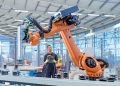
In the 1990s, a typical industrial robotic arm cost well over $100,000. Today, a collaborative robot (cobot) from Universal Robots or Techman Robot can be purchased for under $35,000. This represents a cost decline of approximately 65% over 25 years, driven by cheaper components, global competition, and simplified designs. This was a steady, linear improvement.

The Humanoid Challenge:
Humanoids are exponentially more complex. A modern industrial arm has 6-7 degrees of freedom (DoF). A humanoid like Tesla’s Optimus has 28+ DoF. This isn’t just 4x the complexity; it’s a geometric increase in the challenges of power distribution, control, and balance. Early research humanoids, like the DRC Atlas from Boston Dynamics, had estimated production costs in the $2-5 million range. The current generation of commercial prototypes from companies like Figure and Tesla are estimated to have a Bill of Materials (BOM) in the $150,000 – $500,000 range. This represents a dramatic drop, but it’s only the first step on a long journey.

The initial steep decline is classic for a new technology: the shift from one-off, hand-built research apparatuses to designed-for-manufacture prototypes. The harder, slower work of driving costs down by another order of magnitude is now beginning.

Manufacturing Automation Synergy

This is the secret weapon that could accelerate the humanoid cost curve far beyond the historical precedent of industrial arms. The companies building humanoids are not just creating a product; they are becoming their own first and best customer.

The Self-Replicating Loop:
Tesla’s strategy is the quintessential example. The company is using its expertise in Gigacasting (massive single-piece car parts), automated assembly lines, and vertically integrated power electronics to build Optimus. Crucially, the goal is for Optimus robots to eventually work on the assembly lines building more Optimus robots. This creates a powerful positive feedback loop:

  1. Initial automation reduces the cost of humanoid production.
  2. Lower-cost humanoids can be deployed more widely within the factory.
  3. This expanded deployment further reduces production costs.
    This cycle of “automation building better automation” is a force multiplier that was not present in the first wave of industrial robotics.

Supply Chain Leverage:
Companies like Tesla and Hyundai (owner of Boston Dynamics) can leverage their existing automotive-scale supply chains for motors, batteries, sensors, and chips. Ordering 10 million electric motor components for cars allows you to source 100,000 similar components for robots at a fraction of the cost a startup would pay. This immediate access to high-volume, cost-optimized manufacturing is the single biggest accelerant for the cost curve.

Benchmarking Competitors

The race to lower costs is creating a public benchmark war, with each leading company showcasing its progress.

Tesla: The Vertical Integration Evangelist

  • Claim: A sub-$20,000 cost target and a sub-$30,000 sale price for a general-purpose robot.
  • Strategy: Maximum vertical integration. Custom-designed actuators, batteries, and chips, all built using Tesla’s automotive manufacturing prowess. Their cost reduction is predicated on achieving automotive volumes.
  • Progress: Rapid iteration from a crude “Bumblebee” prototype to a sleek, walking Optimus Gen 2 in just two years demonstrates a formidable pace, but the final cost remains unproven.

Figure AI: The AI-First Disruptor

  • Claim: Focused on value, not just cost. Their business case is based on the robot’s labor output, not its sticker price.
  • Strategy: Partnership with OpenAI to drive down the “cost of intelligence” and with BMW to refine deployment in a real manufacturing environment. Their cost reduction will come from AI efficiency and targeted hardware design.
  • Progress: A high-profile demo showing language-to-action capabilities suggests a focus on high-value tasks that can justify a higher initial cost.

Agility Robotics: The Pragmatic Deployment Leader

  • Claim: Not competing on the “$20,000 robot” hype. Focused on a clear ROI for specific tasks in logistics.
  • Strategy: Its Digit robot has a simpler, more stable leg design than a full humanoid, which inherently lowers cost. Its “RoboFab” mass production facility is already coming online.
  • Progress: Having robots in paid pilot programs means Agility is generating real-world data on Total Cost of Ownership (TCO), which is more important than BOM for business customers.

Consumer vs. Industrial Adoption Rates

The cost curve will drop at different speeds for these two vastly different markets, creating a staggered adoption timeline.

Industrial Adoption: The First Wave (Now – 2030)

  • Cost Threshold: Adoption becomes widespread when the robot’s annualized cost (purchase price + maintenance + operation) is less than the fully burdened cost of a human worker. In the US, this is roughly $50,000-$80,000 per year.
  • Adoption Rate: This market is cost-insensitive at first. A $250,000 robot that can work 3 shifts is immediately economically viable. As the cost drops to $100,000 and then $50,000, the market expands from large auto plants to mid-sized warehouses and factories. Adoption will be rapid once reliability is proven, because the ROI is easy to calculate.

Consumer Adoption: The Distant Horizon (Post-2030)

  • Cost Threshold: Requires a sub-$20,000 price point, and more likely sub-$10,000, to be considered a mass-market appliance, similar to a car.
  • Adoption Rate: This market is highly cost-sensitive. The ROI is less clear (saving time on chores vs. generating income). Consumer adoption will lag industrial adoption by 5-10 years, only beginning in earnest once the cost curve has been flattened by industrial volume and the technology is proven safe and useful in the home.

Forecast to 2035

Based on the convergence of manufacturing synergy, competitive pressure, and market demand, here is a plausible forecast for the cost curve of a production-ready humanoid robot:

  • 2025: $150,000 – $250,000 BOM. The first commercial units are sold at a loss or at cost to strategic partners for pilot programs. Low-volume, semi-automated production.
  • 2028: $70,000 – $100,000 BOM. The first wave of scaling hits. Automated assembly lines for robots are operational. Key components like actuators see their first major cost reductions due to volume. Robots become a common sight in large-scale manufacturing and logistics.
  • 2032: $30,000 – $50,000 BOM. The industrial adoption tipping point. The technology is mature, supply chains are robust, and robots are now affordable for a huge swath of small and medium-sized enterprises. The design is heavily optimized for manufacture.
  • 2035: $15,000 – $25,000 BOM. The consumer threshold is breached. Humanoids are now a high-end consumer product, akin to a luxury car. They are built on fully automated production lines, with many components having become commoditized. The focus of R&D has shifted from hardware cost to AI capability.

Conclusion

The cost curve for humanoid robots is dropping at an unprecedented rate, accelerated by a powerful synergy with advanced manufacturing and a fierce competitive war. While the starting point was astronomically high, the slope of the curve is steeper than any previous class of robotics.

The journey to affordability will not be a smooth descent but a stair-step function, marked by key breakthroughs in assembly automation and component integration. Industrial markets, driven by clear and compelling economics, will lead the way, pulling the technology down the cost curve through volume and iteration. The consumer dream of a personal robot remains on the more distant horizon, entirely dependent on the success of this industrial scaling.

By 2035, the question will not be “How much does a humanoid robot cost?” but “What can’t we use them for?” The rapid flattening of this cost curve is the key that will unlock the next great leap in automation, reshaping the global economy and our daily lives in the process.


Tags: Cost ReductionFigure AIhumanoid roboticsManufacturing AutomationTesla Optimus
ShareTweetShare

Related Posts

Title: Major Stumble: What the Failure of a High-Profile Humanoid Startup Teaches the Industry
Industry Pulse

Title: Major Stumble: What the Failure of a High-Profile Humanoid Startup Teaches the Industry

December 15, 2025
Why Are Robotics Companies Waging an All-Out Talent War Against Big Tech and Academia?
Industry Pulse

Why Are Robotics Companies Waging an All-Out Talent War Against Big Tech and Academia?

December 15, 2025
Will the “Robotics as a Service” Model Become the Dominant Path for Humanoid Deployment?
Industry Pulse

Will the “Robotics as a Service” Model Become the Dominant Path for Humanoid Deployment?

December 14, 2025
The Demographics Solution: Can Humanoids Solve the Crisis of Aging Populations?
Future Scenarios

The Demographics Solution: Can Humanoids Solve the Crisis of Aging Populations?

December 14, 2025
Is Universal Basic Income the Inevitable Solution to Widescale Robotic Automation?
Future Scenarios

Is Universal Basic Income the Inevitable Solution to Widescale Robotic Automation?

December 13, 2025
Analysis: Why Did Hyundai Double Down on Boston Dynamics? A Strategic Look Beyond Spot and Atlas
Future Scenarios

Analysis: Why Did Hyundai Double Down on Boston Dynamics? A Strategic Look Beyond Spot and Atlas

December 12, 2025
Leave Comment
  • Trending
  • Comments
  • Latest
Will Humanoid Robots Become Legal Citizens by 2050? Exploring Rights, Responsibilities, and the Future of Robotic Personhood

Will Humanoid Robots Become Legal Citizens by 2050? Exploring Rights, Responsibilities, and the Future of Robotic Personhood

October 13, 2025
Will Humans and Robots Coexist Seamlessly in 2040’s Smart Cities? Exploring the Rise of Symbiotic Urban Ecosystems

Will Humans and Robots Coexist Seamlessly in 2040’s Smart Cities? Exploring the Rise of Symbiotic Urban Ecosystems

October 13, 2025
Analysis: Why Did Hyundai Double Down on Boston Dynamics? A Strategic Look Beyond Spot and Atlas

Analysis: Why Did Hyundai Double Down on Boston Dynamics? A Strategic Look Beyond Spot and Atlas

December 12, 2025
The End of the Frontline? Reimagining Military Strategy in an Era of Robot Soldiers

The End of the Frontline? Reimagining Military Strategy in an Era of Robot Soldiers

November 30, 2025
Will Humanoid Robots Become Legal Citizens by 2050? Exploring Rights, Responsibilities, and the Future of Robotic Personhood

Will Humanoid Robots Become Legal Citizens by 2050? Exploring Rights, Responsibilities, and the Future of Robotic Personhood

A World Where Robots Are Teachers: Educational Ecosystem with Humanoids

A World Where Robots Are Teachers: Educational Ecosystem with Humanoids

Can Humanoid Robots Redefine Disaster Response? Exploring the Future of Rescue Robotics in Extreme Environments

Can Humanoid Robots Redefine Disaster Response? Exploring the Future of Rescue Robotics in Extreme Environments

The Great Robot Economy: Humanoids as Workers in All Sectors

The Great Robot Economy: Humanoids as Workers in All Sectors

Title: Major Stumble: What the Failure of a High-Profile Humanoid Startup Teaches the Industry

Title: Major Stumble: What the Failure of a High-Profile Humanoid Startup Teaches the Industry

December 15, 2025
Why Are Robotics Companies Waging an All-Out Talent War Against Big Tech and Academia?

Why Are Robotics Companies Waging an All-Out Talent War Against Big Tech and Academia?

December 15, 2025
Will the “Robotics as a Service” Model Become the Dominant Path for Humanoid Deployment?

Will the “Robotics as a Service” Model Become the Dominant Path for Humanoid Deployment?

December 14, 2025
Why Are Humanoid Robots Becoming the Essential Workforce for Building Off-World Habitats?

Why Are Humanoid Robots Becoming the Essential Workforce for Building Off-World Habitats?

December 14, 2025
HumanoidInsight

We provide a clear lens on the rapidly evolving world of humanoid robots through news interpretation, trend observation, and data-driven reports. Join our community to stay authoritatively informed about the next wave of automation and intelligence.

© 2025 humanoidinsight.com. contacts:[email protected]

No Result
View All Result
  • Home
  • Spotlight
  • Future Scenarios
  • Industry Pulse
  • Insight Reports
  • Tech Frontiers

© 2025 humanoidinsight.com. contacts:[email protected]

Welcome Back!

Login to your account below

Forgotten Password?

Retrieve your password

Please enter your username or email address to reset your password.

Log In