










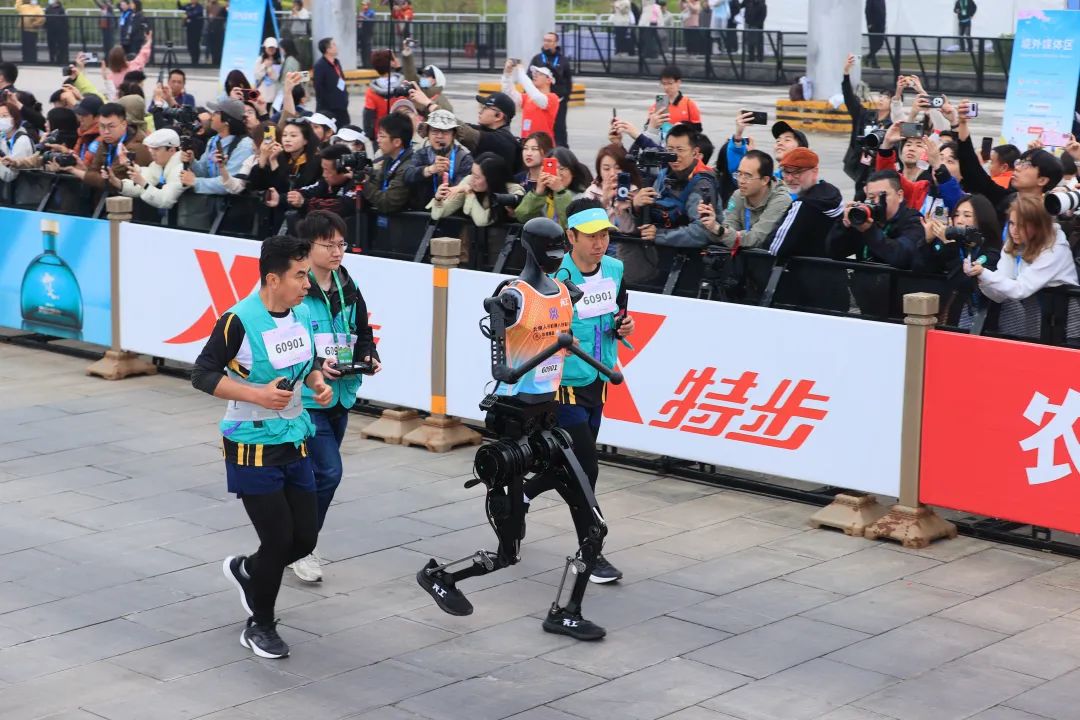
The humanoid robotics field, once a niche domain of academic research and YouTube spectacle, has evolved into a complex, multi-tiered industrial ecosystem. By 2025, humanoid development is no longer about building a single “miracle machine.” It’s about coordinating hundreds of companies—each specializing in hardware, software, sensors, AI, or supply chain management—to create functioning, adaptive, and safe humanoid systems.
This article maps the 2025 humanoid robotics ecosystem—identifying who’s doing what, how value chains are structured, and where the major bottlenecks still reside. It reveals a field that’s both expanding rapidly and consolidating around a few powerful nodes, much like the early days of the personal computing or smartphone revolutions.
1. The Ecosystem Layers: From Brain to Body
Humanoid robotics development spans a vertical stack that mirrors biological complexity—from synthetic nervous systems to musculoskeletal frameworks. The industry can be broadly divided into five layers, each dominated by distinct players and technologies.
1.1. Intelligence Layer (AI & Control Systems)
This is the “brain” of the humanoid—the software that drives perception, reasoning, and decision-making. In 2025, three paradigms dominate:
- Large AI Models for Robotics (LAIMs): Major AI companies such as OpenAI, Google DeepMind, and Anthropic are adapting foundation models for real-world robotics, integrating perception, motor control, and natural language understanding.
- Closed-loop Control Systems: Robotics firms like Boston Dynamics and Agility Robotics develop highly optimized motion control loops tailored to physical reliability, prioritizing safety and stability.
- Cloud-to-Edge Intelligence: Companies such as NVIDIA, Figure AI, and Apptronik blend local inference with cloud-level learning—allowing humanoids to continuously update skills from collective data pools.
This layer represents the cognitive core, where AI meets real-time physics. It’s also where intellectual property (IP) concentration is most intense, leading to both innovation and dependency risks.
1.2. Sensor & Perception Layer
Perception defines a humanoid’s ability to “see,” “hear,” and “feel.” The 2025 sensor market is a dense web of partnerships among specialized startups and established suppliers:
- Vision Sensors: Sony and Intel supply RGB-D cameras and LiDAR modules, while emerging firms like Luxonis and Orbbec push open-source depth-sensing solutions.
- Tactile Sensing: Startups such as SynTouch, BeBop Sensors, and GelSight pioneer artificial skin technologies that provide force, texture, and temperature feedback.
- Auditory & Speech Recognition: Embedded microphones powered by DSP Group and AI speech modules from Whisper and Speechmatics enable natural verbal interaction.
- Proprioceptive Systems: Advanced gyroscopes and IMUs from Bosch, TDK, and Analog Devices help humanoids understand their own body orientation and balance.
These components form the robot’s sensory nervous system—critical for human-safe interaction and adaptive learning.
1.3. Actuation & Mobility Layer
Muscle-like motion remains the hardest part of humanoid engineering. The ecosystem here is divided between precision mechatronics and energy efficiency innovation:
- Core Suppliers: Harmonic Drive, Maxon Motor, and Faulhaber dominate high-torque servo markets.
- Next-gen Actuators: Companies like Infinite Robotics and Myorobotics are developing soft actuators and variable-stiffness systems that mimic human musculature.
- Mobility Systems: Wheel-foot hybrids from Unitree and Fourier Intelligence combine efficiency with adaptability.
Despite progress, actuators remain a cost bottleneck—accounting for 30–40% of a humanoid’s total bill of materials. Durability, power density, and cost scalability continue to limit mass production.
1.4. Power & Energy Systems
A humanoid’s performance is only as good as its power architecture. While battery innovation lags behind demand, several breakthroughs are emerging:
- Solid-State Batteries: Toyota, CATL, and QuantumScape push solid-state chemistries that can safely power humanoids for extended durations.
- Swappable Power Units: Agility Robotics and Tesla’s Optimus prototypes experiment with modular battery packs to minimize downtime.
- Regenerative Motion Systems: Inspired by electric vehicles, robots now recover kinetic energy from walking and manipulation, improving overall efficiency.
Still, power density and thermal management remain technical constraints that shape humanoid body design.
1.5. Enclosure, Materials & Manufacturing Layer
Here, the challenge is balancing strength, flexibility, and human aesthetics.
- Structural Materials: Carbon fiber, magnesium alloys, and 3D-printed titanium are used in premium models; ABS and aluminum dominate mid-range builds.
- Manufacturing Networks: Asian OEMs like Foxconn, Flex Ltd, and BYD Electronics provide large-scale assembly capabilities, while smaller robotics firms retain final integration control.
- Design Houses: Companies such as IDEO, fuseproject, and internal design labs of major robotics firms shape anthropomorphic ergonomics and user perception.
2. Key Nodes and Corporate Archetypes
The humanoid ecosystem can be visualized as a network of interdependent archetypes—each occupying a specific niche within the innovation landscape:
| Archetype | Examples | Primary Role | Strategic Power |
|---|---|---|---|
| Core Platform Leaders | Figure AI, Agility Robotics, Boston Dynamics, Tesla | End-to-end integration of humanoid systems | High |
| Component Specialists | Harmonic Drive, TDK, Luxonis, SynTouch | Deep hardware expertise | Moderate |
| AI Foundation Providers | OpenAI, NVIDIA, Google DeepMind | Cognitive and perception engines | High |
| Manufacturing Partners | Foxconn, BYD, Flex | Large-scale assembly and component logistics | Moderate |
| Academic & Research Hubs | ETH Zurich, CMU, Tsinghua University, MIT CSAIL | Innovation pipeline, open datasets | Variable |
These entities form the core mesh of humanoid robotics: a distributed but interlinked system where breakthroughs in one area rapidly influence all others.
3. Bottlenecks and Weak Links in 2025
Despite the ecosystem’s growth, several structural challenges prevent humanoids from scaling beyond pilot production:
3.1. Actuator Cost and Reliability
High-torque actuators and harmonic drives remain expensive, complex, and difficult to mass-produce. The lack of standardization among models prevents economies of scale.
3.2. Sensor Integration
Different suppliers produce vision, tactile, and proprioceptive sensors with unique communication protocols—making integration costly and error-prone. The need for interoperable standards is critical.
3.3. Software-Hardware Decoupling
Many humanoid systems are still vertically integrated, with proprietary AI stacks tied to specific hardware. This slows cross-compatibility and ecosystem diversification.
3.4. Energy Efficiency
Even with modern batteries, humanoids can rarely operate longer than 4–6 hours on a single charge—insufficient for real-world deployment without external power aids.
3.5. Regulatory Fragmentation
Countries differ drastically in safety certifications, data governance, and liability frameworks. This slows deployment and complicates export strategies for manufacturers.
4. Emerging Sub-Ecosystems and Innovation Hotspots
4.1. Robotics Middleware & Operating Systems
The rise of ROS 2, NVIDIA Isaac, and Tesla’s Optimus SDK represents a new wave of standardization. Middleware frameworks are becoming the backbone for humanoid control, allowing modular plug-ins for perception, locomotion, and task planning.
4.2. Synthetic Data & Simulation
Digital twins and physics-based simulators—like DeepMind’s MuJoCo and Unity Robotics Hub—enable rapid learning cycles without physical wear. This cuts prototyping costs and accelerates behavior refinement.
4.3. Emotion & Human Interaction Systems
Companies like Furhat Robotics and Engineered Arts focus on expressive faces, speech modulation, and affective computing—turning humanoids into emotionally legible co-workers and service providers.
4.4. Supply Chain Localization
To reduce geopolitical risk, regional clusters are forming:
- U.S. West Coast: Software, AI integration, and venture capital.
- East Asia: Precision hardware and large-scale manufacturing.
- Europe: Ethical AI governance, safety standards, and design research.
5. Visualization: The 2025 Humanoid Robotics Map (Conceptual)
Imagine a network diagram with five concentric rings:
- Core Integration Layer – Tesla Optimus, Figure AI, Agility Robotics
- AI & Control Layer – OpenAI, NVIDIA, DeepMind, Microsoft
- Component Supply Layer – Harmonic Drive, TDK, Luxonis, CATL
- Manufacturing & Logistics Layer – Foxconn, BYD, Flex
- Regulation & Standards Layer – ISO, IEEE, national robotics agencies
Lines connect across layers—AI companies feed cognitive software to integrators, who depend on sensor suppliers, who in turn rely on material manufacturers. The resulting structure looks less like a pyramid and more like a living neural network, reflecting the field’s collaborative complexity.
6. Ecosystem Outlook: 2025–2030
The humanoid robotics ecosystem is at a pre-scaling phase, comparable to the smartphone industry circa 2007. Market consolidation is inevitable. Expect three major shifts by 2030:
- Platform Wars: Competing humanoid operating systems will define developer ecosystems, much like Android vs. iOS.
- Vertical Integration: Firms will internalize component production to control costs and IP, reducing supplier dependence.
- AI Co-Piloting: Future humanoids will be less mechanical and more cognitive—dynamic collaborators that learn continuously from shared cloud intelligence.
In short, the race is no longer just to build a humanoid that works—but to create one that scales.
7. Conclusion: A Living, Breathing Industry
By 2025, humanoid robotics is no longer an engineering novelty—it’s a global industrial ecosystem with thousands of interconnected nodes. From component manufacturers in Shenzhen to AI labs in Silicon Valley, every layer contributes to shaping the next generation of human-like machines.
The ecosystem’s strength lies in its diversity and interdependence. But its success will depend on how well it can standardize, scale, and sustain collaboration across technological, cultural, and political boundaries.
If 2023–2025 was the age of prototypes, 2025–2030 will be the age of platforms—when humanoids move from lab floors to factory floors, city streets, and homes. And those who understand the ecosystem map today will be the ones shaping its future tomorrow.