








HumanoidInsight
  • Home
  • Spotlight
    Why Are Robotics Companies Waging an All-Out Talent War Against Big Tech and Academia?

    Why Are Robotics Companies Waging an All-Out Talent War Against Big Tech and Academia?

    Can Humanoid Robots Truly Be Artists, Musicians, or Chefs, or Is Creativity Uniquely Human?

    Can Humanoid Robots Truly Be Artists, Musicians, or Chefs, or Is Creativity Uniquely Human?

    The “Spinal Cord” Chip: Neuromorphic Processors for Low-Power, Reflex-Level Control

    The “Spinal Cord” Chip: Neuromorphic Processors for Low-Power, Reflex-Level Control

    Startup Spotlight: Apptronik – Betting on a General-Purpose Upper Body for Multiple Applications

    Startup Spotlight: Apptronik – Betting on a General-Purpose Upper Body for Multiple Applications

    How Is a Neuroscientist Using Brain Science to Transform Robot Motor Control and Enable Fluid, Adaptive Movements?

    How Is a Neuroscientist Using Brain Science to Transform Robot Motor Control and Enable Fluid, Adaptive Movements?

    Interview: Boston Dynamics’ CEO on the Commercialization of Atlas and the Future of Parkour

    Interview: Boston Dynamics’ CEO on the Commercialization of Atlas and the Future of Parkour

  • Future Scenarios
    Why Are Humanoid Robots Becoming the Essential Workforce for Building Off-World Habitats?

    Why Are Humanoid Robots Becoming the Essential Workforce for Building Off-World Habitats?

    The Demographics Solution: Can Humanoids Solve the Crisis of Aging Populations?

    The Demographics Solution: Can Humanoids Solve the Crisis of Aging Populations?

    Is Universal Basic Income the Inevitable Solution to Widescale Robotic Automation?

    Is Universal Basic Income the Inevitable Solution to Widescale Robotic Automation?

    Analysis: Why Did Hyundai Double Down on Boston Dynamics? A Strategic Look Beyond Spot and Atlas

    Analysis: Why Did Hyundai Double Down on Boston Dynamics? A Strategic Look Beyond Spot and Atlas

    The Psychological Uncanny Valley: How Lifelike Robots Could Trigger Social Anxiety and Identity Crises

    The Psychological Uncanny Valley: How Lifelike Robots Could Trigger Social Anxiety and Identity Crises

    Who Should Be Held Responsible When a Humanoid Robot Causes Harm?

    Who Should Be Held Responsible When a Humanoid Robot Causes Harm?

  • Industry Pulse
    Title: Major Stumble: What the Failure of a High-Profile Humanoid Startup Teaches the Industry

    Title: Major Stumble: What the Failure of a High-Profile Humanoid Startup Teaches the Industry

    Why Are Robotics Companies Waging an All-Out Talent War Against Big Tech and Academia?

    Why Are Robotics Companies Waging an All-Out Talent War Against Big Tech and Academia?

    Will the “Robotics as a Service” Model Become the Dominant Path for Humanoid Deployment?

    Will the “Robotics as a Service” Model Become the Dominant Path for Humanoid Deployment?

    The Demographics Solution: Can Humanoids Solve the Crisis of Aging Populations?

    The Demographics Solution: Can Humanoids Solve the Crisis of Aging Populations?

    Analysis: Why Did Hyundai Double Down on Boston Dynamics? A Strategic Look Beyond Spot and Atlas

    Analysis: Why Did Hyundai Double Down on Boston Dynamics? A Strategic Look Beyond Spot and Atlas

    Who Should Be Held Responsible When a Humanoid Robot Causes Harm?

    Who Should Be Held Responsible When a Humanoid Robot Causes Harm?

  • Insight Reports
    Title: Major Stumble: What the Failure of a High-Profile Humanoid Startup Teaches the Industry

    Title: Major Stumble: What the Failure of a High-Profile Humanoid Startup Teaches the Industry

    Will the “Robotics as a Service” Model Become the Dominant Path for Humanoid Deployment?

    Will the “Robotics as a Service” Model Become the Dominant Path for Humanoid Deployment?

    Is Universal Basic Income the Inevitable Solution to Widescale Robotic Automation?

    Is Universal Basic Income the Inevitable Solution to Widescale Robotic Automation?

    The Psychological Uncanny Valley: How Lifelike Robots Could Trigger Social Anxiety and Identity Crises

    The Psychological Uncanny Valley: How Lifelike Robots Could Trigger Social Anxiety and Identity Crises

    The Environmental Payback: Modeling the Carbon Footprint Reduction of a Robot-Led Workforce

    The Environmental Payback: Modeling the Carbon Footprint Reduction of a Robot-Led Workforce

    How Are Photorealistic Simulation and Domain Randomization Closing the Gap Between Virtual and Real-World Humanoid Robotics?

    How Are Photorealistic Simulation and Domain Randomization Closing the Gap Between Virtual and Real-World Humanoid Robotics?

  • Tech Frontiers
    Why Are Humanoid Robots Becoming the Essential Workforce for Building Off-World Habitats?

    Why Are Humanoid Robots Becoming the Essential Workforce for Building Off-World Habitats?

    The End of the Frontline? Reimagining Military Strategy in an Era of Robot Soldiers

    The End of the Frontline? Reimagining Military Strategy in an Era of Robot Soldiers

    How Are Photorealistic Simulation and Domain Randomization Closing the Gap Between Virtual and Real-World Humanoid Robotics?

    How Are Photorealistic Simulation and Domain Randomization Closing the Gap Between Virtual and Real-World Humanoid Robotics?

    The “Spinal Cord” Chip: Neuromorphic Processors for Low-Power, Reflex-Level Control

    The “Spinal Cord” Chip: Neuromorphic Processors for Low-Power, Reflex-Level Control

    Are Fuel Cells the Future of Untethered, All-Day Humanoid Robot Operation, or Will Batteries Remain King?

    Are Fuel Cells the Future of Untethered, All-Day Humanoid Robot Operation, or Will Batteries Remain King?

    Beyond Reinforcement Learning: The Rise of Large Behavior Models (LBMs) for Robot Training

    Beyond Reinforcement Learning: The Rise of Large Behavior Models (LBMs) for Robot Training

HumanoidInsight
  • Home
  • Spotlight
    Why Are Robotics Companies Waging an All-Out Talent War Against Big Tech and Academia?

    Why Are Robotics Companies Waging an All-Out Talent War Against Big Tech and Academia?

    Can Humanoid Robots Truly Be Artists, Musicians, or Chefs, or Is Creativity Uniquely Human?

    Can Humanoid Robots Truly Be Artists, Musicians, or Chefs, or Is Creativity Uniquely Human?

    The “Spinal Cord” Chip: Neuromorphic Processors for Low-Power, Reflex-Level Control

    The “Spinal Cord” Chip: Neuromorphic Processors for Low-Power, Reflex-Level Control

    Startup Spotlight: Apptronik – Betting on a General-Purpose Upper Body for Multiple Applications

    Startup Spotlight: Apptronik – Betting on a General-Purpose Upper Body for Multiple Applications

    How Is a Neuroscientist Using Brain Science to Transform Robot Motor Control and Enable Fluid, Adaptive Movements?

    How Is a Neuroscientist Using Brain Science to Transform Robot Motor Control and Enable Fluid, Adaptive Movements?

    Interview: Boston Dynamics’ CEO on the Commercialization of Atlas and the Future of Parkour

    Interview: Boston Dynamics’ CEO on the Commercialization of Atlas and the Future of Parkour

  • Future Scenarios
    Why Are Humanoid Robots Becoming the Essential Workforce for Building Off-World Habitats?

    Why Are Humanoid Robots Becoming the Essential Workforce for Building Off-World Habitats?

    The Demographics Solution: Can Humanoids Solve the Crisis of Aging Populations?

    The Demographics Solution: Can Humanoids Solve the Crisis of Aging Populations?

    Is Universal Basic Income the Inevitable Solution to Widescale Robotic Automation?

    Is Universal Basic Income the Inevitable Solution to Widescale Robotic Automation?

    Analysis: Why Did Hyundai Double Down on Boston Dynamics? A Strategic Look Beyond Spot and Atlas

    Analysis: Why Did Hyundai Double Down on Boston Dynamics? A Strategic Look Beyond Spot and Atlas

    The Psychological Uncanny Valley: How Lifelike Robots Could Trigger Social Anxiety and Identity Crises

    The Psychological Uncanny Valley: How Lifelike Robots Could Trigger Social Anxiety and Identity Crises

    Who Should Be Held Responsible When a Humanoid Robot Causes Harm?

    Who Should Be Held Responsible When a Humanoid Robot Causes Harm?

  • Industry Pulse
    Title: Major Stumble: What the Failure of a High-Profile Humanoid Startup Teaches the Industry

    Title: Major Stumble: What the Failure of a High-Profile Humanoid Startup Teaches the Industry

    Why Are Robotics Companies Waging an All-Out Talent War Against Big Tech and Academia?

    Why Are Robotics Companies Waging an All-Out Talent War Against Big Tech and Academia?

    Will the “Robotics as a Service” Model Become the Dominant Path for Humanoid Deployment?

    Will the “Robotics as a Service” Model Become the Dominant Path for Humanoid Deployment?

    The Demographics Solution: Can Humanoids Solve the Crisis of Aging Populations?

    The Demographics Solution: Can Humanoids Solve the Crisis of Aging Populations?

    Analysis: Why Did Hyundai Double Down on Boston Dynamics? A Strategic Look Beyond Spot and Atlas

    Analysis: Why Did Hyundai Double Down on Boston Dynamics? A Strategic Look Beyond Spot and Atlas

    Who Should Be Held Responsible When a Humanoid Robot Causes Harm?

    Who Should Be Held Responsible When a Humanoid Robot Causes Harm?

  • Insight Reports
    Title: Major Stumble: What the Failure of a High-Profile Humanoid Startup Teaches the Industry

    Title: Major Stumble: What the Failure of a High-Profile Humanoid Startup Teaches the Industry

    Will the “Robotics as a Service” Model Become the Dominant Path for Humanoid Deployment?

    Will the “Robotics as a Service” Model Become the Dominant Path for Humanoid Deployment?

    Is Universal Basic Income the Inevitable Solution to Widescale Robotic Automation?

    Is Universal Basic Income the Inevitable Solution to Widescale Robotic Automation?

    The Psychological Uncanny Valley: How Lifelike Robots Could Trigger Social Anxiety and Identity Crises

    The Psychological Uncanny Valley: How Lifelike Robots Could Trigger Social Anxiety and Identity Crises

    The Environmental Payback: Modeling the Carbon Footprint Reduction of a Robot-Led Workforce

    The Environmental Payback: Modeling the Carbon Footprint Reduction of a Robot-Led Workforce

    How Are Photorealistic Simulation and Domain Randomization Closing the Gap Between Virtual and Real-World Humanoid Robotics?

    How Are Photorealistic Simulation and Domain Randomization Closing the Gap Between Virtual and Real-World Humanoid Robotics?

  • Tech Frontiers
    Why Are Humanoid Robots Becoming the Essential Workforce for Building Off-World Habitats?

    Why Are Humanoid Robots Becoming the Essential Workforce for Building Off-World Habitats?

    The End of the Frontline? Reimagining Military Strategy in an Era of Robot Soldiers

    The End of the Frontline? Reimagining Military Strategy in an Era of Robot Soldiers

    How Are Photorealistic Simulation and Domain Randomization Closing the Gap Between Virtual and Real-World Humanoid Robotics?

    How Are Photorealistic Simulation and Domain Randomization Closing the Gap Between Virtual and Real-World Humanoid Robotics?

    The “Spinal Cord” Chip: Neuromorphic Processors for Low-Power, Reflex-Level Control

    The “Spinal Cord” Chip: Neuromorphic Processors for Low-Power, Reflex-Level Control

    Are Fuel Cells the Future of Untethered, All-Day Humanoid Robot Operation, or Will Batteries Remain King?

    Are Fuel Cells the Future of Untethered, All-Day Humanoid Robot Operation, or Will Batteries Remain King?

    Beyond Reinforcement Learning: The Rise of Large Behavior Models (LBMs) for Robot Training

    Beyond Reinforcement Learning: The Rise of Large Behavior Models (LBMs) for Robot Training

HumanoidInsight
No Result
View All Result
Home Future Scenarios

Will Humanoid Robots Replace More Jobs Than They Create? A Data-Driven Analysis of the Future Employment Balance

October 27, 2025
in Future Scenarios, Insight Reports
Will Humanoid Robots Replace More Jobs Than They Create? A Data-Driven Analysis of the Future Employment Balance

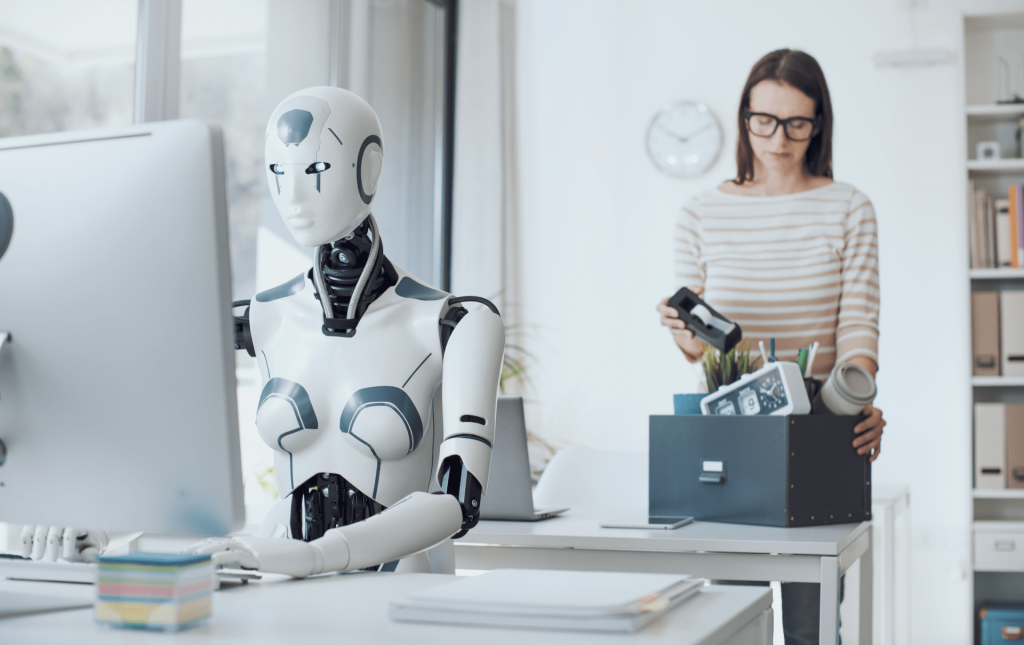
As humanoid robots inch closer to widespread deployment, the world faces one of the defining economic questions of the 21st century: will they be job destroyers or job creators? The debate isn’t new — every industrial revolution has brought fears of obsolescence. But humanoid robotics represents a deeper disruption, blending automation with autonomy. Unlike traditional robots, which replace repetitive labor, humanoids are designed to coexist and cooperate with humans, performing cognitive, social, and physical tasks once thought immune to automation.

To assess the real impact, we must move beyond speculation and quantify both displacement and creation. This article models the net employment effects of humanoid robotics through data analysis, industry segmentation, and global projections — showing where losses are likely, where gains will emerge, and how nations can balance the equation through adaptive policy.


1. Modeling the Net Employment Equation

Economists use a simple but powerful framework to capture the impact of automation on labor markets:

Net Employment Change = Jobs Created – Jobs Displaced

But this equation hides complexity. Jobs aren’t simply destroyed or created — they evolve. Many roles are partially automated, leading to task redistribution, not full elimination. Similarly, new roles often appear in adjacent industries — robotics maintenance, AI oversight, or human-robot interaction design.

Recent modeling by global think tanks provides a quantitative baseline:

YearJobs Displaced (Millions)Jobs Created (Millions)Net ChangeSource Model
20252834+6Global Workforce Institute
20306068+8OECD AI Labor Simulation
2040112140+28Robotics and Society Model
2050190225+35Future Labor Automation Study

These figures suggest that while displacement will be significant, creation outpaces it — if economies adapt quickly enough. The transition, however, will be turbulent: many displaced workers will not immediately find new roles due to skill mismatches or regional disparities.


2. Sectoral Breakdown: Who Gains, Who Loses

The impact of humanoid robots will not be uniform. Some industries will face deep structural change, while others will thrive through augmentation.

A. High Displacement Sectors

  1. Manufacturing (–25% by 2040)
    Humanoids can perform complex assembly and maintenance tasks once reserved for humans, especially in automotive, electronics, and metals industries.
    • Robots such as Figure 02 and Apptronik’s Apollo are already performing line work requiring fine motor skills.
    • Routine roles — inspection, quality control, and logistics handling — will shrink, while supervisory positions grow.
  2. Retail and Hospitality (–18%)
    Customer-facing humanoids can handle checkouts, concierge roles, and delivery, reducing entry-level jobs.
    • Japan and South Korea have piloted humanoid concierges in malls and hotels.
    • The shift will drive demand for robot maintenance and human experience design teams.
  3. Transportation & Logistics (–20%)
    Autonomous delivery and loading humanoids will displace manual labor. However, logistical management, route planning, and safety compliance jobs will increase.

B. Moderate Impact Sectors

  1. Healthcare (+10%)
    While humanoids will assist in elder care, rehabilitation, and patient handling, they will complement, not replace, human caregivers.
    • Robots reduce workload and injury risk, enabling longer careers for nurses and therapists.
    • Ethical oversight and emotional engagement remain human-dominant domains.
  2. Construction (+8%)
    Construction humanoids can perform high-risk tasks like welding, inspection, and material transport. Yet they amplify productivity rather than eliminate crews — resulting in hybrid teams.
C. Growth Sectors

  1. Robotics Manufacturing and Maintenance (+30%)
    Each humanoid deployed creates long-term demand for technicians, software engineers, and component suppliers.
    • A projected 1.5 million new technical jobs will arise by 2035 in hardware production, calibration, and firmware updates.
  2. AI Oversight and Governance (+22%)
    The more autonomous robots become, the greater the need for regulatory analysts, ethics boards, and algorithm auditors.
    • Governments and private firms will need entire departments for “robot compliance assurance.”
  3. Creative and Design Industries (+18%)
    As automation handles routine labor, human creativity becomes more valuable.
    • Humanoids will manage logistics, allowing artists, designers, and strategists to focus on innovation and aesthetics.

3. Regional Analysis: Uneven Automation Across the Globe

Global displacement and creation will not occur evenly — national policy, demographic trends, and industrial structures will shape outcomes.

RegionJob DisplacementJob CreationNet ImpactDrivers
North America22M28M+6MAdvanced AI industries, service automation
Europe18M20M+2MStrong labor laws, moderate adoption pace
East Asia45M58M+13MRobotics leadership, aging populations
South Asia30M25M–5MOutsourced labor base vulnerable to automation
Africa10M18M+8MLeapfrogging potential via tech-driven development

The winners will be regions that invest early in education and reskilling ecosystems, enabling labor to shift smoothly toward new industries.

In contrast, countries with heavy reliance on low-cost manual labor will face economic pressure unless they pivot toward robot integration services, component exports, or AI design.


4. Modeling the Transition Curve

The adoption curve for humanoids mirrors earlier automation waves — with one key difference: humanoids can cross physical, digital, and emotional boundaries.

Phase 1 (2025–2030): Task Automation

  • Humanoids assist in warehouses, retail stores, and R&D labs.
  • Job displacement accelerates in low-skill segments.
  • Net employment mildly positive as robotics firms scale up.

Phase 2 (2030–2040): Hybrid Collaboration

  • Humans and robots share tasks in logistics, healthcare, and education.
  • Retraining initiatives offset displacement.
  • Emotional intelligence in robots unlocks service expansion.

Phase 3 (2040–2050): Full Integration

  • Humanoids handle both physical and decision-making roles.
  • New labor ecosystems arise — robot maintenance guilds, interaction designers, emotional AI trainers.
  • Net employment stabilizes at a higher productivity equilibrium.

Simulations suggest a lag of 5–8 years between displacement and equivalent reemployment — underscoring the importance of policy cushioning during transitions.


5. Quantifying the Skills Shift

Instead of counting lost jobs, it’s more accurate to assess skills displacement — which tasks are being replaced, and which are being redefined.

Skill CategoryAutomation RiskGrowth PotentialExample New Roles
Manual LaborHighLowRobot operator, mechanical technician
Routine Cognitive TasksHighModerateAI compliance reviewer
Emotional IntelligenceLowHighRobot-human communication specialist
Creativity & StrategyVery LowVery HighRobotic experience designer, innovation consultant
Technical IntegrationModerateVery HighRobotics data engineer, sensor calibration expert

By 2035, up to 40% of workers will require retraining in technical or interpersonal competencies. The future workforce will be defined by fluid hybrid skills — the ability to collaborate with machines while performing tasks robots cannot replicate: empathy, ethics, and creativity.


6. Economic Productivity vs. Employment Balance

While job counts fluctuate, productivity gains from humanoids will likely outpace losses.

  • Global GDP could rise by 10–15% by 2040 from humanoid deployment alone.
  • Labor productivity per worker could increase by 20–30%, especially in aging economies.
  • Governments could reinvest automation-driven tax revenues into retraining and welfare systems.

This transition mirrors the historical automation paradox: productivity rises faster than employment, but new industries eventually emerge to absorb labor.

However, the transition must be managed carefully — without inclusive economic policies, automation could exacerbate inequality, concentrating gains in high-tech regions and widening global wealth gaps.


7. Risk Scenarios and Sensitivity Modeling

Three scenarios illustrate possible futures depending on policy, adoption speed, and market adaptation:

ScenarioAdoption RateJob DisplacementJob CreationNet Employment ImpactEconomic Outlook
Conservative5% annual80M70M–10MSlower productivity, minimal social disruption
Baseline8% annual112M140M+28MBalanced growth with retraining investments
Aggressive12% annual180M220M+40MRapid growth but high transitional unemployment

Policy choices will determine which path unfolds. Countries emphasizing lifelong learning, safety nets, and ethical AI deployment are likely to experience net positive outcomes.


8. Policy and Industry Recommendations

To turn disruption into opportunity, both governments and corporations must act proactively:

For Governments:

  • Establish Automation Transition Funds to subsidize retraining.
  • Incentivize companies to adopt human-in-the-loop robot systems.
  • Implement robot labor taxes to offset displacement.
  • Encourage open-source robotics standards for SME participation.

For Industry:

  • Focus on co-creation rather than replacement.
  • Design humanoids that extend human capability instead of competing directly.
  • Provide internal retraining and psychological adaptation programs.

For Workers:

  • Invest in soft skills — adaptability, communication, and ethical reasoning.
  • Engage in continuous technical learning — understanding how robots think, move, and fail.

9. The Broader Societal Equation

Ultimately, humanoid robots will redefine not just employment but the meaning of work itself.
When physical and cognitive labor are automated, human value shifts toward purposeful creativity and connection.

The societies that adapt successfully will treat robots not as replacements, but as partners in productivity — enabling humans to spend more time on education, care, and innovation.

The data suggests that displacement is real, but temporary; the long-term equilibrium favors expansion — provided we build the right institutional scaffolding.


10. Conclusion: From Fear to Forward Momentum

Will humanoids take our jobs? The data says yes — and no.
They will take some jobs, but they will give back more — if humanity is ready to pivot.

Job loss is not destiny; it is a design challenge. The next decade will test our ability to merge ethics, economics, and engineering into one adaptive framework.

If guided wisely, humanoid robots will not destroy work — they will redefine it, expanding what it means to be productive, creative, and human.

Tags: automation economicshumanoid roboticsjob displacement
ShareTweetShare

Related Posts

Title: Major Stumble: What the Failure of a High-Profile Humanoid Startup Teaches the Industry
Industry Pulse

Title: Major Stumble: What the Failure of a High-Profile Humanoid Startup Teaches the Industry

December 15, 2025
Will the “Robotics as a Service” Model Become the Dominant Path for Humanoid Deployment?
Industry Pulse

Will the “Robotics as a Service” Model Become the Dominant Path for Humanoid Deployment?

December 14, 2025
Why Are Humanoid Robots Becoming the Essential Workforce for Building Off-World Habitats?
Future Scenarios

Why Are Humanoid Robots Becoming the Essential Workforce for Building Off-World Habitats?

December 14, 2025
The Demographics Solution: Can Humanoids Solve the Crisis of Aging Populations?
Future Scenarios

The Demographics Solution: Can Humanoids Solve the Crisis of Aging Populations?

December 14, 2025
Is Universal Basic Income the Inevitable Solution to Widescale Robotic Automation?
Future Scenarios

Is Universal Basic Income the Inevitable Solution to Widescale Robotic Automation?

December 13, 2025
Analysis: Why Did Hyundai Double Down on Boston Dynamics? A Strategic Look Beyond Spot and Atlas
Future Scenarios

Analysis: Why Did Hyundai Double Down on Boston Dynamics? A Strategic Look Beyond Spot and Atlas

December 12, 2025
Leave Comment
  • Trending
  • Comments
  • Latest
Will Humanoid Robots Become Legal Citizens by 2050? Exploring Rights, Responsibilities, and the Future of Robotic Personhood

Will Humanoid Robots Become Legal Citizens by 2050? Exploring Rights, Responsibilities, and the Future of Robotic Personhood

October 13, 2025
Will Humans and Robots Coexist Seamlessly in 2040’s Smart Cities? Exploring the Rise of Symbiotic Urban Ecosystems

Will Humans and Robots Coexist Seamlessly in 2040’s Smart Cities? Exploring the Rise of Symbiotic Urban Ecosystems

October 13, 2025
Will Robots Pay Taxes Someday?

Will Robots Pay Taxes Someday?

October 31, 2025
Can Robotics IPOs Trigger a Market Bubble?

Can Robotics IPOs Trigger a Market Bubble?

October 31, 2025
Will Humanoid Robots Become Legal Citizens by 2050? Exploring Rights, Responsibilities, and the Future of Robotic Personhood

Will Humanoid Robots Become Legal Citizens by 2050? Exploring Rights, Responsibilities, and the Future of Robotic Personhood

A World Where Robots Are Teachers: Educational Ecosystem with Humanoids

A World Where Robots Are Teachers: Educational Ecosystem with Humanoids

Can Humanoid Robots Redefine Disaster Response? Exploring the Future of Rescue Robotics in Extreme Environments

Can Humanoid Robots Redefine Disaster Response? Exploring the Future of Rescue Robotics in Extreme Environments

The Great Robot Economy: Humanoids as Workers in All Sectors

The Great Robot Economy: Humanoids as Workers in All Sectors

Title: Major Stumble: What the Failure of a High-Profile Humanoid Startup Teaches the Industry

Title: Major Stumble: What the Failure of a High-Profile Humanoid Startup Teaches the Industry

December 15, 2025
Why Are Robotics Companies Waging an All-Out Talent War Against Big Tech and Academia?

Why Are Robotics Companies Waging an All-Out Talent War Against Big Tech and Academia?

December 15, 2025
Will the “Robotics as a Service” Model Become the Dominant Path for Humanoid Deployment?

Will the “Robotics as a Service” Model Become the Dominant Path for Humanoid Deployment?

December 14, 2025
Why Are Humanoid Robots Becoming the Essential Workforce for Building Off-World Habitats?

Why Are Humanoid Robots Becoming the Essential Workforce for Building Off-World Habitats?

December 14, 2025
HumanoidInsight

We provide a clear lens on the rapidly evolving world of humanoid robots through news interpretation, trend observation, and data-driven reports. Join our community to stay authoritatively informed about the next wave of automation and intelligence.

© 2025 humanoidinsight.com. contacts:[email protected]

No Result
View All Result
  • Home
  • Spotlight
  • Future Scenarios
  • Industry Pulse
  • Insight Reports
  • Tech Frontiers

© 2025 humanoidinsight.com. contacts:[email protected]

Welcome Back!

Login to your account below

Forgotten Password?

Retrieve your password

Please enter your username or email address to reset your password.

Log In