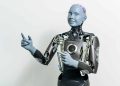










When people discuss the modern humanoid robotics boom, names like Figure AI, Agility Robotics, and Tesla’s Optimus often dominate the headlines. But behind many of these breakthroughs lies a shared lineage — one that traces back to Willow Garage, a small Silicon Valley lab that quietly redefined how robots learn, collaborate, and evolve. Though Willow Garage closed its doors in 2014, its alumni have since fanned out across the tech landscape, becoming the architects of a new robotic era. Their shared vision — open platforms, human-centered design, and AI-driven adaptability — continues to shape humanoid robotics in profound ways.
This article explores how Willow Garage’s DNA lives on through its alumni, their spin-off ventures, and the technological philosophies that still power some of the most advanced robots on Earth.
The Willow Garage Legacy: A Vision Beyond Profit
Founded in 2006 by Scott Hassan, Willow Garage was never a traditional tech startup. It wasn’t chasing quarterly returns or consumer gadget fame. Instead, its mission was to accelerate robotics research by providing an open, shared platform for collaboration.
The lab’s most influential creation was ROS (Robot Operating System) — an open-source framework that allowed robots to “speak the same language.” Before ROS, roboticists around the world were reinventing the wheel — writing unique codebases for every robot. ROS unified the field, offering standardized libraries for navigation, perception, and control.
The other major contribution was the PR2 robot, a human-sized platform built for manipulation, mobility, and autonomy. It was designed not as a product, but as a research vessel — a robust, modular humanoid precursor that universities and labs could experiment on.
Together, ROS and PR2 transformed robotics from a fragmented, hardware-bound discipline into a collaborative software ecosystem — a foundation that every humanoid robot today stands upon.
The Alumni Network: From Research to Reality
When Willow Garage closed, its engineers didn’t scatter — they seeded the global robotics industry. Many of today’s most prominent robotics startups can trace their DNA back to the lab’s alumni and its intellectual culture.
1. Brian Gerkey — Open Robotics (ROS 2 and beyond)
As one of ROS’s original architects, Brian Gerkey co-founded Open Robotics, the non-profit that continues to maintain and evolve ROS today. Under his leadership, ROS 2 was developed, enabling real-time communication, enhanced security, and large-scale robot fleets — all essential components for humanoid robots operating in unpredictable environments.
Without Gerkey’s stewardship, the humanoid revolution might have fractured into proprietary silos. Instead, ROS remains the lingua franca of robotics, ensuring interoperability across diverse humanoid systems — from industrial bipeds to home companions.
2. Keenan Wyrobek — Zipline
Wyrobek, one of PR2’s chief designers, co-founded Zipline, the world’s leading drone delivery company. Though not a humanoid robotics firm, Zipline’s autonomous flight systems, precision navigation, and reliability engineering stem directly from Willow Garage’s methodology.
The autonomy stack Zipline refined for aerial robots is now being mirrored in humanoid systems — particularly in balance control, decision-making, and navigation under uncertainty. The principles of safety, redundancy, and adaptive autonomy link both aerial and humanoid robotics.
3. Melonee Wise — Fetch Robotics and Agility Robotics
Melonee Wise, a core member of the PR2 team, went on to found Fetch Robotics, which specialized in autonomous mobile robots for warehouses. After Fetch’s acquisition by Zebra Technologies, Wise took on leadership roles influencing broader automation strategy.
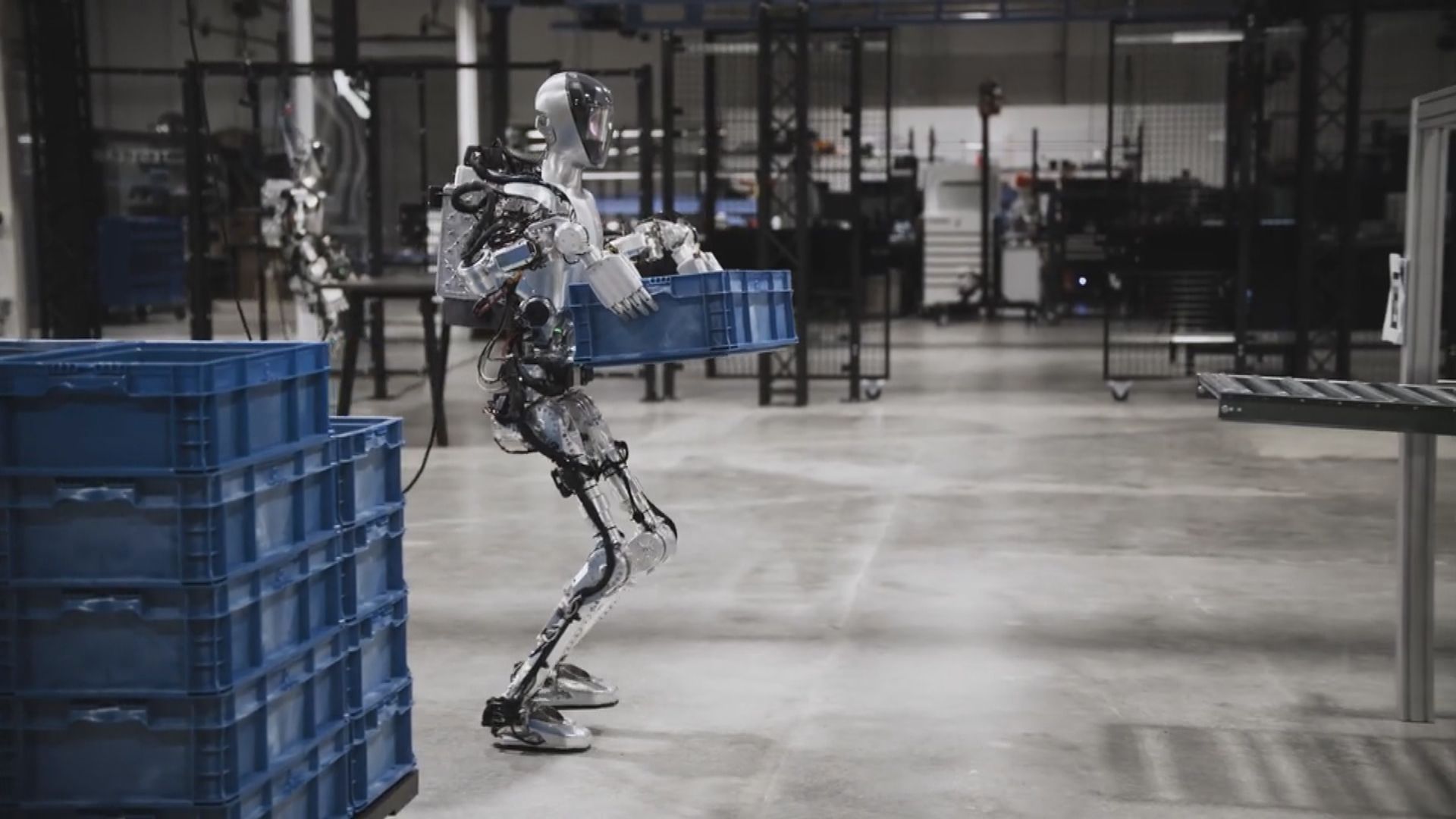
Her involvement in Agility Robotics (makers of the humanoid “Digit”) represents a full-circle moment — the PR2’s research spirit reborn in a commercially viable bipedal form. Digit’s design reflects Willow’s legacy of modularity, human-safe operation, and ROS-native control, bridging research and enterprise.
4. Aaron Edsinger — Hello Robot
Edsinger co-founded Hello Robot, whose mobile manipulator “Stretch” brings the PR2 philosophy into the home. Compact, lightweight, and ROS-compatible, Stretch continues Willow Garage’s vision of accessible, human-assistive robotics.
Its architecture — software-driven, extensible, and focused on usability — shows how Willow’s ideals of democratization persist even outside industrial robotics.
5. Morgan Quigley, Eric Berger, and the Academic Web
These alumni became influential academic figures, teaching at universities where new humanoid frameworks are being born. Quigley’s continued work on robot software abstraction, for instance, underpins humanoid perception stacks used in universities and startups alike.
In essence, Willow’s alumni didn’t just found companies — they built the intellectual infrastructure for a generation of roboticists.
From PR2 to Humanoids: Technology Evolution
The PR2 wasn’t a humanoid in the strict sense — it rolled on wheels rather than walked on legs. Yet, its manipulation capabilities, sensor fusion, and autonomy architecture became direct ancestors of today’s humanoid systems.
Let’s examine how key PR2-era innovations evolved into humanoid robotics technologies:
- Modular Actuation → Dynamic Bipedal Control
PR2’s modular joints paved the way for current-generation actuator packages in humanoids like Figure 01 and Digit. By standardizing torque feedback and joint synchronization, PR2 laid the groundwork for smooth human-like movement. - Vision and Perception → Spatial Awareness in Humanoids
Willow’s investment in 3D camera systems and SLAM (Simultaneous Localization and Mapping) now manifests in humanoids capable of recognizing obstacles, reading environments, and navigating indoor spaces autonomously. - Human-Robot Interaction (HRI)
Early experiments with gesture recognition and voice commands at Willow Garage were precursors to today’s emotional and behavioral AI layers, seen in humanoids designed for social interaction, healthcare, and education. - Open-Source Robotics Stack → Scalable Ecosystems
Perhaps the greatest legacy is ROS’s plug-and-play architecture, which allows humanoid developers to integrate perception, motion planning, and reinforcement learning systems from different vendors — without reinventing the wheel.
The Philosophy: Collaboration Over Competition
Willow Garage’s alumni share more than just technical DNA; they share a philosophy that contrasts sharply with the secrecy of Big Tech. Their approach emphasizes:
- Open innovation: Sharing frameworks rather than guarding them behind corporate walls.
- Interdisciplinary teamwork: Blending AI, mechanical design, and psychology to create robots that feel natural to humans.
- Community before product: Building ecosystems before monetizing them.
This ethos has rippled through every corner of humanoid robotics. It’s why startups like Figure AI openly integrate ROS-based tools, why Tesla’s Optimus uses a ROS-like software layer for modularity, and why OpenAI collaborates with robotics firms instead of competing with them.
In short, Willow Garage turned robotics from a race into a collaborative movement.
The Present Landscape: Alumni Influence Across the Globe
The Willow Garage diaspora now occupies leadership roles across academia, industry, and policy. Their shared experiences have defined three distinct paths shaping humanoid development today:
- Industrial Integration – Robots like Agility’s Digit and Figure 01 embody the practical side of Willow’s vision: humanoids as reliable coworkers.
- Assistive Robotics – Hello Robot and other home-service initiatives channel PR2’s humanitarian focus into personal assistance.
- AI Collaboration – Former Willow alumni now influence the intersection of AI and robotics, ensuring humanoids learn, adapt, and empathize.
Even outside the robotics community, companies developing exoskeletons, surgical robots, and mobile manipulators rely on ROS-based architectures—directly tracing their lineage back to Willow Garage.
The Future: From Ideology to Infrastructure
As humanoid robotics enters a commercial era, the Willow Garage philosophy is evolving from a culture of research to a culture of infrastructure.
Modern humanoid companies no longer start from scratch — they begin with frameworks, datasets, and open-source tools that Willow’s alumni helped pioneer. ROS 2, Gazebo, MoveIt, and other tools enable rapid prototyping of humanoid gait, perception, and manipulation behaviors.
Yet the alumni community continues to warn against over-commercialization. Their collective belief remains that robotics must serve humanity first, prioritizing safety, accessibility, and collaboration over dominance or novelty.
In a sense, Willow Garage’s spirit now functions as the moral compass of humanoid robotics — ensuring that as machines become more humanlike, they also become more human-centered.
Conclusion: The Ghost in the Machine Lives On
Though Willow Garage closed over a decade ago, its influence pervades every humanoid robot walking today. Its alumni didn’t just engineer machines—they engineered a philosophy: openness, modularity, and humanity in robotics.
Every time a humanoid robot learns to grasp a cup, navigate a home, or respond to a person’s tone of voice, it is channeling a lineage that began in a converted garage on the California coast.
So when we ask whether Willow Garage alumni are shaping humanoid robotics today, the answer is not just yes — it’s continuously. They are the invisible architects of an industry that, ironically, no longer needs walls to innovate.