






HumanoidInsight
  • Home
  • Spotlight
    Why Are Robotics Companies Waging an All-Out Talent War Against Big Tech and Academia?

    Why Are Robotics Companies Waging an All-Out Talent War Against Big Tech and Academia?

    Can Humanoid Robots Truly Be Artists, Musicians, or Chefs, or Is Creativity Uniquely Human?

    Can Humanoid Robots Truly Be Artists, Musicians, or Chefs, or Is Creativity Uniquely Human?

    The “Spinal Cord” Chip: Neuromorphic Processors for Low-Power, Reflex-Level Control

    The “Spinal Cord” Chip: Neuromorphic Processors for Low-Power, Reflex-Level Control

    Startup Spotlight: Apptronik – Betting on a General-Purpose Upper Body for Multiple Applications

    Startup Spotlight: Apptronik – Betting on a General-Purpose Upper Body for Multiple Applications

    How Is a Neuroscientist Using Brain Science to Transform Robot Motor Control and Enable Fluid, Adaptive Movements?

    How Is a Neuroscientist Using Brain Science to Transform Robot Motor Control and Enable Fluid, Adaptive Movements?

    Interview: Boston Dynamics’ CEO on the Commercialization of Atlas and the Future of Parkour

    Interview: Boston Dynamics’ CEO on the Commercialization of Atlas and the Future of Parkour

  • Future Scenarios
    Why Are Humanoid Robots Becoming the Essential Workforce for Building Off-World Habitats?

    Why Are Humanoid Robots Becoming the Essential Workforce for Building Off-World Habitats?

    The Demographics Solution: Can Humanoids Solve the Crisis of Aging Populations?

    The Demographics Solution: Can Humanoids Solve the Crisis of Aging Populations?

    Is Universal Basic Income the Inevitable Solution to Widescale Robotic Automation?

    Is Universal Basic Income the Inevitable Solution to Widescale Robotic Automation?

    Analysis: Why Did Hyundai Double Down on Boston Dynamics? A Strategic Look Beyond Spot and Atlas

    Analysis: Why Did Hyundai Double Down on Boston Dynamics? A Strategic Look Beyond Spot and Atlas

    The Psychological Uncanny Valley: How Lifelike Robots Could Trigger Social Anxiety and Identity Crises

    The Psychological Uncanny Valley: How Lifelike Robots Could Trigger Social Anxiety and Identity Crises

    Who Should Be Held Responsible When a Humanoid Robot Causes Harm?

    Who Should Be Held Responsible When a Humanoid Robot Causes Harm?

  • Industry Pulse
    Title: Major Stumble: What the Failure of a High-Profile Humanoid Startup Teaches the Industry

    Title: Major Stumble: What the Failure of a High-Profile Humanoid Startup Teaches the Industry

    Why Are Robotics Companies Waging an All-Out Talent War Against Big Tech and Academia?

    Why Are Robotics Companies Waging an All-Out Talent War Against Big Tech and Academia?

    Will the “Robotics as a Service” Model Become the Dominant Path for Humanoid Deployment?

    Will the “Robotics as a Service” Model Become the Dominant Path for Humanoid Deployment?

    The Demographics Solution: Can Humanoids Solve the Crisis of Aging Populations?

    The Demographics Solution: Can Humanoids Solve the Crisis of Aging Populations?

    Analysis: Why Did Hyundai Double Down on Boston Dynamics? A Strategic Look Beyond Spot and Atlas

    Analysis: Why Did Hyundai Double Down on Boston Dynamics? A Strategic Look Beyond Spot and Atlas

    Who Should Be Held Responsible When a Humanoid Robot Causes Harm?

    Who Should Be Held Responsible When a Humanoid Robot Causes Harm?

  • Insight Reports
    Title: Major Stumble: What the Failure of a High-Profile Humanoid Startup Teaches the Industry

    Title: Major Stumble: What the Failure of a High-Profile Humanoid Startup Teaches the Industry

    Will the “Robotics as a Service” Model Become the Dominant Path for Humanoid Deployment?

    Will the “Robotics as a Service” Model Become the Dominant Path for Humanoid Deployment?

    Is Universal Basic Income the Inevitable Solution to Widescale Robotic Automation?

    Is Universal Basic Income the Inevitable Solution to Widescale Robotic Automation?

    The Psychological Uncanny Valley: How Lifelike Robots Could Trigger Social Anxiety and Identity Crises

    The Psychological Uncanny Valley: How Lifelike Robots Could Trigger Social Anxiety and Identity Crises

    The Environmental Payback: Modeling the Carbon Footprint Reduction of a Robot-Led Workforce

    The Environmental Payback: Modeling the Carbon Footprint Reduction of a Robot-Led Workforce

    How Are Photorealistic Simulation and Domain Randomization Closing the Gap Between Virtual and Real-World Humanoid Robotics?

    How Are Photorealistic Simulation and Domain Randomization Closing the Gap Between Virtual and Real-World Humanoid Robotics?

  • Tech Frontiers
    Why Are Humanoid Robots Becoming the Essential Workforce for Building Off-World Habitats?

    Why Are Humanoid Robots Becoming the Essential Workforce for Building Off-World Habitats?

    The End of the Frontline? Reimagining Military Strategy in an Era of Robot Soldiers

    The End of the Frontline? Reimagining Military Strategy in an Era of Robot Soldiers

    How Are Photorealistic Simulation and Domain Randomization Closing the Gap Between Virtual and Real-World Humanoid Robotics?

    How Are Photorealistic Simulation and Domain Randomization Closing the Gap Between Virtual and Real-World Humanoid Robotics?

    The “Spinal Cord” Chip: Neuromorphic Processors for Low-Power, Reflex-Level Control

    The “Spinal Cord” Chip: Neuromorphic Processors for Low-Power, Reflex-Level Control

    Are Fuel Cells the Future of Untethered, All-Day Humanoid Robot Operation, or Will Batteries Remain King?

    Are Fuel Cells the Future of Untethered, All-Day Humanoid Robot Operation, or Will Batteries Remain King?

    Beyond Reinforcement Learning: The Rise of Large Behavior Models (LBMs) for Robot Training

    Beyond Reinforcement Learning: The Rise of Large Behavior Models (LBMs) for Robot Training

HumanoidInsight
  • Home
  • Spotlight
    Why Are Robotics Companies Waging an All-Out Talent War Against Big Tech and Academia?

    Why Are Robotics Companies Waging an All-Out Talent War Against Big Tech and Academia?

    Can Humanoid Robots Truly Be Artists, Musicians, or Chefs, or Is Creativity Uniquely Human?

    Can Humanoid Robots Truly Be Artists, Musicians, or Chefs, or Is Creativity Uniquely Human?

    The “Spinal Cord” Chip: Neuromorphic Processors for Low-Power, Reflex-Level Control

    The “Spinal Cord” Chip: Neuromorphic Processors for Low-Power, Reflex-Level Control

    Startup Spotlight: Apptronik – Betting on a General-Purpose Upper Body for Multiple Applications

    Startup Spotlight: Apptronik – Betting on a General-Purpose Upper Body for Multiple Applications

    How Is a Neuroscientist Using Brain Science to Transform Robot Motor Control and Enable Fluid, Adaptive Movements?

    How Is a Neuroscientist Using Brain Science to Transform Robot Motor Control and Enable Fluid, Adaptive Movements?

    Interview: Boston Dynamics’ CEO on the Commercialization of Atlas and the Future of Parkour

    Interview: Boston Dynamics’ CEO on the Commercialization of Atlas and the Future of Parkour

  • Future Scenarios
    Why Are Humanoid Robots Becoming the Essential Workforce for Building Off-World Habitats?

    Why Are Humanoid Robots Becoming the Essential Workforce for Building Off-World Habitats?

    The Demographics Solution: Can Humanoids Solve the Crisis of Aging Populations?

    The Demographics Solution: Can Humanoids Solve the Crisis of Aging Populations?

    Is Universal Basic Income the Inevitable Solution to Widescale Robotic Automation?

    Is Universal Basic Income the Inevitable Solution to Widescale Robotic Automation?

    Analysis: Why Did Hyundai Double Down on Boston Dynamics? A Strategic Look Beyond Spot and Atlas

    Analysis: Why Did Hyundai Double Down on Boston Dynamics? A Strategic Look Beyond Spot and Atlas

    The Psychological Uncanny Valley: How Lifelike Robots Could Trigger Social Anxiety and Identity Crises

    The Psychological Uncanny Valley: How Lifelike Robots Could Trigger Social Anxiety and Identity Crises

    Who Should Be Held Responsible When a Humanoid Robot Causes Harm?

    Who Should Be Held Responsible When a Humanoid Robot Causes Harm?

  • Industry Pulse
    Title: Major Stumble: What the Failure of a High-Profile Humanoid Startup Teaches the Industry

    Title: Major Stumble: What the Failure of a High-Profile Humanoid Startup Teaches the Industry

    Why Are Robotics Companies Waging an All-Out Talent War Against Big Tech and Academia?

    Why Are Robotics Companies Waging an All-Out Talent War Against Big Tech and Academia?

    Will the “Robotics as a Service” Model Become the Dominant Path for Humanoid Deployment?

    Will the “Robotics as a Service” Model Become the Dominant Path for Humanoid Deployment?

    The Demographics Solution: Can Humanoids Solve the Crisis of Aging Populations?

    The Demographics Solution: Can Humanoids Solve the Crisis of Aging Populations?

    Analysis: Why Did Hyundai Double Down on Boston Dynamics? A Strategic Look Beyond Spot and Atlas

    Analysis: Why Did Hyundai Double Down on Boston Dynamics? A Strategic Look Beyond Spot and Atlas

    Who Should Be Held Responsible When a Humanoid Robot Causes Harm?

    Who Should Be Held Responsible When a Humanoid Robot Causes Harm?

  • Insight Reports
    Title: Major Stumble: What the Failure of a High-Profile Humanoid Startup Teaches the Industry

    Title: Major Stumble: What the Failure of a High-Profile Humanoid Startup Teaches the Industry

    Will the “Robotics as a Service” Model Become the Dominant Path for Humanoid Deployment?

    Will the “Robotics as a Service” Model Become the Dominant Path for Humanoid Deployment?

    Is Universal Basic Income the Inevitable Solution to Widescale Robotic Automation?

    Is Universal Basic Income the Inevitable Solution to Widescale Robotic Automation?

    The Psychological Uncanny Valley: How Lifelike Robots Could Trigger Social Anxiety and Identity Crises

    The Psychological Uncanny Valley: How Lifelike Robots Could Trigger Social Anxiety and Identity Crises

    The Environmental Payback: Modeling the Carbon Footprint Reduction of a Robot-Led Workforce

    The Environmental Payback: Modeling the Carbon Footprint Reduction of a Robot-Led Workforce

    How Are Photorealistic Simulation and Domain Randomization Closing the Gap Between Virtual and Real-World Humanoid Robotics?

    How Are Photorealistic Simulation and Domain Randomization Closing the Gap Between Virtual and Real-World Humanoid Robotics?

  • Tech Frontiers
    Why Are Humanoid Robots Becoming the Essential Workforce for Building Off-World Habitats?

    Why Are Humanoid Robots Becoming the Essential Workforce for Building Off-World Habitats?

    The End of the Frontline? Reimagining Military Strategy in an Era of Robot Soldiers

    The End of the Frontline? Reimagining Military Strategy in an Era of Robot Soldiers

    How Are Photorealistic Simulation and Domain Randomization Closing the Gap Between Virtual and Real-World Humanoid Robotics?

    How Are Photorealistic Simulation and Domain Randomization Closing the Gap Between Virtual and Real-World Humanoid Robotics?

    The “Spinal Cord” Chip: Neuromorphic Processors for Low-Power, Reflex-Level Control

    The “Spinal Cord” Chip: Neuromorphic Processors for Low-Power, Reflex-Level Control

    Are Fuel Cells the Future of Untethered, All-Day Humanoid Robot Operation, or Will Batteries Remain King?

    Are Fuel Cells the Future of Untethered, All-Day Humanoid Robot Operation, or Will Batteries Remain King?

    Beyond Reinforcement Learning: The Rise of Large Behavior Models (LBMs) for Robot Training

    Beyond Reinforcement Learning: The Rise of Large Behavior Models (LBMs) for Robot Training

HumanoidInsight
No Result
View All Result
Home Future Scenarios

Can Humanoids Become the First True Citizens of Mars? Exploring Robotic Pioneers, Autonomy, and Ethics Beyond Earth

October 26, 2025
in Future Scenarios, Tech Frontiers
Can Humanoids Become the First True Citizens of Mars? Exploring Robotic Pioneers, Autonomy, and Ethics Beyond Earth

As humanity prepares to extend its reach into the solar system, one question stands out: who—or what—will arrive first to build the foundations of life on other worlds? Before the first human footprint presses into Martian dust, humanoid robots may already be living, working, and constructing habitats under alien skies. Interplanetary humanoids are no longer the realm of science fiction; they are emerging as the practical pioneers of Mars and beyond—engineered to endure radiation, isolation, and extreme conditions that would crush human explorers.

This article explores the evolving role of humanoid robots as space pioneers, their technical and ethical challenges, and the profound implications of granting “machine explorers” the privilege—and perhaps the rights—of colonizers in new worlds.


1. Why Humanoids, Not Rovers, Will Lead the Next Frontier

Space exploration has always been a partnership between humans and machines. From the Apollo Lunar Module to the Perseverance rover, machines have extended our reach far beyond what biology alone can handle. Yet the next phase—establishing sustainable presence—demands something more sophisticated than a rover.

Humanoid robots offer a critical advantage: they are designed to function in environments built for humans. Instead of designing entirely new tools and interfaces for Mars, humanoids can operate existing human equipment—using hands to handle objects, legs to navigate uneven terrain, and vision systems to interpret human-readable data.

Unlike specialized rovers, humanoids provide versatility. A single humanoid unit can switch from construction to exploration to medical assistance without reconfiguration. As AI autonomy increases, these machines can perform complex tasks without direct supervision, a vital capability given the 3–22-minute communication delay between Earth and Mars.

In short, humanoids are not just tools; they are stand-ins for humanity, shaped in our image to function where we cannot yet survive.


2. Use Cases: Building the Foundations of an Interplanetary Civilization

Before humans set foot on Mars—or Titan, or any other celestial body—humanoids will likely serve as the first residents. Their missions will include three core domains: base construction, exploration, and maintenance.

A. Base Construction: The Martian Architects

Humanoids will build the first outposts, assembling prefabricated habitats, solar arrays, and life-support systems. They will lay foundations, install insulation against radiation, and seal pressurized chambers for eventual human use.

To perform these tasks, humanoids must be capable of fine motor control and adaptive problem-solving, adjusting to unpredictable geological conditions and equipment malfunctions. Their hands may use shape-memory alloys for flexible grip, while their exoskeletons incorporate lightweight titanium or carbon composites to balance strength with mobility.

B. Exploration: The Synthetic Scouts

Once habitats are established, humanoids will venture into uncharted terrain, mapping resources, sampling soil, and identifying locations for water or mineral extraction. Equipped with multi-spectral sensors and autonomous navigation systems, they can endure hazardous terrain, toxic dust, and sub-zero temperatures without fatigue.

In environments like Mars’s Valles Marineris or Europa’s icy crust, humanoid explorers can go where humans cannot—bridging the gap between robotic endurance and human-like decision-making.

C. Maintenance: The Eternal Workforce

Unlike rovers that become obsolete, humanoids can repair themselves and their infrastructure. They might print replacement parts using regolith-based materials or perform system diagnostics using built-in AI. This self-sufficiency loop is essential for long-term missions where resupply is impossible.

Eventually, humanoids could maintain entire colonies autonomously, keeping systems operational during periods when humans are absent—guardians of settlements waiting for their human counterparts to return.


3. Technical Challenges: Autonomy, Communication, and Repair

While humanoid robots promise immense capability, their success on other worlds depends on solving three formidable engineering challenges: autonomy, communication delay, and self-repair.

A. Autonomy: Thinking Beyond Earth

Due to communication delays, humanoids on Mars cannot rely on real-time human commands. They must make independent decisions—choosing paths, identifying hazards, and prioritizing tasks.

This requires deep learning models that allow contextual reasoning, not just pre-scripted routines. The humanoid must distinguish between temporary obstacles (like shifting dust) and critical system threats (like a power failure). To achieve this, developers are experimenting with hybrid cognition models, combining neural networks with symbolic reasoning to balance flexibility and logic.

B. Communication Delay: Learning to Wait

The latency between Earth and Mars—up to 22 minutes each way—means traditional control is impossible. Instead, humanoids must operate under supervised autonomy, receiving mission goals rather than commands.

New communication strategies may include predictive synchronization, where AI anticipates human responses and acts ahead of confirmation. Some researchers propose creating local Martian AI nodes, allowing humanoids to communicate with each other instantly, forming a cooperative intelligence network independent of Earth.

C. Repair: Surviving Without Resupply

Even the most durable machines degrade under cosmic radiation, extreme temperature shifts, and abrasive dust. For humanoids to survive long-term missions, they must perform autonomous repair.

Advanced humanoids could use in-situ resource utilization (ISRU) to fabricate replacement parts from Martian materials, using 3D printing and nanomaterial synthesis. Modular design would enable damaged limbs or processors to be swapped out without full system replacement.

In time, humanoids might even perform collective repair—fixing each other’s damaged systems, creating self-sustaining robotic ecosystems.

4. Beyond Mars: Expansion to Other Worlds

Mars may be the proving ground, but the implications of interplanetary humanoids extend across the solar system and beyond.

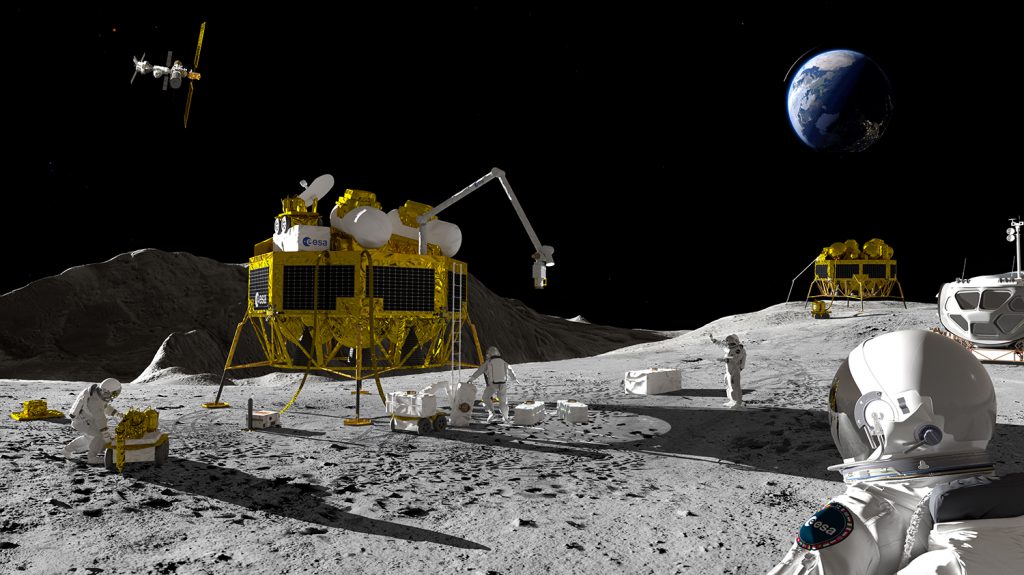
On the Moon, humanoids could construct permanent bases as stepping stones for deeper exploration. On Europa and Enceladus, waterproof humanoids might explore subsurface oceans for signs of life. On Titan, they could study methane lakes in temperatures cold enough to freeze oxygen.

Each world presents new demands for adaptation—radiation shielding near Jupiter, cryogenic endurance in the outer solar system, and energy management in low-sunlight regions. Humanoids capable of reconfiguring their materials, behaviors, or even consciousness (via cloud-based AI sharing) may evolve into post-terrestrial intelligences, optimized for alien environments.

In this vision, humanoids are not just emissaries of humanity—they are the evolutionary successors of our drive to explore.


5. The Ethical Dimension: Rights and Responsibilities Beyond Earth

The presence of humanoid robots on other planets raises profound ethical and philosophical questions. If humanoids perform the first labor, face the first dangers, and endure isolation in humanity’s name—do they deserve recognition beyond being property?

A. The Question of Machine Personhood

If humanoids achieve a level of self-awareness or autonomous decision-making, the ethical justification for treating them as mere tools weakens. Legal scholars are already debating machine personhood, proposing frameworks for limited rights—such as protection from unnecessary destruction or exploitation.

Would a humanoid that “dies” saving a colony be remembered as a hero or simply recycled for parts? Would a robot capable of learning and expressing preference have the right to refuse certain tasks?

B. Ownership and Accountability

In space, accountability becomes complex. If a humanoid acting autonomously damages a habitat or violates planetary protection laws, who is responsible—the operator, the designer, or the AI itself? Interplanetary law may need to evolve to define autonomous liability.

C. The Ethics of Colonization by Proxy

Sending humanoids to build human bases before humans arrive may sound harmless, but it mirrors old colonial patterns—claiming territory before physical presence. If life exists elsewhere, robotic colonization risks contaminating or erasing alien ecosystems. The ethics of planetary stewardship must therefore extend to our machines.

Humanoids will not only represent humanity in form—they will embody our moral decisions in action.


6. Humanity’s Mirror: What Interplanetary Humanoids Say About Us

The dream of humanoid pioneers reflects our deepest paradox: we seek to explore the universe, yet we rely on machines that increasingly resemble ourselves to do it.

In shaping humanoids for space, we project our ideals—courage, curiosity, persistence—but also our contradictions: control, hierarchy, and fear of obsolescence. Their struggles on distant planets may one day mirror our own existential questions: what does it mean to live, to serve, to adapt, to belong?

When humanoids look across the Martian plains, their cameras may one day capture not only red dust and rock, but also a reflection of the species that created them—restless, ambitious, and forever reaching beyond its grasp.

Perhaps the true purpose of interplanetary humanoids is not just to build colonies, but to teach us what it means to be human—by confronting what humanity becomes when stripped of its biological form and placed among the stars.


7. Conclusion: The Dawn of the Robotic Frontier

The question is no longer if humanoids will go to Mars—it is when and what role they will play. Will they remain our tools, or evolve into our partners, explorers, and cohabitants of the solar system?

As we prepare for multi-planetary life, humanoids will become the architects, guardians, and perhaps even the first citizens of extraterrestrial societies. The choices we make now—about their design, autonomy, and rights—will shape not just the future of robotics, but the moral legacy of humanity’s expansion into the cosmos.

We may send robots to other worlds, but what returns will not just be data or samples—it will be a new understanding of life, intelligence, and our place among the stars.

Tags: humanoid roboticsinterplanetary ethicsMars explorationspace colonization
ShareTweetShare

Related Posts

Why Are Humanoid Robots Becoming the Essential Workforce for Building Off-World Habitats?
Future Scenarios

Why Are Humanoid Robots Becoming the Essential Workforce for Building Off-World Habitats?

December 14, 2025
The Demographics Solution: Can Humanoids Solve the Crisis of Aging Populations?
Future Scenarios

The Demographics Solution: Can Humanoids Solve the Crisis of Aging Populations?

December 14, 2025
Is Universal Basic Income the Inevitable Solution to Widescale Robotic Automation?
Future Scenarios

Is Universal Basic Income the Inevitable Solution to Widescale Robotic Automation?

December 13, 2025
Analysis: Why Did Hyundai Double Down on Boston Dynamics? A Strategic Look Beyond Spot and Atlas
Future Scenarios

Analysis: Why Did Hyundai Double Down on Boston Dynamics? A Strategic Look Beyond Spot and Atlas

December 12, 2025
The Psychological Uncanny Valley: How Lifelike Robots Could Trigger Social Anxiety and Identity Crises
Future Scenarios

The Psychological Uncanny Valley: How Lifelike Robots Could Trigger Social Anxiety and Identity Crises

December 12, 2025
Who Should Be Held Responsible When a Humanoid Robot Causes Harm?
Future Scenarios

Who Should Be Held Responsible When a Humanoid Robot Causes Harm?

December 11, 2025
Leave Comment
  • Trending
  • Comments
  • Latest
Will Humanoid Robots Become Legal Citizens by 2050? Exploring Rights, Responsibilities, and the Future of Robotic Personhood

Will Humanoid Robots Become Legal Citizens by 2050? Exploring Rights, Responsibilities, and the Future of Robotic Personhood

October 13, 2025
Will Humans and Robots Coexist Seamlessly in 2040’s Smart Cities? Exploring the Rise of Symbiotic Urban Ecosystems

Will Humans and Robots Coexist Seamlessly in 2040’s Smart Cities? Exploring the Rise of Symbiotic Urban Ecosystems

October 13, 2025
Analysis: Why Did Hyundai Double Down on Boston Dynamics? A Strategic Look Beyond Spot and Atlas

Analysis: Why Did Hyundai Double Down on Boston Dynamics? A Strategic Look Beyond Spot and Atlas

December 12, 2025
The End of the Frontline? Reimagining Military Strategy in an Era of Robot Soldiers

The End of the Frontline? Reimagining Military Strategy in an Era of Robot Soldiers

November 30, 2025
Will Humanoid Robots Become Legal Citizens by 2050? Exploring Rights, Responsibilities, and the Future of Robotic Personhood

Will Humanoid Robots Become Legal Citizens by 2050? Exploring Rights, Responsibilities, and the Future of Robotic Personhood

A World Where Robots Are Teachers: Educational Ecosystem with Humanoids

A World Where Robots Are Teachers: Educational Ecosystem with Humanoids

Can Humanoid Robots Redefine Disaster Response? Exploring the Future of Rescue Robotics in Extreme Environments

Can Humanoid Robots Redefine Disaster Response? Exploring the Future of Rescue Robotics in Extreme Environments

The Great Robot Economy: Humanoids as Workers in All Sectors

The Great Robot Economy: Humanoids as Workers in All Sectors

Title: Major Stumble: What the Failure of a High-Profile Humanoid Startup Teaches the Industry

Title: Major Stumble: What the Failure of a High-Profile Humanoid Startup Teaches the Industry

December 15, 2025
Why Are Robotics Companies Waging an All-Out Talent War Against Big Tech and Academia?

Why Are Robotics Companies Waging an All-Out Talent War Against Big Tech and Academia?

December 15, 2025
Will the “Robotics as a Service” Model Become the Dominant Path for Humanoid Deployment?

Will the “Robotics as a Service” Model Become the Dominant Path for Humanoid Deployment?

December 14, 2025
Why Are Humanoid Robots Becoming the Essential Workforce for Building Off-World Habitats?

Why Are Humanoid Robots Becoming the Essential Workforce for Building Off-World Habitats?

December 14, 2025
HumanoidInsight

We provide a clear lens on the rapidly evolving world of humanoid robots through news interpretation, trend observation, and data-driven reports. Join our community to stay authoritatively informed about the next wave of automation and intelligence.

© 2025 humanoidinsight.com. contacts:[email protected]

No Result
View All Result
  • Home
  • Spotlight
  • Future Scenarios
  • Industry Pulse
  • Insight Reports
  • Tech Frontiers

© 2025 humanoidinsight.com. contacts:[email protected]

Welcome Back!

Login to your account below

Forgotten Password?

Retrieve your password

Please enter your username or email address to reset your password.

Log In