










When the Hyundai Motor Group completed its $1.1 billion controlling acquisition of Boston Dynamics in 2021, the move was met with a mix of fascination and skepticism. On the surface, it seemed an odd pairing: a conservative, global automotive and industrial behemoth from South Korea acquiring a flashy, bleeding-edge American robotics company famed for viral videos of backflipping robots. However, as Hyundai has steadily increased its stake and begun integrating Boston Dynamics into its core strategy, the profound logic of the deal has come into sharp focus. This was not merely the purchase of a robotics company; it was a strategic bet on the very definition of “mobility” for the 21st century and the acquisition of a priceless technological and brand asset. Why did Hyundai double down, and what does this reveal about the future where cars, robots, and logistics converge?
Hyundai’s vision, articulated as “Progress for Humanity,” extends far beyond manufacturing and selling automobiles. It envisions a future of comprehensive mobility solutions—encompassing how people and goods move through air, land, sea, and within the intricate ecosystems of cities and factories. In this expansive framework, Boston Dynamics is not a side project; it is a central pillar. This analysis deconstructs the multifaceted strategy behind the acquisition, looking past the immediate products of Spot and Atlas to uncover the deeper synergies, brand calculus, and long-term financial logic that convinced one of the world’s largest industrial conglomerates to place a billion-dollar bet on the future of embodied AI.
Synergy with Automotive: The Convergence of Mobility Domains
The most direct alignment between Hyundai and Boston Dynamics lies in the foundational technologies of autonomy, sensing, and navigation. The acquisition is a masterstroke in vertical integration for the age of smart machines.
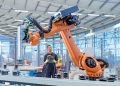
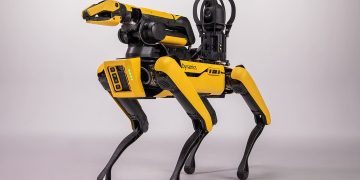
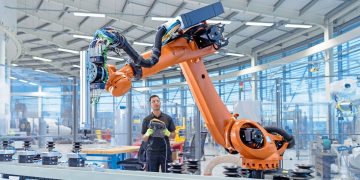
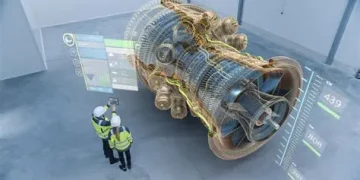
- Manufacturing Revolution: Hyundai’s core business is automotive manufacturing, a domain undergoing its own robotic transformation. Boston Dynamics’ expertise in dynamic mobility and dexterous manipulation is being directly applied to next-generation factory automation. The vision is for agile, mobile robots like Spot to perform quality inspections on assembly lines, navigate complex factory floors, and monitor infrastructure. More significantly, the advanced perception and control algorithms developed for Atlas are informing the development of more sophisticated, flexible robotic arms and autonomous guided vehicles (AGVs) within Hyundai’s own manufacturing division. This isn’t just about buying robots; it’s about insourcing the world’s most advanced robotics R&D to future-proof its entire production ecosystem.
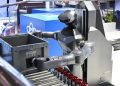
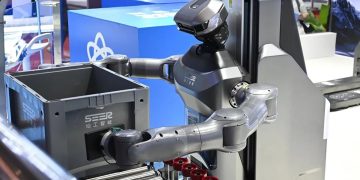
- Last-Mile and Logistics: The delivery of a vehicle is the end of the automotive value chain, but the movement of goods is a parallel mobility market. Here, Boston Dynamics’ technology offers a direct path. Spot can be deployed for warehouse inventory management, while the concepts underpinning humanoid research point toward a future where Hyundai could deploy robots for the final physical hand-off of packages in urban environments, integrating with its autonomous vehicle platforms. This creates a seamless “container-to-doorstep” logistics chain, from autonomous trucks to delivery robots, all under one corporate umbrella.
- Shared Technological Core: The technologies that allow a robot to perceive a cluttered room, map its environment, and navigate dynamically are first cousins to the technologies powering Hyundai’s autonomous driving ambitions. The sensor fusion, SLAM (Simultaneous Localization and Mapping), and path-planning algorithms developed by Boston Dynamics provide a non-automotive proving ground for core software that can be adapted and hardened for self-driving cars. This cross-pollination accelerates R&D across the entire group.
The “Meta” Value: Boston Dynamics as the Ultimate Brand and Technology Lighthouse
Beyond tangible product synergies, Hyundai acquired something less quantifiable but potentially more valuable: an unparalleled brand asset and a technological North Star.
- The Brand Flagship: In a competitive automotive landscape where brand perception is shifting towards technology and innovation, Boston Dynamics is a marketing powerhouse. It instantly rebrands Hyundai from a traditional carmaker to a leader at the absolute forefront of advanced technology. Every viral Atlas video, every deployment of Spot in an innovative setting, casts a halo of extreme competence and futurism over the entire Hyundai-Kia-Genesis group. This is invaluable for attracting top engineering talent, shaping investor perception, and appealing to a new generation of customers who value technological leadership.
- The Technology Lighthouse: Boston Dynamics serves as an advanced R&D lab whose breakthroughs trickle down across Hyundai’s diverse subsidiaries. Whether it’s new actuator designs, advanced control theory, or AI training methods, the insights gained from pushing the limits with Atlas inform everything from future vehicle chassis control systems to the development of advanced industrial and service robots across the conglomerate. It is a high-risk, high-reward research division that keeps the entire organization at the cutting edge, preventing technological stagnation.
- Shaping the Narrative: By controlling Boston Dynamics, Hyundai gains a powerful voice in shaping the global narrative around robotics. It can influence ethical frameworks, safety standards, and commercial applications from a position of strength and proven capability, rather than as a newcomer.

Financial Deep Dive: The Long-Game ROI
A superficial financial analysis might question the ROI on a $1.1 billion acquisition of a company with historically modest revenues. However, a deeper look reveals a strategic investment with multiple compounding return channels.
- Direct Revenue Streams: This is the most straightforward path. Commercializing Spot and, eventually, the next-generation commercial Atlas robot, will generate revenue. Hyundai’s global sales, service, and distribution network gives Boston Dynamics a commercial scale it previously lacked.
- Cost Avoidance and Internal Efficiency Gains: The value of applying Boston Dynamics’ automation expertise to Hyundai’s own manufacturing and logistics operations is immense. Gains in productivity, quality control, and worker safety translate directly to the bottom line across Hyundai’s global empire of factories. This internal value capture could alone justify the acquisition over time.
- IP Portfolio and Licensing Potential: Boston Dynamics holds a treasure trove of foundational patents in robotics. Hyundai can leverage this IP in cross-licensing deals, defend its own technological turf, and potentially license specific technologies to other companies, creating a high-margin revenue stream.
- Strategic Option Value: This is the most significant, if hardest to quantify, return. Hyundai has purchased a “strategic option” on the future of the multi-trillion-dollar physical automation market. Whether humanoids become ubiquitous in factories, homes, or disaster response, Hyundai now owns a leading player. The optionality—the right, but not the obligation, to dominate this future market—is an asset whose potential value dwarfs the initial acquisition cost.
Call to Action
Hyundai’s acquisition of Boston Dynamics was a visionary move that redefined the company’s trajectory. It was a declaration that the future of mobility is not confined to the road, but encompasses any environment where humans and goods need to move intelligently. The synergy is not just about putting robots in car factories; it’s about creating a unified technological stack for autonomy that spans from the highway to the hallway.
The deal demonstrates that in the new industrial competition, separating “auto OEMs” from “robotics companies” is an obsolete distinction. The winners will be those who master the integrated ecosystem of moving machines, whether they have four wheels, two legs, or tracks.
Hyundai is not alone in this realization. Automakers worldwide are grappling with the same disruptive forces and technological convergence. To understand the full competitive landscape, read our comparative analysis, “The Auto-Robotics Nexus: How Tesla, Toyota, BMW, and Others Are Betting on the Machine-Driven Future,” which breaks down the different strategic approaches being taken across the industry