







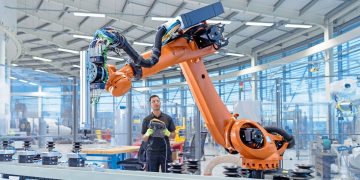
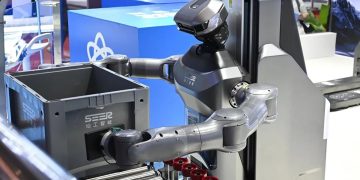

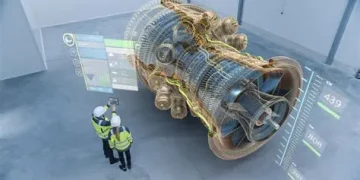




As humanoid robots and autonomous systems advance at unprecedented speed, the global debate over Universal Basic Income (UBI) is rapidly intensifying. What was once a speculative concept debated among futurists has become a practical policy question facing governments, economists, and social planners. The reason is simple: large-scale automation is no longer theoretical. Robotics is poised to transform manufacturing, logistics, food service, retail, transportation, and even certain white-collar sectors. With rising productivity comes rising anxiety: What happens to workers whose roles are automated? How many jobs will disappear, and how quickly? And perhaps most urgently—how do societies ensure income stability in a post-automation economy?
This report explores whether UBI is emerging as the most viable solution, examining economic models, global pilot programs, and alternative futures that challenge both pessimistic and optimistic narratives. Although opinions diverge sharply, the data increasingly suggests that UBI may shift from fringe policy to mainstream necessity.
Introduction: Revisiting the UBI Debate with Data on Projected Job Displacement
Automation is accelerating across multiple economic sectors, driven largely by advances in humanoid robotics, dexterous manipulation, generalizable motion planning, and multimodal AI. Projections from major economic institutions, think tanks, and consulting firms converge around a similar outcome: by 2035–2040, hundreds of millions of jobs globally may be transformed or rendered obsolete.
Key displacement trends include:
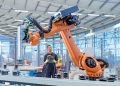
- Manufacturing: High-speed humanoids and robotic arms continue to reduce the need for repetitive manual labor.
- Logistics: Autonomous pickers, palletizers, and warehouse humanoids are already reducing staffing requirements in distribution centers.
- Retail and Service: Robots capable of inventory tracking, stocking, sanitation, and customer assistance are scaling rapidly.
- Transportation: The long-term trajectory of autonomous vehicles threatens driving-related occupations.
- Healthcare and Elder Care: Service humanoids could reduce demand for certain support roles, though fully replacing human care remains unlikely.
The central challenge lies not merely in job displacement but in job mismatch. Automation eliminates roles rapidly, while newly created jobs often require specialized training, digital literacy, or technical skills that displaced workers may not possess. Historically, labor markets have adapted over time, but the speed of this automation wave may overwhelm traditional retraining systems.
Against this backdrop, UBI is gaining traction as a structural policy capable of preserving social stability and mitigating inequality as automation scales.
Economic Models: How Could a Universal Basic Income Be Funded?
UBI is a simple idea: provide every citizen with a baseline income unconditionally. Implementing it at national scale, however, requires robust funding strategies. Several models have emerged, each with distinct implications for economic growth, tax burdens, and political feasibility.
1. Robot Taxes
Popularized by technology leaders and policymakers, robot taxes impose fees on companies based on:
- The number of robots deployed
- The level of labor displacement
- Productivity gains attributed to automation
Advantages:
- Directly links automation-driven productivity to social welfare.
- Provides an incentive for “responsible automation,” slowing reckless deployment.
Critics argue:
- Taxing robots may stifle innovation.
- The definition of a “robot” is ambiguous, especially with software-based automation.
- Productivity gains may fall if automation becomes artificially more expensive.
Robot taxes may be viable but require careful calibration to avoid distorting technological progress.
2. Sovereign Wealth Funds (SWFs)
Countries like Norway have demonstrated the power of national investment funds. An automation-era SWF could operate by:
- Taxing corporate profits from high automation companies
- Investing revenue in global markets
- Returning dividends to citizens as UBI
Advantages:
- Stabilizes income over long horizons.
- Reduces reliance on annual taxation.
Challenges:
- Requires a strong governance structure insulated from political cycles.
- Countries with smaller economies may struggle to scale such a fund.
3. Value-Added Automation Tariffs
Governments could levy small taxes on automated production outputs—similar to carbon pricing mechanisms.
Advantages:
- Shifts the burden to the point of value creation.
- Avoids the definitional challenges of robot taxes.
Potential downsides:
- Increases consumer prices if passed downstream.
- Politically sensitive in inflationary environments.
4. Income Redistribution via Progressive Taxation
A classic model: higher taxation on capital gains, automation-driven corporate profits, and high-income earners.
Advantages:
- Simple and established within existing tax infrastructure.
Disadvantages:
- Politically polarizing.
- May face resistance from capital-intensive industries at the heart of automation.
5. Hybrid Models
Most realistic UBI systems will blend multiple funding mechanisms to ensure sustainability and mitigate economic distortion. For large economies, hybrid structures may be the only way to achieve balance between innovation and equity.

Pilot Program Correlations: What Real-World Experiments Tell Us
UBI is no longer hypothetical. More than 50 pilot programs worldwide have generated meaningful data. While each differs in scale, structure, and demographics, several consistent patterns emerge.
Key Global Experiments
- Finland (2017–2018): Participants reported higher well-being, lower stress, and slightly higher labor participation.
- Stockton, USA: Guaranteed income increased job retention, accelerated job search outcomes, and reduced financial instability.
- Kenya (ongoing): One of the longest-running UBI trials shows improvements in long-term planning, entrepreneurship, and health.
- South Korea (provincial pilots): Youth-focused UBI increased local economic activity and reduced financial distress.
- Japan (micro-pilots): Early robotics-heavy communities show UBI as beneficial for supporting elderly and underemployed workers.
What the Data Suggests
- UBI does not significantly reduce employment motivation.
Contrary to early fears, most participants continue working and often pursue better jobs or training. - Financial stability improves across indicators.
Reduced debt, improved mental health, and increased resilience during crises are common outcomes. - Local economies benefit.
A substantial portion of UBI spending remains within local communities, driving demand for services. - Long-term impacts are amplified when automation displaces labor quickly.
Regions adopting high levels of robotics show stronger correlations between UBI and social stability.
While pilot programs cannot fully reflect national-scale dynamics, they provide encouraging evidence that UBI may enhance—not inhibit—economic participation.
Alternative Futures: Is UBI the Only Answer, or Will a Creative Economy Emerge?
While UBI is often cast as the inevitable solution to automation-driven displacement, alternative pathways exist. Some futurists argue that technological progress may unleash a new era of human creativity, entrepreneurship, and self-directed labor.
1. The Creative Economy Hypothesis
As routine work declines, humans may shift toward:
- Creative arts and digital content
- Personal coaching and specialized services
- Niche manufacturing and craft industries
- Community-building and local enterprise
- Online micro-businesses supported by automation tools
In this scenario, automation enhances productivity while humans expand into areas robots cannot easily replicate: storytelling, emotional intelligence, high-level strategy, and cross-cultural communication.
However, this future assumes broad digital skills, affordable tools, and cultural shifts. It also assumes that creative markets can absorb millions of displaced workers, which is uncertain.
2. Just-in-Time Training Ecosystems
Governments and companies may dramatically accelerate training pipelines using:
- AI tutors
- Skill certification through micro-learning
- Workforce-automation matching algorithms
This model envisions highly fluid career transitions. Yet retraining is historically difficult for older workers and may not fully offset displacement speed.
3. AI-Augmented Labor Markets
Some analysts believe humanoids will collaborate with humans rather than replace them. Roles may evolve into supervisory, creative, or integrative positions. As robots perform physical tasks, humans focus on design, customization, and high-level oversight.
This model is promising but depends heavily on industry behavior and policy incentives.
4. Partial Basic Income or Negative Income Tax
Not full UBI, but targeted income supplementation to stabilize lower-income workers while retaining incentives.
While attractive to some policymakers, partial models may be insufficient during extreme automation waves.
The Likely Reality
Future economies may blend several of these trajectories. Yet based on current projections, UBI appears to be the most comprehensive structural solution for mitigating widespread displacement while enabling alternative futures to flourish.
Call to Action
Automation will reshape global labor markets at a pace few societies are prepared for. To understand the impact on your specific region, explore our interactive model comparing projected job displacement, automation adoption rates, and UBI funding requirements for countries around the world.