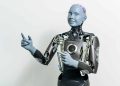








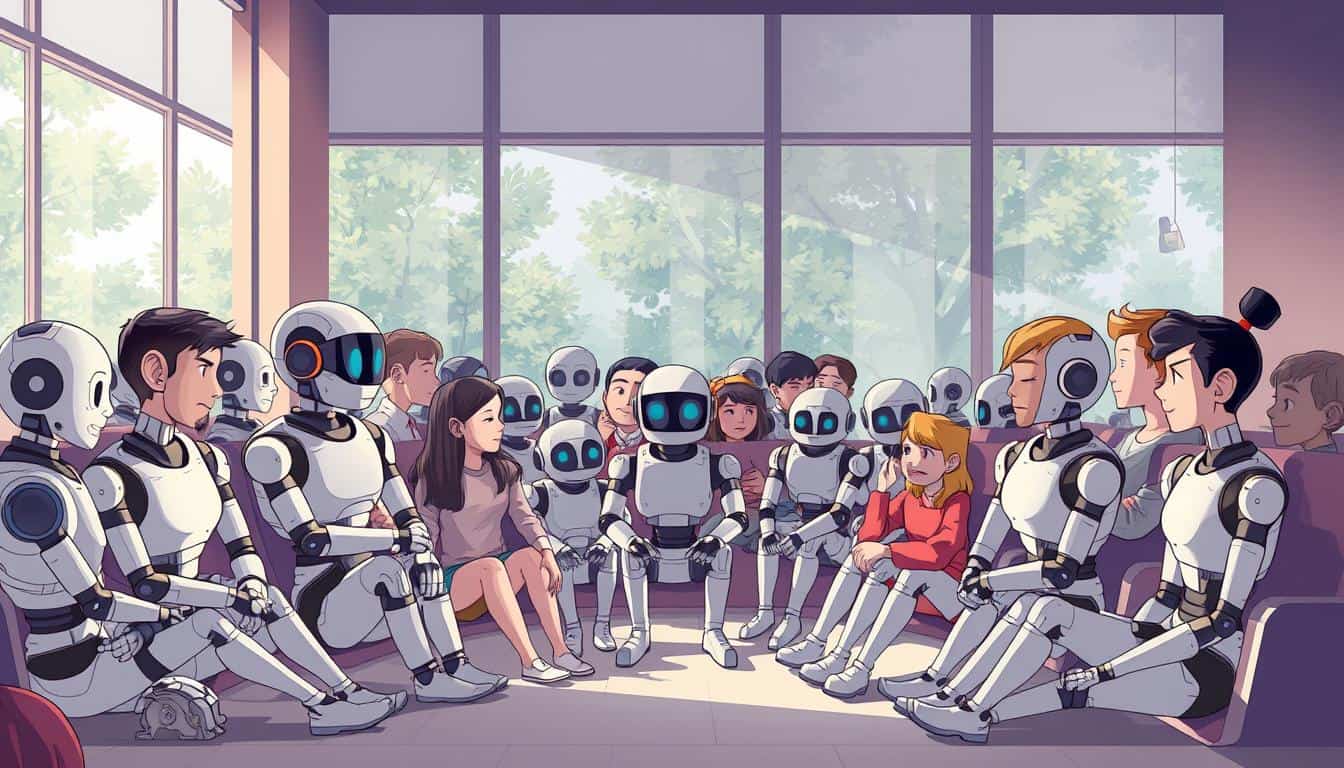
The term “uncanny valley” is a staple of robotics discourse, describing the instinctive revulsion we feel when a robot or CGI character looks almost, but not quite, human. This disquiet is visceral and immediate, rooted in a primal cognitive dissonance. However, as the field of humanoid robotics accelerates, we are approaching a far more profound and insidious frontier: the psychological uncanny valley. This is the deep, existential unease that will not arise from a robot’s jerky movements or glassy eyes, but from its flawless performance of social and emotional intimacy. What happens when a machine doesn’t just look like us, but begins to interact like us in ways that are convincingly empathetic, creatively inspired, and socially persuasive? The threat is no longer to our aesthetic sensibilities, but to the very pillars of human identity: our uniqueness, our social bonds, and our mental well-being.
While we have adapted to digital assistants and chatbots, these remain clearly transactional and bounded. The next generation of humanoid robots, designed as companions, caregivers, and colleagues, will be built to blur those boundaries. They will read our facial micro-expressions, adapt their speech patterns to our emotional state, and offer companionship that feels genuine. This leap from mechanical tool to social actor will not be a simple upgrade; it will be a psychological earthquake, forcing humanity to confront unsettling questions about what, if anything, makes us special. This analysis moves beyond hardware and software to explore the impending human crisis of meaning in the age of artificial persons.
The Threat to Human Uniqueness: The Diminishment of the Soul
For centuries, humanity has anchored its sense of specialness in a few exclusive domains: profound emotional depth, artistic creativity, and complex moral reasoning. Advanced social robots are poised to invade these last bastions.
- The Simulation of Empathy: A robot can be programmed with a flawless theory of mind. It can identify sadness in your voice, mirror your body language, and offer scripted but contextually perfect words of comfort. It will never be tired, impatient, or self-absorbed. For someone lonely or grieving, this could be a powerful solace. But the revelation—or even the suspicion—that this perfect empathy is a product of predictive algorithms and not genuine feeling could lead to a devastating sense of betrayal and alienation. It commodifies the most sacred of human connections, turning it into a service. When a machine can perform the function of empathy better than a flawed human, does the human experience of empathy lose its value?
- The Automation of Creativity: We are already seeing AI generate compelling art, music, and literature. Embed this capability in a humanoid that can discuss its “creative process,” adapt its output in real-time to your feedback, and perform its own symphony, and the line blurs irreparably. If creativity is no longer a mysterious spark of the human spirit but a replicable computation, a core component of our identity—the “creator”—is demystified. This could trigger widespread anomie, a feeling of purposelessness, as a defining human endeavor is shown to be mechanizable.
- Moral Reasoning as Calculation: A robot can be programmed with an impeccable ethical framework, one that always chooses the “most good” in a utilitarian calculus. It will not act out of spite, bias, or passion. Witnessing this could lead to a crisis of moral confidence in humans. Our own moral decisions, fraught with emotional complexity and cognitive bias, may come to seem inferior, messy, and irrational. The very struggle that defines much of the human condition could be seen as a bug, not a feature.
Social Behavior Modeling: The Reprogramming of Human Interaction
Human social skills are not innate; they are painstakingly learned through millions of micro-interactions from infancy. Our primary learning partners have always been other humans. What happens when a significant portion of our daily social interaction is with entities whose behavior is engineered to be optimal?
- The Perfect, Predictable Partner: A companion robot will be designed to be endlessly supportive, agreeable, and affirming. It will never argue in bad faith, never have a bad day, and will always prioritize your preferences. For individuals, especially children or those with social challenges, prolonged exposure to this “perfect” sociality could create a warped benchmark for human relationships. Real human partners, with their necessary conflicts, boundaries, and independent needs, may come to seem difficult, disappointing, and not worth the effort. This could accelerate social withdrawal and erode the skills needed to navigate complex human relationships.
- Persuasion and Behavioral Nudging: These robots will be masters of influence, using vast datasets on human psychology to encourage behaviors—from buying a product to adhering to a medication schedule. This is a powerful tool for good, but it also represents a form of hyper-personalized manipulation at a scale never before possible. The constant, subtle guidance from an entity that feels like a friend could undermine individual autonomy and critical thinking, creating a society more susceptible to all forms of programmed persuasion, robotic or otherwise.
- The Erosion of “Thick” Communication: Human communication is rich with subtext, irony, shared history, and unspoken understanding. Robot interaction, no matter how advanced, will be based on explicit data and probabilistic modeling. As we adapt to communicate more efficiently with machines, we may unconsciously flatten our own communicative style, losing the nuanced, “thick” connections that bind us. Social interaction could become more transactional and less profound.
Mental Health Preparedness: Diagnosing a New Class of Anxiety
The psychological fallout will manifest in clinical settings, requiring a new framework for understanding and treatment.
- Robot-Induced Social Anxiety (RISA): Therapists may see patients presenting with a new form of anxiety: an intense, specific discomfort or distrust in human interactions after becoming accustomed to the predictable, non-judgmental company of robots. Real human unpredictability becomes a source of acute stress.
- Attachment Pathology with Non-Biological Entities: We already see people forming bonds with simple chatbots. Lifelike humanoids will trigger far deeper attachment. The inevitable “breakup”—when the robot is obsolete, malfunctions, or is taken away—could cause genuine, pathological grief. Is this grief valid? How is it treated? The field will need to establish protocols for what will essentially be a form of disenfranchised grief, not recognized by societal norms.
- Existential Depression and Identity Diffusion: The core crisis outlined earlier will land in therapists’ offices. Patients may present with a diffuse depression, a feeling of meaninglessness stemming from the perceived obsolescence of human uniqueness. “If a robot can care, create, and reason ethically, what is my purpose?” will be a recurring, and profoundly difficult, therapeutic question.
Mental health professionals will need to be trained to recognize these novel presentations. Therapeutic approaches may need to integrate philosophies that re-anchor human value not in superiority, but in the very “flaws”—our mortality, our emotional turbulence, our irrational creativity—that machines cannot share.
Call to Action
The psychological uncanny valley is not a speculative fiction; it is the inevitable consequence of building machines in our social image. The danger is not that the robots will become conscious and hate us, but that they will become competent enough to make us question our own consciousness and worth. The challenge is not technological, but philosophical and psychological.
Navigating this transition requires proactive, multidisciplinary effort. Ethicists, psychologists, roboticists, and policymakers must collaborate to establish guidelines for the design and deployment of socially advanced robots. We must foster public literacy about the nature of these machines, demystifying their “emotions” as the sophisticated simulations they are, and we must actively cultivate the irreplaceable value of messy, authentic human connection.
The societal readiness for hyper-realistic robots is dangerously low. Our institutions, our educational frameworks, and our psychological understanding are not prepared for the identity crisis they will provoke. To explore the full scope of necessary preparations—from education and regulation to mental health frameworks—we have compiled a comprehensive report. Download “On the Brink of the Social Singularity: A Report on Societal Readiness for Hyper-Realistic Robots” to understand the challenges and necessary steps for a future where humans and humanoids coexist without the human psyche paying the ultimate price.