










In the high-stakes world of robotics and advanced technology, public demonstrations have become more than a marketing tool—they are increasingly shaping the flow of investment and the direction of innovation. From dazzling CES showcases to specialized robotics conferences like IROS, these events serve as stages where companies signal technological capabilities, attract capital, and test market interest. But do these public displays genuinely catalyze funding, or are they primarily hype generators with fleeting impact? This article examines the mechanisms through which demonstrations influence investment, analyzes historical data, and explores the future of hype-driven innovation cycles.
The Role of Public Demonstrations in Technology Adoption
Public demonstrations are critical for translating abstract technology into tangible experiences. Investors, journalists, and potential partners can see prototypes in action, understand capabilities, and gauge feasibility. In robotics, where real-world performance is difficult to convey through slides or press releases, live showcases provide a powerful validation signal.
- Visibility: Demonstrations put startups and established firms on the radar of high-net-worth investors, venture capitalists, and corporate R&D divisions. A well-executed demonstration can generate global media coverage, amplifying reach beyond the attendees.
- Credibility: Seeing a robot perform complex tasks reduces skepticism, especially when the technology claims are ambitious or unprecedented. Demonstrations serve as proof points, mitigating perceived risk.
- Networking and Partnerships: Beyond capital, events enable collaborations, supply chain partnerships, and recruitment, all of which indirectly support innovation funding.
Impact of Expos and Conferences
Large-scale events like CES (Consumer Electronics Show) and IROS (International Conference on Intelligent Robots and Systems) have become arenas where technology meets finance. Companies strategically time product unveilings or live demos to maximize investor attention and media amplification.
- CES: Known for showcasing consumer-facing technologies, CES is particularly influential in driving venture capital towards robotics startups with market-ready products. Historical data shows that companies demonstrating humanoid robots or autonomous devices at CES often experience funding spikes in the following six to twelve months.
- IROS: More technical and research-focused, IROS serves as a bridge between academic innovation and commercialization. Funding agencies, corporate R&D teams, and deep-tech investors frequently scout for high-potential prototypes, identifying ventures worth incubating or acquiring.
- Other Regional Expos: Events in Asia and Europe, such as RoboBusiness Europe and RoboDEX in Japan, highlight regional innovation ecosystems. Demonstrations at these events can accelerate investment into geographically strategic hubs, influencing global capital flows.

Media Influence on Investment Patterns
Media coverage amplifies the effect of public demonstrations. A single viral video of a robot performing an impressive task can trigger investor interest worldwide. Quantitative studies show a correlation between media attention and subsequent funding rounds, suggesting that publicity is often as important as the underlying technology.
- Investor Perception: Coverage in top-tier technology outlets can legitimize startups in the eyes of potential backers, reducing perceived technical risk.
- Hype Cycles: Public demonstrations contribute to the well-documented hype-to-reality cycles, where heightened expectations temporarily inflate valuations and attract capital, sometimes ahead of actual technological maturity.
- Crowd Influence: Smaller investors and crowdfunding campaigns also benefit from the visibility generated by media, broadening the financial base for early-stage robotics ventures.
Spotlight: CES and IROS Showcases
To illustrate, consider a few high-profile cases:
- Tesla Bot (Optimus) Reveal at CES: The public unveiling of Tesla’s humanoid prototype sparked significant media attention and a surge in retail and venture interest, despite skepticism about immediate deployment. The demonstration served as a capital magnet, accelerating pre-orders, investor inquiries, and partnerships.
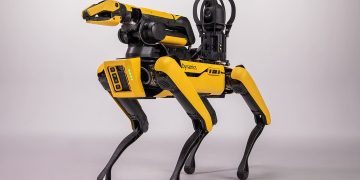
- Boston Dynamics Demonstrations at IROS: Showcasing Atlas and Spot robots in real-world tasks increased corporate and governmental contracts. The technical rigor of these demos reassured investors of feasibility, directly influencing follow-on investment rounds and collaborations with research institutions.
- SoftBank Robotics Pepper Presentations: Consumer-focused interactions, combined with live demonstrations of AI-driven social robots, attracted both corporate clients and VC interest in Europe and Asia, highlighting the dual role of product and public engagement in funding acceleration.
Quantitative Analysis of Funding Post-Events
Studies tracking venture capital activity in robotics suggest that investment surges often follow major expos, typically within 3–9 months. Key observations include:
- Early-Stage Startups: Small companies benefit disproportionately, as visibility is scarce outside these venues. Demonstrations can increase funding probability by up to 30–40% compared with startups that skip such events.
- Series A and B Rounds: Mid-stage companies often see valuation boosts and faster deal closure after successful demos, particularly when combined with strong media coverage.
- Sector-Specific Effects: Consumer robotics, AI-assisted automation, and humanoid robotics experience the most pronounced investment spikes, while purely industrial hardware sees more measured responses.
Predicting Hype-Driven Innovation Cycles
While public demonstrations are undeniably influential, they can also distort expectations. The robotics industry is susceptible to hype cycles, where funding inflows outpace actual technological readiness. Considerations include:
- Short-Term Capital Surges vs. Long-Term Development: Public demos may drive immediate investment but do not guarantee successful product deployment or market adoption.
- Investor Education: Overemphasis on spectacle can overshadow nuanced technical limitations, leading to misaligned capital allocation.
- Cycle Management: Experienced investors and incubators increasingly incorporate technical audits alongside demo observations to temper hype with realistic feasibility assessments.
Despite these risks, demonstrations remain a powerful mechanism to catalyze funding, especially when complemented by transparent technical disclosure and post-demo follow-ups.
Conclusion: The Future of Demo-Driven Funding
Public demonstrations in robotics operate at the intersection of technology, finance, and media. They provide tangible proof of concept, attract investor attention, and create narrative momentum. While hype can sometimes inflate expectations, careful planning, credible demonstrations, and strategic media engagement can convert public visibility into substantial investment inflows.
As the humanoid and AI robotics industry matures, we can expect demonstrations to evolve beyond spectacle, incorporating metrics, live analytics, and interactive investor engagement. Companies that master this balance between showmanship and transparency are likely to capture both capital and credibility, driving innovation cycles and shaping the trajectory of next-generation robotics.
In essence, public demonstrations are no longer just a showcase—they are a strategic funding engine, accelerating the commercialization of robotics and influencing the broader ecosystem for years to come.