






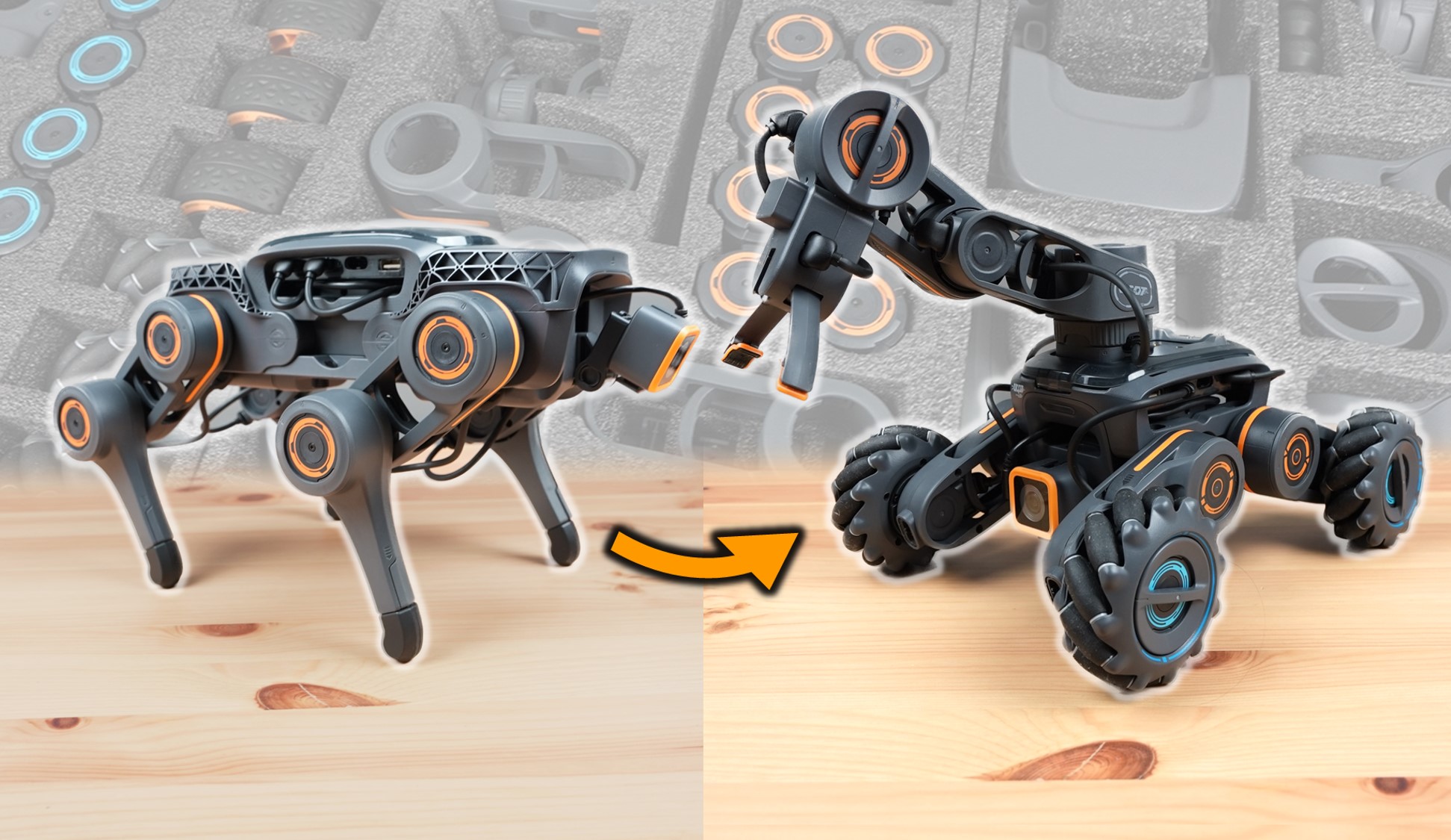
The current paradigm in humanoid robotics mirrors that of the early automotive industry: manufacturers produce a limited set of complete, fixed models, and consumers choose from available options. But a transformative shift is on the horizon, driven by the principles of modularity. Imagine a future where you don’t just buy a robot; you build it—assembling a unique entity from interchangeable components tailored to your specific needs, aesthetics, and even personality preferences. This vision of modular robotics promises to shatter the one-size-fits-all model, ushering in an era of deeply personalized machines. This article explores the rise of modular humanoid architectures, features insights from developers pioneering reconfigurable systems, examines the vast potential for functional and personality customization, analyzes early market response, and envisions a future of truly tailor-made companions.
Rise of Modular Humanoid Architectures
The foundation of personal customization is a hardware and software architecture designed for flexibility from the ground up. The monolithic robot is giving way to the concept of a “platform.”
Hardware as a Kit of Parts: Instead of a permanently fused skeleton, modular humanoids are built around a standardized structural framework with universal attachment points. Key subsystems become swappable modules:
- Actuator Cartridges: A user could choose between high-speed actuators for a nimble assistant, high-torque modules for heavy lifting, or ultra-quiet, compliant actuators for a bedroom companion.
- Sensor Suites: Interchangeable “perception packs” could be slotted in. A base model might have standard stereo vision, while a premium pack adds high-resolution LiDAR for precise navigation or thermal sensing for monitoring well-being.
- Battery Packs: Users could select between a lightweight, standard-capacity battery for short tasks or a heavier, long-life pack for all-day operation.
- End Effectors: The hands are the most expressive modules. A user could have a powerful, two-fingered gripper for tools, a dexterous five-fingered hand for delicate tasks, and a specialized hand with integrated touchscreens or scientific instruments.
The Software Backbone: The “Robot OS”
None of this hardware flexibility is possible without a robust operating system designed for heterogeneity. A modular Robot OS must:
- Automatically Recognize Hardware: When a new arm or sensor is attached, the OS must instantly identify it, download the necessary drivers, and integrate its capabilities into the robot’s overall skill set.
- Manage Resource Allocation: The OS must intelligently manage power, compute, and data flow between different modules, ensuring that adding a power-hungry component doesn’t cripple the rest of the system.
- Abstract Complexity: The user interface for this customization must be simple, perhaps using an AR app that lets users “drag and drop” virtual modules onto their robot, with the OS handling the underlying technical complexity.
Developer Interviews: Reconfigurable Robotics
We spoke with Dr. Ben Carter, CTO of “Kyntics,” a startup building one of the first commercially viable modular humanoid platforms.
On the Engineering Philosophy:
“We rejected the idea of a ‘perfect’ general-purpose robot because it’s a myth. A robot that’s great at lifting boxes will be terrible at threading a needle. So, we asked, why not let the user define the purpose? Our core innovation isn’t a specific actuator; it’s the universal dorsal bus—a spine-like backbone that provides power, data, and mechanical attachment for all modules. It’s the USB-C of robotics.”
On the “Hot-Swapping” Challenge:
“The holy grail is true hot-swapping—changing a hand while the robot is still on. We’re not there yet safely. But we’ve achieved ‘warm-swapping.’ The robot can enter a safe mode in 30 seconds, you swap the module, and it’s fully operational again in under a minute. The software is key; it runs integrity checks on the new module and recalibrates the entire kinematic model automatically.”
On the Democratization of Robotics:
“This isn’t just for consumers. It’s for developers and researchers. A university lab can buy one base platform and ten different specialized modules for the price of two specialized robots. It massively lowers the barrier to entry for robotics innovation. We’re building a platform, not just a product.”
Customization in Function and Personality
Modularity unlocks a spectrum of customization that extends from raw capability to the very essence of the robot’s character.
Functional Customization: The “Toolbox” Robot
A user can configure their robot for specific roles:
- The Home Handyman Bot: Equipped with a tool-gripper hand, a high-torque arm, and a laser measurement module.
- The Culinary Assistant: Featuring hygienic, easy-clean surfaces, precise weighing scales in the hands, and a recipe database integrated into its OS.
- The Mobility Companion: Built with a stable, wide-stance base, a supportive arm with a gentle grip, and fall-detection sensors.
Personality and Aesthetic Customization: The “Soul” of the Machine
This is where modularity becomes revolutionary. Personality is no longer just software-deep.
- Voice and Speech Modules: Users could purchase voice packs from their favorite actors or celebrities, or select a tone—soothing, energetic, scholarly—that they find most comforting.
- Aesthetic Shells and “Skins”: The robot’s physical exterior could be changed as easily as a phone case. A user might have a sleek, professional shell for weekdays and a colorful, expressive one for the weekend.
- The “Behavior Core” Module: This is the heart of personality. A user could install a “Nurturing Caregiver” core, a “Productive Taskmaster” core, or a “Curious Explorer” core. Each would fundamentally alter how the robot interprets commands, initiates interactions, and expresses itself non-verbally. Swapping the Behavior Core would be like giving the robot a new “brain,” fundamentally changing its relationship with the user.
Market Response and User Behavior
Early pilot programs and consumer surveys reveal how people respond to the power of customization.
The “IKEA Effect” in Robotics: Data from limited beta tests shows a powerful psychological phenomenon: users who assemble their own robot from modules develop a significantly stronger attachment to it than those who receive a pre-built model. The act of creation fosters a sense of ownership and pride, making the robot feel less like an appliance and more like a personal project or companion.
The Emergence of Module Marketplaces: The most successful modular platforms will not be defined by their first-party modules, but by the ecosystem they create. We foresee the rise of digital marketplaces where third-party developers sell specialized modules:
- Niche Professional Tools: A company might sell a module for automotive diagnostics or soil analysis.
- Artist-Designed Shells: Limited-edition aesthetic covers could become collectibles.
- Open-Source Behavior Cores: A community of developers could create and share unique personality profiles.
The “Platform Lock-in” Dilemma: The risk, as with smartphones, is platform lock-in. A user’s investment in a collection of modules for one brand’s architecture makes it expensive to switch. This will place immense pressure on companies to create open or interoperable standards, lest they fragment the market and stifle the very innovation modularity seeks to unleash.
Future: Tailor-Made Companions
Looking ahead, modularity could lead to a level of personalization that makes today’s robots seem primitive.
The Subscription Model for Capability: Instead of buying a robot outright, users might subscribe to a “capability library.” Need to tile a bathroom? Subscribe to the “Tiling Module Pack” for a month. Planning a party? Subscribe to the “Entertainment and Bartending” pack. The robot becomes a fluid platform for temporary skills.
Biometric and Psychographic Integration: Future modular systems could integrate with personal biometric data. A “Wellness Module” could be configured to monitor a specific user’s vital signs and recognize their unique signs of stress or fatigue, adapting its behavior to provide proactive support.
The Truly Evolving Companion: With modularity, a robot is never “finished.” It can grow and evolve with its owner over a lifetime. The clumsy, playful robot companion of a child could be gradually upgraded and reconfigured into a studious tutor during their school years, a productivity assistant in their professional life, and a supportive caregiver in their old age. The bond formed with a machine that has physically and personality-wise “grown up” with you would be unprecedented.
Conclusion
Modular robotics represents a fundamental democratization of technology, shifting power from the manufacturer to the user. It acknowledges that our needs, environments, and personalities are not monolithic, and our tools should reflect that diversity. By enabling deep functional and personal customization, this approach has the potential to transform robots from impersonal utilities into deeply integrated and cherished partners in our daily lives.
The challenges—standardization, platform lock-in, and the sheer engineering complexity—are significant. But the vision is too powerful to ignore. The future of personal robotics may not lie in a single, perfect machine, but in a box of parts and a platform powerful enough to help us build the unique companion we’ve always wanted. In the end, the most personalized robot will be the one we have a hand in creating ourselves.