















The relentless pace of advancement in robotics and artificial intelligence presents a fundamental challenge to one of humanity’s oldest institutions: government. While engineers measure progress in months, governments often move in years or even decades. This growing disconnect between technological capability and regulatory capacity creates a dangerous vacuum—a wild west where innovation can outstrip oversight, and societal risks can escalate before policymakers even understand what is happening. The question is no longer if robots will transform society, but whether our governing structures can evolve quickly enough to manage that transformation. This article examines the inherent inertia of policy-making, compares global regulatory approaches, explores frameworks for safety and rights, analyzes the tension between innovation and protection, and forecasts what adaptive governance must look like in the coming robotic age.
Policy Inertia and Tech Disruption
The structure of modern government is fundamentally ill-suited to the pace of technological change. This inertia stems from several deeply embedded characteristics:
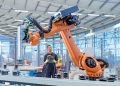
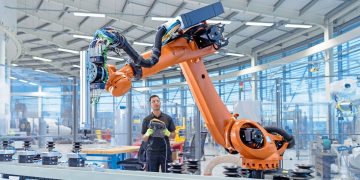
The Legislative Lag: The traditional legislative process is deliberative by design. A bill addressing a specific robotic technology might take 2-3 years to pass through committees, debates, and votes. By the time it becomes law, the technology it sought to regulate has likely evolved into something new and more complex. For instance, legislation drafted for industrial robot arms would be largely irrelevant for cloud-connected, learning-enabled humanoids.
Jurisdictional Confusion: Robotics straddles multiple traditional government domains. Is a delivery robot a transportation issue (Department of Transportation), a commerce issue (Department of Commerce), a privacy issue (FTC), or a workplace safety issue (OSHA)? This ambiguity leads to bureaucratic gridlock, where no single agency takes ownership, and crucial regulatory gaps remain unfilled.
The Expertise Deficit: The most talented AI and robotics experts are employed in the private sector at multiples of government salaries. This creates a profound knowledge asymmetry. Regulators often lack the technical depth to ask the right questions, let alone craft effective rules. They are perpetually playing catch-up, relying on outdated information and struggling to comprehend the capabilities and implications of the systems they are supposed to oversee.
Risk-Averse Culture: Governments are inherently risk-averse, prioritizing the prevention of harm. The tech industry, conversely, is built on a “move fast and break things” ethos. This cultural clash means that by the time a government feels it has sufficient data to act cautiously, the technology has already been deployed at scale, creating de facto standards and entrenched economic interests that are difficult to reverse.
Global Case Comparisons
Nations are taking starkly different approaches to this challenge, creating a global patchwork of regulation that reflects their unique political and cultural values.
The European Union: The Precautionary Regulator
The EU has established itself as the world’s most aggressive tech regulator with its AI Act. This comprehensive legislation takes a risk-based approach, classifying general-purpose humanoid robots as “high-risk.” This triggers stringent requirements for risk assessment, data governance, transparency, and human oversight. The EU’s model is “regulation-first,” prioritizing citizen safety and fundamental rights over unbridled innovation. While this provides clear guardrails, it risks stifling European robotics companies and ceding leadership to less-regulated regions.
The United States: The Sectoral Experimenter
The U.S. has rejected a comprehensive federal approach in favor of a fragmented, sector-specific model. Instead of a single robotics law, oversight is distributed across existing agencies. The FDA regulates surgical robots, the FAA oversees drones, and OSHA might handle workplace robots. The primary federal strategy has been to publish non-binding guidelines and fund research through bodies like NIST. This creates a more permissive environment for innovation but results in a confusing regulatory landscape and significant gaps, particularly for consumer and general-purpose robots. Leadership is expected to come from state governments, like California, which often act as policy laboratories.
China: The State-Directed Accelerator
China’s approach is the inverse of the EU’s. Regulation is designed not to restrain, but to strategically channel technological development in line with state objectives like social stability and industrial dominance. The government provides massive funding, designates pilot zones for rapid testing, and controls data flows. Regulations are agile and can be adapted quickly to support national champions like UBTECH. The focus is on integration and control, not precaution. This model can achieve breathtaking scale and speed but raises profound concerns about surveillance, citizen rights, and the use of robotics for social control.
Japan and South Korea: The Integration Facilitators
Facing acute demographic crises, Japan and South Korea view robots as essential solutions. Their governments act as facilitators, creating “robot-friendly” special zones, streamlining approvals, and actively promoting public acceptance. Their regulations emphasize safety and standardization but are crafted to encourage, not hinder, deployment, particularly in elder care and service industries. They are pioneering the social integration of robots, focusing on harmony and addressing specific societal needs.

Regulatory Frameworks for Safety and Rights
As robots become more autonomous, the regulatory focus must expand from physical safety to encompass more complex issues of rights and accountability.
1. A Layered Safety Framework:
- Functional Safety (ISO Standards): Ensuring the robot’s control systems can detect and manage failures without causing harm.
- Embodied AI Safety: New standards are needed for robots whose behavior is learned, not pre-programmed. This includes testing for “emergent” unsafe behaviors and ensuring robustness against adversarial attacks or unpredictable environments.
- Cybersecurity: A connected robot is a potential entry point for cyberattacks. Regulations must mandate built-in, updatable security protocols to prevent hijacking.
2. The Liability Labyrinth:
The question of “who is responsible when a robot causes harm?” requires a new legal framework. The emerging consensus points toward a three-layer liability model:
- Manufacturer Liability: For design and manufacturing defects.
- Operator Liability: For negligence in deployment, maintenance, or supervision.
- “Black Box” Liability Insurance: For harms caused by the robot’s own autonomous decisions, a mandatory insurance pool funded by manufacturers or operators would provide compensation, similar to car insurance.
3. The “Electronic Personhood” Debate:
For highly advanced autonomous systems, some jurisdictions are exploring a limited form of legal personhood. This is not about granting robots human rights, but about creating a legal entity that can hold assets (like insurance), be sued, and enter contracts. This would simplify the chain of accountability when a machine’s actions cannot be traced directly to a human programmer or user.
Balancing Innovation and Protection
The central dilemma for governments is navigating the tension between fostering economic growth and protecting citizens. The solution lies in moving from static, rigid regulation to dynamic, adaptive governance.
From Regulation to Regulation: The most promising model is the “regulatory sandbox.” In a sandbox, companies can test new robotic technologies in a real-world but controlled environment, with temporary exemptions from certain regulations and close supervision by regulators. This allows regulators to learn about the technology’s risks and benefits firsthand, enabling them to craft more informed and effective rules. It allows for innovation to proceed safely, under a watchful eye.
Performance-Based Standards: Instead of prescribing specific technical designs (e.g., “the robot must have a physical emergency stop button”), future-proof regulations should set performance-based outcomes (e.g., “the robot must be able to enter a safe state within 0.5 seconds of a failure being detected”). This gives companies flexibility in how they achieve safety goals and prevents regulations from becoming instantly obsolete.
Agile Governance and Continuous Monitoring: Governing robotics cannot be a one-time event. It requires ongoing monitoring, like the FAA’s continuous oversight of aviation. Regulatory bodies need permanent, technically skilled staff who can constantly assess the landscape, issue updates to standards, and engage in pre-emptive risk assessment.
Forecast: Adaptive Governance in a Robotic Age
The governments that thrive in the 21st century will be those that transform themselves from slow-moving bureaucracies into agile, learning organizations.
The Rise of the Specialist Agency: We will see the creation of new, specialized regulatory bodies with deep expertise in AI and robotics—a “Federal Robotics Commission” or a “Digital Regulation Authority.” These agencies will be staffed by a hybrid workforce of career civil servants and rotating industry experts.
Algorithmic Transparency and Auditing: Future regulations will mandate a level of transparency for critical AI systems. This won’t mean revealing proprietary source code, but could require “explainability” features—the ability for a robot to justify its actions in understandable terms—and independent algorithmic audits to check for bias, safety, and compliance with ethical guidelines.
Global Regulatory Harmonization: The existential risks of AI and advanced robotics—from autonomous weapons to economic destabilization—will eventually force a degree of international cooperation. While full harmonization is unlikely, we can forecast the emergence of minimum global safety and ethics standards, similar to those for civil aviation or nuclear non-proliferation, to prevent a destructive “race to the bottom.”
Conclusion
The gap between robotic evolution and government response is the defining governance challenge of our time. It is a race that governments are currently losing. However, this is not a foregone conclusion. By embracing regulatory sandboxes, shifting to outcome-based standards, investing in technical expertise, and fostering international cooperation, governments can transition from being perpetually surprised to being proactively prepared.
The goal cannot be to stop the robotic age, but to steer it. The governments that succeed will be those that learn to be as adaptive, intelligent, and responsive as the technologies they seek to govern. They must evolve from rigid gatekeepers into dynamic stewards, ensuring that the robotic revolution enhances human dignity, equity, and safety, rather than undermining it. The future of our societies depends on their ability to catch up.