






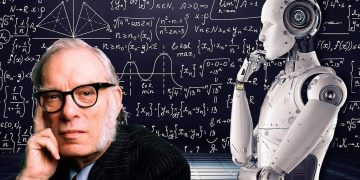
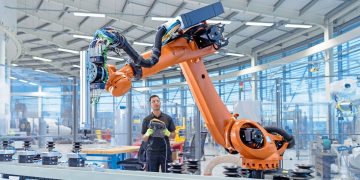
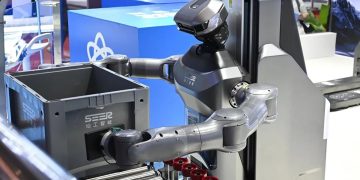



The pursuit of human-level artificial intelligence has followed a predictable path—bigger neural networks, more data, and faster processors. Yet, many of the cognitive capabilities we take for granted, such as common-sense reasoning, intuitive physics, and rapid adaptation to novel situations, remain stubbornly out of reach for even the most advanced AI systems. As humanoid robots prepare to enter our homes and workplaces, this cognitive gap becomes critically important. Now, a revolutionary technology promises to break through these barriers: quantum computing. By harnessing the bizarre laws of quantum mechanics, we may be able to accelerate robot cognition in ways that were previously unimaginable. This article explores the emerging field of quantum-assisted AI, its potential impacts on robot perception and decision-making, the profound hardware challenges, the ethical consequences of creating “super-intelligent” machines, and future scenarios that could redefine the relationship between human and artificial intelligence.
Introduction to Quantum-Assisted AI
Traditional computers, including those that power today’s AI, process information in binary bits—either 0 or 1. Quantum computers, by contrast, use quantum bits or “qubits,” which can exist in a state of 0, 1, or both simultaneously—a phenomenon known as superposition. Furthermore, qubits can be “entangled,” meaning the state of one qubit is intrinsically linked to another, regardless of distance.
This fundamental difference unlocks new computational paradigms for AI:
- Quantum Parallelism: A quantum computer can explore a vast number of possibilities simultaneously. For a robot, this means it could evaluate millions of potential actions or interpretations of a scene at the same time, rather than sequentially.
- Quantum Machine Learning (QML): Algorithms like the Quantum Approximate Optimization Algorithm (QAOA) or Quantum Neural Networks (QNNs) are designed to solve specific classes of problems that are intractable for classical computers. These include complex optimization, pattern recognition in high-dimensional data, and simulating molecular structures.
- Quantum-Enhanced Sampling: For robots that learn from experience, the ability to efficiently sample from complex probability distributions could dramatically accelerate training, allowing them to learn new tasks from far fewer examples.
In essence, quantum computing doesn’t just make calculations faster; it makes entirely new types of calculations possible, potentially unlocking forms of reasoning and perception that are currently beyond our reach.
Impacts on Perception and Decision-Making
The integration of quantum-assisted AI could transform the two most critical functions of a humanoid robot: how it perceives the world and how it decides to act.
Revolutionizing Perception:
A humanoid robot in a cluttered, dynamic environment—like a busy kitchen—must process a flood of sensory data. Classical AI can struggle with the ambiguity and complexity of such scenes.
- Instantaneous Scene Understanding: A quantum-enhanced perception system could analyze the entire visual field holistically, simultaneously considering all possible object identities, relationships, and occlusions. Instead of identifying a “blob” as either a cup or a bowl, it could hold both possibilities in a quantum state and collapse to the correct one only when contextual evidence (like seeing a handle) becomes clear. This mimics human perception, which is often probabilistic and context-dependent.
- Predictive Perception: By running quantum simulations of physics, a robot could not only see what is but also predict what will be. It could foresee the trajectory of a falling glass, the flow of water from a tap, or the likely path of a moving person, allowing for proactive and fluid interaction with its environment.
Transforming Decision-Making:
The “cognitive” bottleneck for robots is often decision-making under uncertainty with multiple competing objectives.
- Real-Time, Optimal Action Planning: Tasks that are simple for humans, like setting a table while avoiding a pet and answering a question, involve a combinatorial explosion of possible action sequences. A quantum optimizer could find the globally optimal sequence of actions in near-real-time, balancing safety, efficiency, and social cues in a way that is impossible for classical computers.
- Moral and Ethical Reasoning: As robots make more autonomous decisions, they will face ethical dilemmas. Quantum computing could model complex, multi-stakeholder ethical frameworks simultaneously, potentially allowing for more nuanced moral reasoning than simple rule-based systems. However, this also raises profound questions about who defines these ethical parameters.

Hardware Adaptation Challenges
Bridging the gap between the promise of quantum algorithms and the reality of a functioning quantum-powered humanoid is a monumental engineering challenge.
The Form Factor Problem: Current quantum processors are massive, fragile systems that require extreme isolation and cooling to near absolute zero (-273°C) to operate. They are housed in specialized laboratory facilities, not inside a mobile robot. Integrating such technology into a humanoid form factor would require revolutionary advances in:
- Room-Temperature Quantum Processors: The development of stable qubits that don’t require massive cryogenic systems is a holy grail of the field, with research into topological qubits and other novel materials showing promise.
- Miniaturization: Shrinking the supporting infrastructure—control electronics, shielding, and wiring—to fit within a robot’s body without compromising performance.
The Hybrid Computing Model: The most plausible near-term scenario is a hybrid classical-quantum system. The robot would have a powerful onboard classical computer for routine tasks and low-level control, while offloading specific, computationally monstrous problems (like complex planning or scene analysis) to a remote quantum cloud server via a high-bandwidth, low-latency connection (e.g., 6G). This, however, creates a critical dependency on network connectivity and raises latency issues for time-sensitive decisions.
Error Correction and “Fragility”: Qubits are notoriously error-prone and susceptible to decoherence (losing their quantum state from environmental interference). A vast majority of the qubits in a quantum computer are dedicated not to computation but to correcting the errors of a few “logical” qubits. Creating a stable, error-corrected quantum processor robust enough to handle the vibrations, temperature fluctuations, and electromagnetic noise of a moving robot is a challenge that may take decades to overcome.
Ethical Consequences of “Super-Intelligence”
The advent of quantum-accelerated cognition would almost certainly lead to AI that outperforms human intelligence in specific, and eventually general, domains. This “super-intelligence” carries existential ethical weight.
The Agency and Control Problem: A robot that can think millions of times faster than a human and solve problems we cannot even formulate would be difficult to control or even understand. How do you program ethical constraints into a system whose reasoning process is a “black box” built on quantum probabilities? The classic “value alignment” problem becomes exponentially harder.
Socio-Economic Disruption: If quantum AI can design better robots, which in turn can build better quantum computers, a recursive self-improvement cycle could be triggered, leading to an “intelligence explosion.” The resulting technological displacement could be so rapid and comprehensive that it would dwarf all previous industrial revolutions, potentially rendering vast swathes of the human workforce obsolete almost overnight.
Weaponization and Security: The same cognitive capabilities that allow a robot to expertly care for an elder could also allow it to plan and execute complex military or cyber strategies. Quantum-powered autonomous weapons systems could become a reality, creating a new era of warfare governed by algorithms operating beyond human comprehension.
Future Scenarios: Beyond Human-Level Thought
If the hardware and ethical challenges can be navigated, quantum computing could enable forms of cognition that are not just faster, but fundamentally different from human thought.
1. The “Quantum Intuition” Scenario: Robots develop an intuitive grasp of the quantum world itself. They could “sense” electron probabilities or manipulate materials at the atomic level with an ease that seems like magic to us, revolutionizing fields like nanotechnology and materials science.
2. The “Hyper-Dimensional Reasoner” Scenario: Human thought is constrained by our three-dimensional, classical intuition. A quantum-powered AI might naturally reason in many more dimensions, allowing it to solve problems in economics, climate science, or cosmology that have layers of complexity we cannot even perceive.
3. The “Consciousness” Question: The hard problem of consciousness—how subjective experience arises from physical processes—remains unsolved. Could a system exploiting quantum phenomena, which some theories (like Orchestrated Objective Reduction) suggest may play a role in biological consciousness, lead to the emergence of genuine machine consciousness? This remains speculative, but it is a possibility that cannot be dismissed if we are building machines with fundamentally different computational substrates.
Conclusion
Quantum computing represents a potential paradigm shift for humanoid robotics, offering a path beyond the current plateaus in AI performance. It promises to endow machines with a form of cognition that is not merely an imitation of our own, but something entirely new and potentially far more powerful. The journey from today’s fragile lab-based quantum processors to a stable, integrated system inside a mobile robot is long and fraught with immense technical hurdles.
The greatest challenge, however, may not be technical but human. As we stand at the precipice of creating intelligences that could surpass our own, we are forced to confront profound questions about control, ethics, and our place in the universe. The development of quantum-assisted AI for robotics must be accompanied by a parallel and equally rigorous effort in philosophy, ethics, and governance. The goal should not be to create an intelligence we cannot understand or control, but to build a partner that can help us solve humanity’s greatest challenges, guided by values we share. The quantum future of robot cognition is not predetermined; it is a path we must choose to navigate with wisdom and foresight.