
















HumanoidInsight
  • Home
  • Spotlight
    Why Are Robotics Companies Waging an All-Out Talent War Against Big Tech and Academia?

    Why Are Robotics Companies Waging an All-Out Talent War Against Big Tech and Academia?

    Can Humanoid Robots Truly Be Artists, Musicians, or Chefs, or Is Creativity Uniquely Human?

    Can Humanoid Robots Truly Be Artists, Musicians, or Chefs, or Is Creativity Uniquely Human?

    The “Spinal Cord” Chip: Neuromorphic Processors for Low-Power, Reflex-Level Control

    The “Spinal Cord” Chip: Neuromorphic Processors for Low-Power, Reflex-Level Control

    Startup Spotlight: Apptronik – Betting on a General-Purpose Upper Body for Multiple Applications

    Startup Spotlight: Apptronik – Betting on a General-Purpose Upper Body for Multiple Applications

    How Is a Neuroscientist Using Brain Science to Transform Robot Motor Control and Enable Fluid, Adaptive Movements?

    How Is a Neuroscientist Using Brain Science to Transform Robot Motor Control and Enable Fluid, Adaptive Movements?

    Interview: Boston Dynamics’ CEO on the Commercialization of Atlas and the Future of Parkour

    Interview: Boston Dynamics’ CEO on the Commercialization of Atlas and the Future of Parkour

  • Future Scenarios
    Why Are Humanoid Robots Becoming the Essential Workforce for Building Off-World Habitats?

    Why Are Humanoid Robots Becoming the Essential Workforce for Building Off-World Habitats?

    The Demographics Solution: Can Humanoids Solve the Crisis of Aging Populations?

    The Demographics Solution: Can Humanoids Solve the Crisis of Aging Populations?

    Is Universal Basic Income the Inevitable Solution to Widescale Robotic Automation?

    Is Universal Basic Income the Inevitable Solution to Widescale Robotic Automation?

    Analysis: Why Did Hyundai Double Down on Boston Dynamics? A Strategic Look Beyond Spot and Atlas

    Analysis: Why Did Hyundai Double Down on Boston Dynamics? A Strategic Look Beyond Spot and Atlas

    The Psychological Uncanny Valley: How Lifelike Robots Could Trigger Social Anxiety and Identity Crises

    The Psychological Uncanny Valley: How Lifelike Robots Could Trigger Social Anxiety and Identity Crises

    Who Should Be Held Responsible When a Humanoid Robot Causes Harm?

    Who Should Be Held Responsible When a Humanoid Robot Causes Harm?

  • Industry Pulse
    Title: Major Stumble: What the Failure of a High-Profile Humanoid Startup Teaches the Industry

    Title: Major Stumble: What the Failure of a High-Profile Humanoid Startup Teaches the Industry

    Why Are Robotics Companies Waging an All-Out Talent War Against Big Tech and Academia?

    Why Are Robotics Companies Waging an All-Out Talent War Against Big Tech and Academia?

    Will the “Robotics as a Service” Model Become the Dominant Path for Humanoid Deployment?

    Will the “Robotics as a Service” Model Become the Dominant Path for Humanoid Deployment?

    The Demographics Solution: Can Humanoids Solve the Crisis of Aging Populations?

    The Demographics Solution: Can Humanoids Solve the Crisis of Aging Populations?

    Analysis: Why Did Hyundai Double Down on Boston Dynamics? A Strategic Look Beyond Spot and Atlas

    Analysis: Why Did Hyundai Double Down on Boston Dynamics? A Strategic Look Beyond Spot and Atlas

    Who Should Be Held Responsible When a Humanoid Robot Causes Harm?

    Who Should Be Held Responsible When a Humanoid Robot Causes Harm?

  • Insight Reports
    Title: Major Stumble: What the Failure of a High-Profile Humanoid Startup Teaches the Industry

    Title: Major Stumble: What the Failure of a High-Profile Humanoid Startup Teaches the Industry

    Will the “Robotics as a Service” Model Become the Dominant Path for Humanoid Deployment?

    Will the “Robotics as a Service” Model Become the Dominant Path for Humanoid Deployment?

    Is Universal Basic Income the Inevitable Solution to Widescale Robotic Automation?

    Is Universal Basic Income the Inevitable Solution to Widescale Robotic Automation?

    The Psychological Uncanny Valley: How Lifelike Robots Could Trigger Social Anxiety and Identity Crises

    The Psychological Uncanny Valley: How Lifelike Robots Could Trigger Social Anxiety and Identity Crises

    The Environmental Payback: Modeling the Carbon Footprint Reduction of a Robot-Led Workforce

    The Environmental Payback: Modeling the Carbon Footprint Reduction of a Robot-Led Workforce

    How Are Photorealistic Simulation and Domain Randomization Closing the Gap Between Virtual and Real-World Humanoid Robotics?

    How Are Photorealistic Simulation and Domain Randomization Closing the Gap Between Virtual and Real-World Humanoid Robotics?

  • Tech Frontiers
    Why Are Humanoid Robots Becoming the Essential Workforce for Building Off-World Habitats?

    Why Are Humanoid Robots Becoming the Essential Workforce for Building Off-World Habitats?

    The End of the Frontline? Reimagining Military Strategy in an Era of Robot Soldiers

    The End of the Frontline? Reimagining Military Strategy in an Era of Robot Soldiers

    How Are Photorealistic Simulation and Domain Randomization Closing the Gap Between Virtual and Real-World Humanoid Robotics?

    How Are Photorealistic Simulation and Domain Randomization Closing the Gap Between Virtual and Real-World Humanoid Robotics?

    The “Spinal Cord” Chip: Neuromorphic Processors for Low-Power, Reflex-Level Control

    The “Spinal Cord” Chip: Neuromorphic Processors for Low-Power, Reflex-Level Control

    Are Fuel Cells the Future of Untethered, All-Day Humanoid Robot Operation, or Will Batteries Remain King?

    Are Fuel Cells the Future of Untethered, All-Day Humanoid Robot Operation, or Will Batteries Remain King?

    Beyond Reinforcement Learning: The Rise of Large Behavior Models (LBMs) for Robot Training

    Beyond Reinforcement Learning: The Rise of Large Behavior Models (LBMs) for Robot Training

HumanoidInsight
  • Home
  • Spotlight
    Why Are Robotics Companies Waging an All-Out Talent War Against Big Tech and Academia?

    Why Are Robotics Companies Waging an All-Out Talent War Against Big Tech and Academia?

    Can Humanoid Robots Truly Be Artists, Musicians, or Chefs, or Is Creativity Uniquely Human?

    Can Humanoid Robots Truly Be Artists, Musicians, or Chefs, or Is Creativity Uniquely Human?

    The “Spinal Cord” Chip: Neuromorphic Processors for Low-Power, Reflex-Level Control

    The “Spinal Cord” Chip: Neuromorphic Processors for Low-Power, Reflex-Level Control

    Startup Spotlight: Apptronik – Betting on a General-Purpose Upper Body for Multiple Applications

    Startup Spotlight: Apptronik – Betting on a General-Purpose Upper Body for Multiple Applications

    How Is a Neuroscientist Using Brain Science to Transform Robot Motor Control and Enable Fluid, Adaptive Movements?

    How Is a Neuroscientist Using Brain Science to Transform Robot Motor Control and Enable Fluid, Adaptive Movements?

    Interview: Boston Dynamics’ CEO on the Commercialization of Atlas and the Future of Parkour

    Interview: Boston Dynamics’ CEO on the Commercialization of Atlas and the Future of Parkour

  • Future Scenarios
    Why Are Humanoid Robots Becoming the Essential Workforce for Building Off-World Habitats?

    Why Are Humanoid Robots Becoming the Essential Workforce for Building Off-World Habitats?

    The Demographics Solution: Can Humanoids Solve the Crisis of Aging Populations?

    The Demographics Solution: Can Humanoids Solve the Crisis of Aging Populations?

    Is Universal Basic Income the Inevitable Solution to Widescale Robotic Automation?

    Is Universal Basic Income the Inevitable Solution to Widescale Robotic Automation?

    Analysis: Why Did Hyundai Double Down on Boston Dynamics? A Strategic Look Beyond Spot and Atlas

    Analysis: Why Did Hyundai Double Down on Boston Dynamics? A Strategic Look Beyond Spot and Atlas

    The Psychological Uncanny Valley: How Lifelike Robots Could Trigger Social Anxiety and Identity Crises

    The Psychological Uncanny Valley: How Lifelike Robots Could Trigger Social Anxiety and Identity Crises

    Who Should Be Held Responsible When a Humanoid Robot Causes Harm?

    Who Should Be Held Responsible When a Humanoid Robot Causes Harm?

  • Industry Pulse
    Title: Major Stumble: What the Failure of a High-Profile Humanoid Startup Teaches the Industry

    Title: Major Stumble: What the Failure of a High-Profile Humanoid Startup Teaches the Industry

    Why Are Robotics Companies Waging an All-Out Talent War Against Big Tech and Academia?

    Why Are Robotics Companies Waging an All-Out Talent War Against Big Tech and Academia?

    Will the “Robotics as a Service” Model Become the Dominant Path for Humanoid Deployment?

    Will the “Robotics as a Service” Model Become the Dominant Path for Humanoid Deployment?

    The Demographics Solution: Can Humanoids Solve the Crisis of Aging Populations?

    The Demographics Solution: Can Humanoids Solve the Crisis of Aging Populations?

    Analysis: Why Did Hyundai Double Down on Boston Dynamics? A Strategic Look Beyond Spot and Atlas

    Analysis: Why Did Hyundai Double Down on Boston Dynamics? A Strategic Look Beyond Spot and Atlas

    Who Should Be Held Responsible When a Humanoid Robot Causes Harm?

    Who Should Be Held Responsible When a Humanoid Robot Causes Harm?

  • Insight Reports
    Title: Major Stumble: What the Failure of a High-Profile Humanoid Startup Teaches the Industry

    Title: Major Stumble: What the Failure of a High-Profile Humanoid Startup Teaches the Industry

    Will the “Robotics as a Service” Model Become the Dominant Path for Humanoid Deployment?

    Will the “Robotics as a Service” Model Become the Dominant Path for Humanoid Deployment?

    Is Universal Basic Income the Inevitable Solution to Widescale Robotic Automation?

    Is Universal Basic Income the Inevitable Solution to Widescale Robotic Automation?

    The Psychological Uncanny Valley: How Lifelike Robots Could Trigger Social Anxiety and Identity Crises

    The Psychological Uncanny Valley: How Lifelike Robots Could Trigger Social Anxiety and Identity Crises

    The Environmental Payback: Modeling the Carbon Footprint Reduction of a Robot-Led Workforce

    The Environmental Payback: Modeling the Carbon Footprint Reduction of a Robot-Led Workforce

    How Are Photorealistic Simulation and Domain Randomization Closing the Gap Between Virtual and Real-World Humanoid Robotics?

    How Are Photorealistic Simulation and Domain Randomization Closing the Gap Between Virtual and Real-World Humanoid Robotics?

  • Tech Frontiers
    Why Are Humanoid Robots Becoming the Essential Workforce for Building Off-World Habitats?

    Why Are Humanoid Robots Becoming the Essential Workforce for Building Off-World Habitats?

    The End of the Frontline? Reimagining Military Strategy in an Era of Robot Soldiers

    The End of the Frontline? Reimagining Military Strategy in an Era of Robot Soldiers

    How Are Photorealistic Simulation and Domain Randomization Closing the Gap Between Virtual and Real-World Humanoid Robotics?

    How Are Photorealistic Simulation and Domain Randomization Closing the Gap Between Virtual and Real-World Humanoid Robotics?

    The “Spinal Cord” Chip: Neuromorphic Processors for Low-Power, Reflex-Level Control

    The “Spinal Cord” Chip: Neuromorphic Processors for Low-Power, Reflex-Level Control

    Are Fuel Cells the Future of Untethered, All-Day Humanoid Robot Operation, or Will Batteries Remain King?

    Are Fuel Cells the Future of Untethered, All-Day Humanoid Robot Operation, or Will Batteries Remain King?

    Beyond Reinforcement Learning: The Rise of Large Behavior Models (LBMs) for Robot Training

    Beyond Reinforcement Learning: The Rise of Large Behavior Models (LBMs) for Robot Training

HumanoidInsight
No Result
View All Result
Home Industry Pulse

Can Robots-as-a-Service Redefine How We Pay for Automation?

October 29, 2025
in Industry Pulse, Insight Reports
Can Robots-as-a-Service Redefine How We Pay for Automation?

The traditional approach to robotics — buying expensive machines outright and maintaining them in-house — is slowly giving way to a new model: Robots-as-a-Service (RaaS). This emerging business structure transforms robots from capital assets into subscription-based services, much like cloud computing transformed IT infrastructure. But is RaaS financially sustainable, technically feasible, and strategically sound? This article explores its foundations, real-world examples, and the financial implications shaping its adoption.


1) What Exactly Is “Robots-as-a-Service”?

At its core, RaaS is the subscription model for robotics. Instead of purchasing a robot for hundreds of thousands of dollars, a company leases it on a recurring basis — monthly, quarterly, or annually. The provider retains ownership, handles maintenance, and updates the software remotely.

Three dominant structures have emerged:

  1. Leasing models – Users pay a fixed rate for access to hardware and support.
  2. Subscription models – Similar to SaaS (Software-as-a-Service), combining hardware, software, and analytics under a predictable fee.
  3. Outcome-based models – Users pay based on measurable results, such as tasks completed, items picked, or hours operated.

Each model aligns robotic automation with operational flexibility, allowing organizations to scale up or down as needed without massive capital expenditures.


2) Why RaaS Is Gaining Ground Now

The rise of RaaS is not accidental. Several converging forces have made it economically viable:

  • Falling hardware costs — Modular actuators, cheaper sensors, and efficient batteries reduce production expenses.
  • Cloud-based management — Remote diagnostics, AI analytics, and OTA (over-the-air) updates allow seamless fleet optimization.
  • AI integration — Smarter software means fewer human operators per robot.
  • Economic uncertainty — Companies seek flexibility to avoid long-term asset commitments during volatile cycles.

In essence, RaaS represents the servitization of robotics — converting one-time sales into recurring revenue streams, while enabling customers to access advanced automation with lower risk.


3) Financial Dynamics: Cash Flow and Risk Distribution

RaaS flips the traditional cash flow equation for both parties.

For Providers:

  • Pros: Steady, predictable income; deeper customer relationships; data collection for performance insights.
  • Cons: High upfront manufacturing costs; slower payback periods; dependency on client retention.

For Customers:

  • Pros: Low upfront costs; outsourced maintenance; scalability; immediate access to innovation.
  • Cons: Ongoing subscription liabilities; potential lock-in with vendors; reliance on external uptime guarantees.

In short, RaaS trades capital intensity for cash flow stability. Success depends on precise cost modeling and strong customer retention.


4) Real-World Case Studies: How RaaS Works in Practice

Case 1: Brain Corp and Autonomous Cleaning Robots

Brain Corp partners with cleaning equipment manufacturers to deliver robots under a service model. Retailers and airports lease these machines rather than own them. Clients pay monthly fees for uptime and usage hours, while Brain Corp collects performance data to refine navigation algorithms.

Result: Facilities gain predictable cleaning capacity without hiring new staff or handling maintenance, while Brain Corp builds long-term revenue from AI-driven analytics.


Case 2: Locus Robotics and Warehouse Automation

Locus Robotics offers warehouse robots via an RaaS approach. Clients like DHL and GEODIS pay per robot, per month, including maintenance and software upgrades. Instead of capital investment, users budget for robotics as an operating expense (OPEX).

Result: Faster deployment, no depreciation management, and scalability during peak seasons — a decisive advantage in logistics.


Case 3: Cobalt Robotics for Security Patrols

Cobalt Robotics rents out autonomous security robots that patrol offices and warehouses. Customers pay a service fee tied to performance metrics (hours patrolled, incidents flagged). The company retains ownership, ensuring centralized maintenance and AI improvement.

Result: Lower cost than human guards, consistent performance, and reduced liability for clients.


Case 4: RaaS in Healthcare – Diligent Robotics’ “Moxi”

In hospitals, Moxi assists with delivery tasks such as transporting supplies. Hospitals pay monthly for each robot, covering software, updates, and support.

Result: Staff freed for patient care, reduced burnout, and predictable monthly costs for hospital budgets.


5) Economic Feasibility: Unit Economics and Break-Even Points

For RaaS providers, financial modeling is everything.

  • Manufacturing cost per unit (CapEx): Typically $20,000–$80,000 for service robots, up to $150,000 for humanoid systems.
  • Subscription revenue: Often $2,000–$10,000 per month depending on complexity.
  • Break-even: Usually within 12–24 months of continuous deployment.

Profitability depends on:

  • Utilization rates — How much time robots spend in operation.
  • Service efficiency — Minimizing downtime and maintenance trips.
  • Customer churn — The longer a robot stays deployed, the higher the lifetime value (LTV).
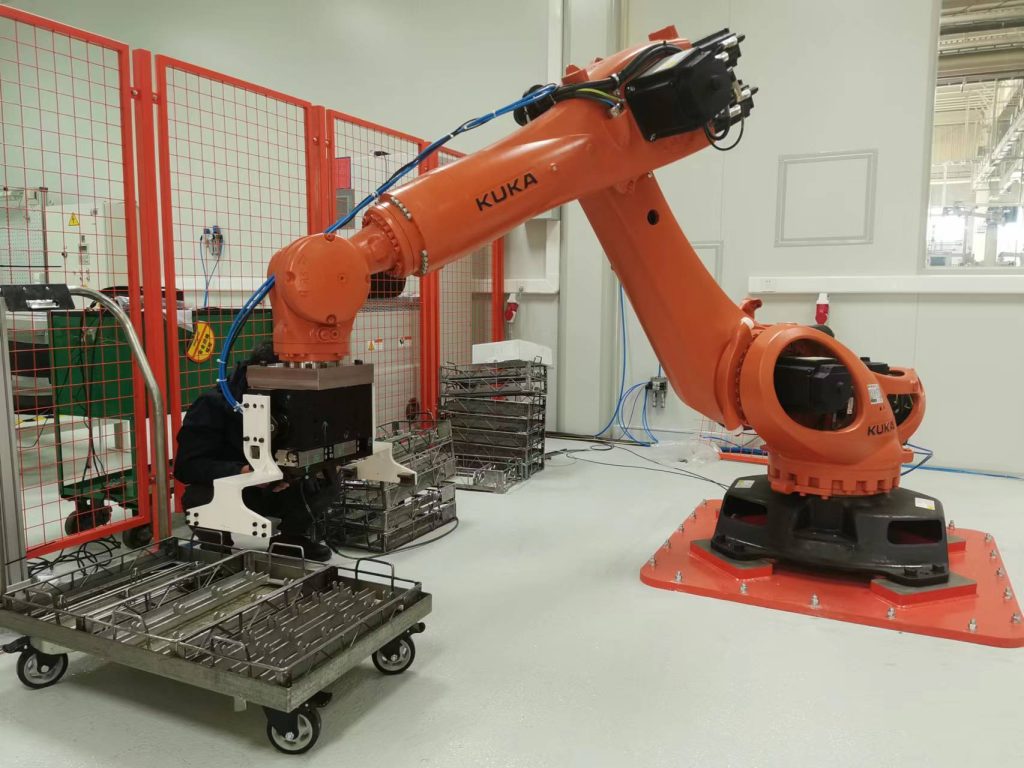
6) Technical Foundations: What Makes RaaS Possible

Several technologies enable this model to function smoothly:

  • IoT connectivity: Real-time telemetry for performance tracking and predictive maintenance.
  • Cloud robotics platforms: Enable remote updates, fleet coordination, and analytics.
  • Edge AI processors: Allow low-latency decision-making for autonomy.
  • Modular design: Simplifies repair and upgrade cycles.
  • Digital twins: Virtual models that simulate robot performance for optimization.

Together, these elements form the backbone of RaaS — ensuring that customers experience seamless performance while providers manage fleets efficiently from a distance.


7) Risk Management and Contract Design

RaaS introduces new types of risk for both sides.

For Providers:

  • Hardware damage and liability — Robots in public or industrial settings face physical risk.
  • Payment defaults — Especially among small clients.
  • Data privacy — Handling sensitive operational data requires compliance with strict regulations.

For Customers:

  • Dependence risk — Losing access if the provider fails or is acquired.
  • Performance risk — Robots not meeting agreed benchmarks.
  • Hidden costs — Fees for overuse, repairs, or software features.

To mitigate these issues, many providers use Service Level Agreements (SLAs) specifying uptime, performance metrics, and support response times. Insurance-backed guarantees are also becoming more common.


8) Strategic Benefits for Providers

RaaS changes how robotics companies grow:

  • Recurring revenue makes businesses more attractive to investors.
  • Usage data fuels software improvement, creating a feedback loop.
  • Customer stickiness increases — switching providers can disrupt operations.
  • Cross-selling opportunities arise through analytics, training, and AI upgrades.

This model aligns incentives: providers focus on long-term performance, not just one-time sales.


9) Why Some RaaS Models Fail

Despite promise, not every RaaS venture succeeds. Common pitfalls include:

  • Overestimating utilization rates – Idle robots don’t generate revenue.
  • Underpricing subscriptions – To attract clients, startups sometimes charge below cost.
  • Weak customer support – Poor service quickly erodes trust.
  • Hardware fragility – Frequent breakdowns destroy margins.

Sustainable RaaS businesses require rigorous reliability engineering, transparent SLAs, and financial discipline.


10) Beyond Logistics: Expanding Sectors

While warehouses and cleaning remain key markets, new sectors are emerging:

  • Agriculture – Autonomous crop monitoring and harvesting as a service.
  • Construction – Site inspection and material delivery robots rented by project duration.
  • Hospitality – Concierge robots leased by hotels for seasonal use.
  • Elder care – Subscription-based social or assistive robots for home environments.

Each market offers unique dynamics — from service duration to regulatory oversight — but the shared theme is flexibility over ownership.


11) Investor Perspective: Risk vs. Return

Investors increasingly view RaaS as a hybrid between hardware manufacturing and SaaS recurring revenue.

Advantages:

  • Predictable income streams.
  • Data-driven valuation metrics.
  • Strong retention potential if performance is reliable.

Risks:

  • High upfront capital expenditure.
  • Long payback cycles before profitability.
  • Hardware depreciation and technological obsolescence.

Thus, many RaaS startups combine venture financing for hardware deployment with revenue-based financing to support fleet expansion.


12) The Long-Term Outlook: From Ownership to Access

The broader economic trend — “access over ownership” — mirrors what happened with cars (ride-sharing), software (SaaS), and computing (cloud). Robotics is next.

By 2030, analysts project that up to 40% of all commercial robots could be deployed via service models, particularly in logistics, healthcare, and cleaning. The shift aligns robotics with the subscription economy — more dynamic, scalable, and data-driven.

In the long run, RaaS may democratize automation, giving even small businesses access to advanced robotics previously reserved for industrial giants.


13) Ethical and Social Considerations

RaaS also reshapes labor and accountability:

  • Who bears responsibility if a leased robot causes harm?
  • Do workers lose jobs to subscription-based automation?
  • How should data collected from customer operations be handled?

Transparent governance and ethical frameworks are essential to ensure that RaaS benefits society, not just corporations.


14) Future Scenario: The “Robot Utility Grid”

Imagine cities where cleaning, delivery, and maintenance robots are shared across industries through centralized RaaS platforms — like utilities. Businesses subscribe to task capacity, not individual machines.
Robots move between sites based on demand, optimizing fleet usage and reducing waste.

This could become the robotic equivalent of cloud computing — shared, scalable, and intelligent.


15) Conclusion: RaaS as the Next Industrial Subscription Revolution

Robots-as-a-Service is more than a financial model — it’s a reimagining of how humanity interacts with automation. By shifting ownership, it lowers barriers to entry, fosters innovation, and creates continuous feedback between users and providers.

However, it also demands careful balance: between flexibility and dependency, efficiency and ethics, innovation and control.

If executed wisely, RaaS could transform robots from isolated machines into connected, evolving partners that power the next phase of human productivity.


Tags: automation economicshumanoid roboticsRaaSrobot leasing
ShareTweetShare

Related Posts

Title: Major Stumble: What the Failure of a High-Profile Humanoid Startup Teaches the Industry
Industry Pulse

Title: Major Stumble: What the Failure of a High-Profile Humanoid Startup Teaches the Industry

December 15, 2025
Why Are Robotics Companies Waging an All-Out Talent War Against Big Tech and Academia?
Industry Pulse

Why Are Robotics Companies Waging an All-Out Talent War Against Big Tech and Academia?

December 15, 2025
Will the “Robotics as a Service” Model Become the Dominant Path for Humanoid Deployment?
Industry Pulse

Will the “Robotics as a Service” Model Become the Dominant Path for Humanoid Deployment?

December 14, 2025
The Demographics Solution: Can Humanoids Solve the Crisis of Aging Populations?
Future Scenarios

The Demographics Solution: Can Humanoids Solve the Crisis of Aging Populations?

December 14, 2025
Is Universal Basic Income the Inevitable Solution to Widescale Robotic Automation?
Future Scenarios

Is Universal Basic Income the Inevitable Solution to Widescale Robotic Automation?

December 13, 2025
Analysis: Why Did Hyundai Double Down on Boston Dynamics? A Strategic Look Beyond Spot and Atlas
Future Scenarios

Analysis: Why Did Hyundai Double Down on Boston Dynamics? A Strategic Look Beyond Spot and Atlas

December 12, 2025
Leave Comment
  • Trending
  • Comments
  • Latest
Will Humanoid Robots Become Legal Citizens by 2050? Exploring Rights, Responsibilities, and the Future of Robotic Personhood

Will Humanoid Robots Become Legal Citizens by 2050? Exploring Rights, Responsibilities, and the Future of Robotic Personhood

October 13, 2025
Will Humans and Robots Coexist Seamlessly in 2040’s Smart Cities? Exploring the Rise of Symbiotic Urban Ecosystems

Will Humans and Robots Coexist Seamlessly in 2040’s Smart Cities? Exploring the Rise of Symbiotic Urban Ecosystems

October 13, 2025
Will Robots Pay Taxes Someday?

Will Robots Pay Taxes Someday?

October 31, 2025
Can Robotics IPOs Trigger a Market Bubble?

Can Robotics IPOs Trigger a Market Bubble?

October 31, 2025
Will Humanoid Robots Become Legal Citizens by 2050? Exploring Rights, Responsibilities, and the Future of Robotic Personhood

Will Humanoid Robots Become Legal Citizens by 2050? Exploring Rights, Responsibilities, and the Future of Robotic Personhood

A World Where Robots Are Teachers: Educational Ecosystem with Humanoids

A World Where Robots Are Teachers: Educational Ecosystem with Humanoids

Can Humanoid Robots Redefine Disaster Response? Exploring the Future of Rescue Robotics in Extreme Environments

Can Humanoid Robots Redefine Disaster Response? Exploring the Future of Rescue Robotics in Extreme Environments

The Great Robot Economy: Humanoids as Workers in All Sectors

The Great Robot Economy: Humanoids as Workers in All Sectors

Title: Major Stumble: What the Failure of a High-Profile Humanoid Startup Teaches the Industry

Title: Major Stumble: What the Failure of a High-Profile Humanoid Startup Teaches the Industry

December 15, 2025
Why Are Robotics Companies Waging an All-Out Talent War Against Big Tech and Academia?

Why Are Robotics Companies Waging an All-Out Talent War Against Big Tech and Academia?

December 15, 2025
Will the “Robotics as a Service” Model Become the Dominant Path for Humanoid Deployment?

Will the “Robotics as a Service” Model Become the Dominant Path for Humanoid Deployment?

December 14, 2025
Why Are Humanoid Robots Becoming the Essential Workforce for Building Off-World Habitats?

Why Are Humanoid Robots Becoming the Essential Workforce for Building Off-World Habitats?

December 14, 2025
HumanoidInsight

We provide a clear lens on the rapidly evolving world of humanoid robots through news interpretation, trend observation, and data-driven reports. Join our community to stay authoritatively informed about the next wave of automation and intelligence.

© 2025 humanoidinsight.com. contacts:[email protected]

No Result
View All Result
  • Home
  • Spotlight
  • Future Scenarios
  • Industry Pulse
  • Insight Reports
  • Tech Frontiers

© 2025 humanoidinsight.com. contacts:[email protected]

Welcome Back!

Login to your account below

Forgotten Password?

Retrieve your password

Please enter your username or email address to reset your password.

Log In