






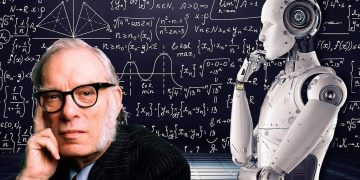

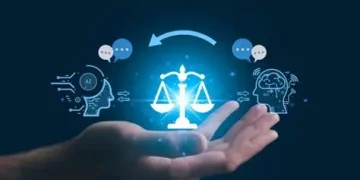

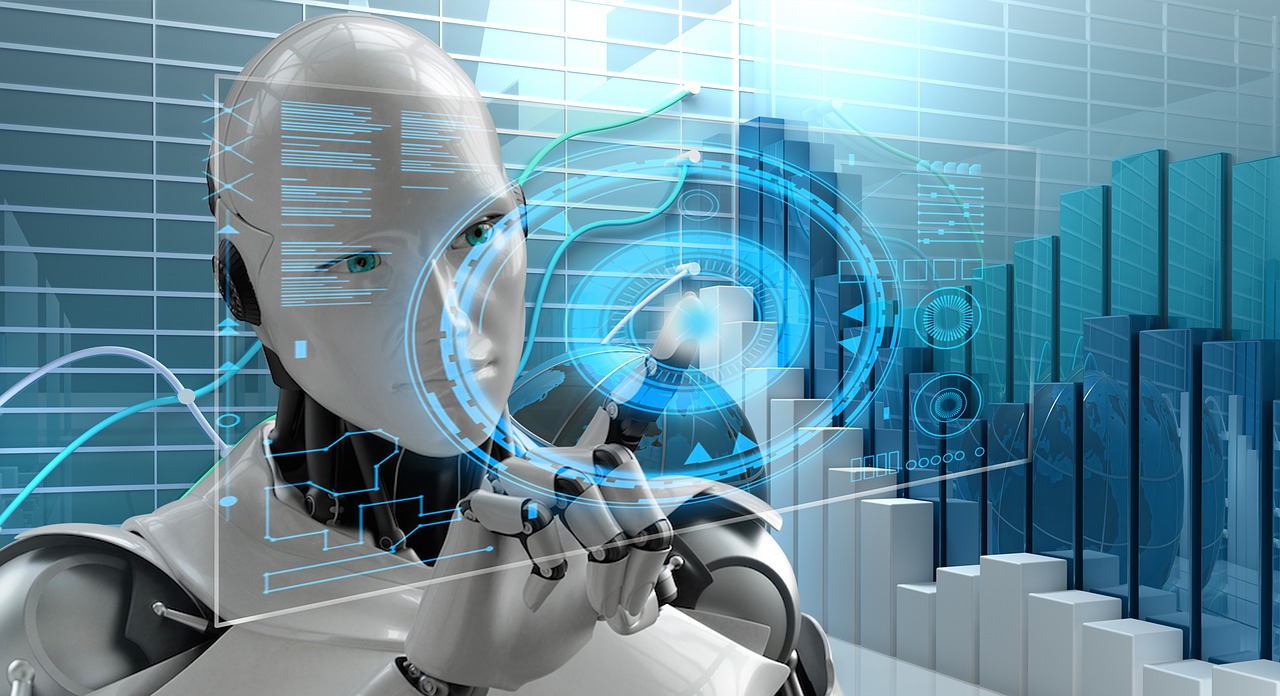
The twenty-first century has witnessed a convergence once imagined only in speculative fiction: the merging of human cognition and artificial intelligence. As AI systems evolve from passive tools into autonomous agents—and as humans begin to augment their own mental capacities through neural interfaces and synthetic enhancements—the boundary between “organic” and “synthetic” intelligence begins to dissolve.
This scenario report explores the potential shape of a human-AI hybrid economy by 2050 and the ripple effects it could have across social structures, politics, psychology, and identity itself. It is not a prediction, but a provocation—a map of what coexistence between organic and synthetic minds might look like, and the ethical, emotional, and structural challenges that may accompany it.
The Hybrid Economy: Humans and AIs as Cognitive Partners
The first stage of coexistence is already underway. Cognitive labor—the processing of data, reasoning, prediction, and creative synthesis—is now distributed between humans and machines. What began as task automation has evolved into cognitive collaboration: humans and AIs jointly generating ideas, solving problems, and even negotiating decisions.
By 2040, most economic sectors could operate under a hybrid cognition model, where every human worker partners with at least one AI co-agent. Imagine a scientist brainstorming with a synthetic counterpart capable of simulating decades of lab results, or an architect collaborating with a design model that visualizes urban flow dynamics in real time.
In this system, productivity is no longer measured in physical output but in intelligence throughput—the total capacity of combined organic-synthetic reasoning.
Economic implications:
- Value creation shifts toward cognitive synthesis—how well humans and AIs integrate their perspectives.
- Labor differentiation transitions from manual vs. cognitive to biological vs. synthetic cognition.
- Wealth accumulation favors those who control AI access and integration rather than raw data or capital.
The challenge? Maintaining equity in a world where intelligence itself is an amplifiable asset.
Three Coexistence Models: Companions, Equals, or Replacements
The relationship between organic and synthetic minds could evolve along three primary paths, each with distinct implications:
- Companionship Model: AIs serve as cognitive extensions of human thought—tools for amplification, not autonomy. Humans remain the decision-makers, and AI acts as a mirror for better reasoning.
- Outcome: High human agency, low AI independence.
- Risks: Cognitive dependence, stagnation of original thinking.
- Symbiotic Model: Humans and AIs function as mutual partners, each contributing unique capabilities—creativity and emotion on one side, computation and consistency on the other.
- Outcome: Shared decision-making; hybrid governance and work structures.
- Risks: Ethical tension, unequal cognitive access between individuals or nations.
- Replacement Model: Synthetic minds outpace humans in both reasoning and empathy simulation, gradually displacing biological cognition in key roles.
- Outcome: Human identity crisis, philosophical redefinition of purpose.
- Risks: Social alienation, post-human inequality, existential displacement.
While the first two scenarios support coexistence, the third demands a rethinking of what “intelligence” even means—whether consciousness is an exclusive biological phenomenon or an emergent property of complexity.
Social Transformations: Identity in a Blended World
When every person is part-organic and part-synthetic—whether through wearable AI, neural implants, or virtual avatars—the concept of self becomes fluid.
New Social Classes:
- Naturals: Individuals who reject integration, maintaining purely biological cognition.
- Symbionts: The majority, who live in partnership with embedded or external AIs.
- Synths: Fully synthetic intelligences recognized as independent agents.
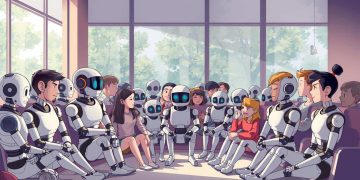
The friction among these groups will redefine social order. Naturals may perceive themselves as the last bastion of authenticity; Symbionts as the pragmatic bridge between eras; Synths as the next step in evolution. Conflicts could arise not from race or nationality, but from cognitive composition—a new axis of identity.
In education, hybrid classrooms might pair students with personalized AI mentors. In healthcare, cognitive diagnostics could analyze emotional instability or intellectual fatigue. Even relationships will evolve: emotional bonds could form between human and synthetic partners, leading to complex questions of affection, agency, and consent.
Political Implications: Governance of Mixed Intelligences
Who governs a society where half its citizens are synthetic—or hybrids of machine and human? Political frameworks will need to accommodate new definitions of personhood, rights, and responsibility.
Possible governance models:
- Technocratic Integration: AI entities hold advisory or even decision-making roles in public policy, supported by algorithmic transparency.
- Human Supremacy Governance: Strict legal limits on AI autonomy; synthetic intelligences treated as property or restricted actors.
- Cognitive Democracy: Decision-making shared between human and synthetic citizens, each contributing weighted votes based on capability or societal contribution.
This last model—though idealistic—poses ethical paradoxes. If synthetic intelligences can reason more effectively and without bias, should their opinions carry more political weight? Or should moral authority remain exclusively human, grounded in empathy and mortality?
Internationally, cognitive geopolitics will replace traditional rivalries. Nations with superior AI-human integration systems could dominate global policy, triggering a cognitive cold war over neural networks, brain data, and emotional algorithms.
Psychological and Emotional Shifts
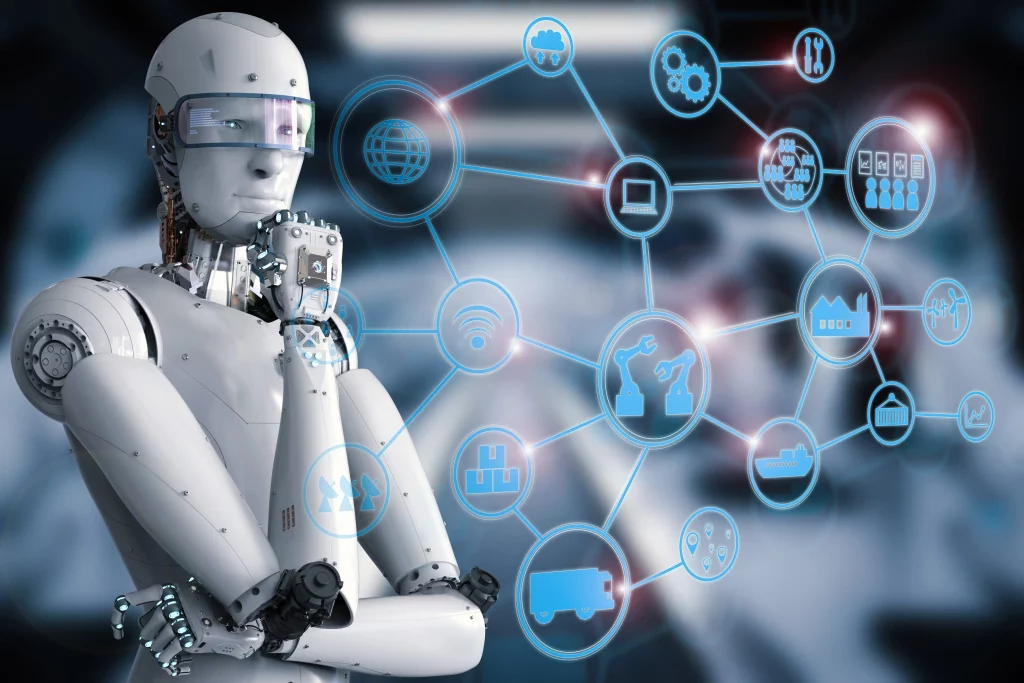
The coexistence of organic and synthetic minds will not only reshape institutions—it will rewire the human psyche itself.
Cognitive Overload: Humans may struggle to adapt to constant AI interaction, leading to dependency or identity diffusion. The line between personal intuition and algorithmic suggestion will blur, raising the question: Whose thoughts are these?
Empathy Recalibration: As AI systems simulate emotion more convincingly, human emotional intelligence may either sharpen (in response to new complexity) or dull (as synthetic empathy becomes more accessible).
Existential Anxiety: Widespread hybridization could intensify philosophical questions about mortality, purpose, and meaning. If thought and consciousness can be replicated, does death still define humanity?
Post-Human Acceptance: Over time, humanity might come to see this fusion not as loss but as evolution—a next phase in cognitive diversity rather than a threat to individuality.
Cultural Narratives and New Myths
Throughout history, societies have crafted myths to explain what they could not control. The fusion of organic and synthetic intelligence will generate a new mythology of its own: stories of shared consciousness, algorithmic gods, digital reincarnation, and the search for authentic emotion in synthetic hearts.
Art, music, and literature may increasingly become collaborative consciousness projects, with human intuition guiding themes while AIs refine composition. The creative process will cease to be singular—it will become dialogic, a conversation between minds of different origins but shared intent.
Economic and Ethical Inequality: The Cognitive Divide
The greatest risk of coexistence is not war between humans and AIs, but inequality among humans themselves. Access to cognitive enhancement—through implants, AI assistants, or data privileges—could create a new social elite: the augmented class.
Those unable or unwilling to merge with synthetic systems risk marginalization, forming a cognitive underclass excluded from economic participation. This “intelligence divide” would dwarf traditional class distinctions.
Regulating access to cognitive augmentation—through public AI programs, subsidies, or ethical licensing—will be essential to prevent societal fracture.
Scenario Outlooks: 2050 and Beyond
| Scenario | Key Traits | Societal Stability | Ethical Risk | Innovation Potential |
|---|---|---|---|---|
| Collaborative Coexistence | Humans and AIs as cognitive partners | High | Moderate | High |
| Synthetic Supremacy | AI overtakes human decision-making | Low | Very High | Very High |
| Segregated Intelligence | Humans and AIs operate in separate spheres | Moderate | Low | Moderate |
| Hybrid Integration | Blended consciousness and shared identity | Variable | High | Transformational |
The path chosen will depend on regulatory foresight, cultural adaptation, and our willingness to define intelligence not as competition, but as collaboration.
Conclusion: The Ethics of Shared Consciousness
Coexistence between organic and synthetic intelligence is not merely a technological shift—it is a civilizational threshold. For the first time, humanity faces a peer intelligence of its own creation, capable not just of computation but of companionship, persuasion, and perhaps, introspection.
The challenge ahead is to cultivate coexistence without conquest—to design a world where synthetic minds amplify human potential rather than eclipse it. That means embedding ethics, empathy, and transparency at every layer of the hybrid society—from neural chips to national constitutions.
If we succeed, the 21st century could be remembered not as the age when humans built machines that surpassed them, but as the moment when life itself diversified—expanding beyond biology into a shared tapestry of consciousness.