











The rise of general-purpose robotics prompts a fundamental design question: is the human form the ultimate template for machines, or merely one option among many? As billions of dollars flow into humanoid development, a parallel universe of non-humanoid robots—from snake-like arms and quadrupedal “dogs” to rolling manipulators and specialized flying drones—continues to advance. The future of automation is not a zero-sum game, but a diverse ecosystem where form will be ruthlessly dictated by function. This comparative forecast analyzes the inherent strengths and weaknesses of humanoid versus non-humanoid designs, segmenting the world of use cases to predict where each will dominate, coexist, or fail. The ultimate winner will not be a single morphology, but the principle of optimal design for the task and environment.
Where Humanoids Will Win: The Mastery of Human Spaces
The primary and most compelling advantage of the humanoid form is its compatibility with the world as it already exists. For decades, we have built our environments—our homes, factories, offices, and vehicles—around the specific dimensions and capabilities of the human body. This creates a powerful, pre-existing niche.
1. The Unstructured Environment Niche:
Humanoids are designed to operate where other robots cannot: in spaces built for people.
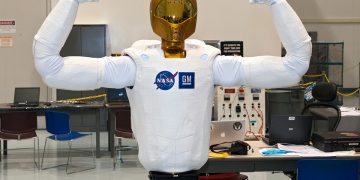
- Use Case: General-purpose factory work, especially in final assembly where tasks are varied and spaces are tight. A humanoid can step over obstacles, climb a ladder to access a panel, and use the same tools and workstations as a human worker without requiring a billion-dollar retrofit of the factory.
- Competitive Advantage vs. Non-Humanoids: A robotic arm on a fixed pedestal is blind to anything outside its pre-programmed reach. An Autonomous Mobile Robot (AMR) with a manipulator can move but cannot climb stairs or navigate a cluttered workshop. A humanoid’s combination of bipedal mobility and dexterous manipulation in a human-scale package is currently unique.
- Example: A Tesla Optimus or Figure 01 robot designed to perform a variety of tasks on a legacy automotive assembly line, from installing wiring harnesses to applying seals, all within the existing human-centric layout.
2. The Tool-Use and Interface Niche:
Our civilization is built on tools and interfaces designed for the human hand and operated from a human perspective.
- Use Case: Maintenance, repair, and operations (MRO) in complex environments like aircraft hangars, ship engine rooms, or power plants. These tasks require using standard wrenches, operating levers, and reading gauges placed at human eye level.
- Competitive Advantage vs. Non-Humanoids: A non-humanoid robot would require a custom-built, expensive tool for every single interface. A humanoid can, in theory, pick up the same wrench a human technician uses and apply it in the same way. This generality is a massive economic advantage.
- Example: A humanoid robot performing pre-flight checks on an aircraft, capable of opening compartments, inspecting components visually, and plugging in standard diagnostic equipment.
3. The Social Interaction and Care Niche:
While still a long-term prospect, the human form holds an inherent advantage in social contexts where familiarity and empathy are important.
- Use Case: Elder care assistance, customer service in retail, and educational companionship.
- Competitive Advantage vs. Non-Humanoids: People are psychologically wired to read human-like cues. A robot with a face, a recognizable body language, and the ability to make eye contact can build trust and facilitate communication more effectively than a box on wheels, even if the underlying AI is identical. A study from researchers like Prof. Bilge Mutlu shows that human-like gaze and gesture significantly improve the fluency of human-robot collaboration.
- Example: A humanoid robot in an elder care facility that can not only fetch items but also offer its arm for physical support and use its human-like presence to provide cognitive stimulation.
Where Humanoids Will Lose: The Tyranny of Complexity
The human form is incredibly complex and inefficient for many tasks. The engineering required for stable bipedal locomotion and dexterous manipulation comes with severe trade-offs in cost, reliability, and simplicity where they are not needed.
1. The High-Speed, High-Payload Logistics Niche:
In environments where the primary goal is moving goods from A to B as quickly and cheaply as possible, humanoids are a poor choice.
- Use Case: Bulk material transport in warehouses, ports, and manufacturing plants.
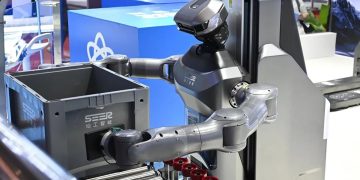
- Competitive Disadvantage vs. Non-Humanoids: An AMR or an Autonomous Forklift is far superior. It has a stable, wheeled base that is energy-efficient, can carry immense loads, and is mechanically simple and reliable. A humanoid, with its complex legs and limited strength, cannot compete on speed, cost, or payload capacity.
- Example: Amazon’s deployment of thousands of Kiva/Amazon Robotics drive units in its fulfillment centers. These non-humanoid robots have revolutionized logistics with an efficiency no bipedal robot could ever match for this specific task.
2. The Specialized Inspection and Access Niche:
Many tasks require accessing confined or hazardous spaces where a humanoid body is a liability.
- Use Case: Pipeline inspection, search and rescue in collapsed structures, hull inspection, and utility tunnel monitoring.
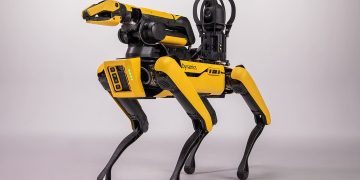
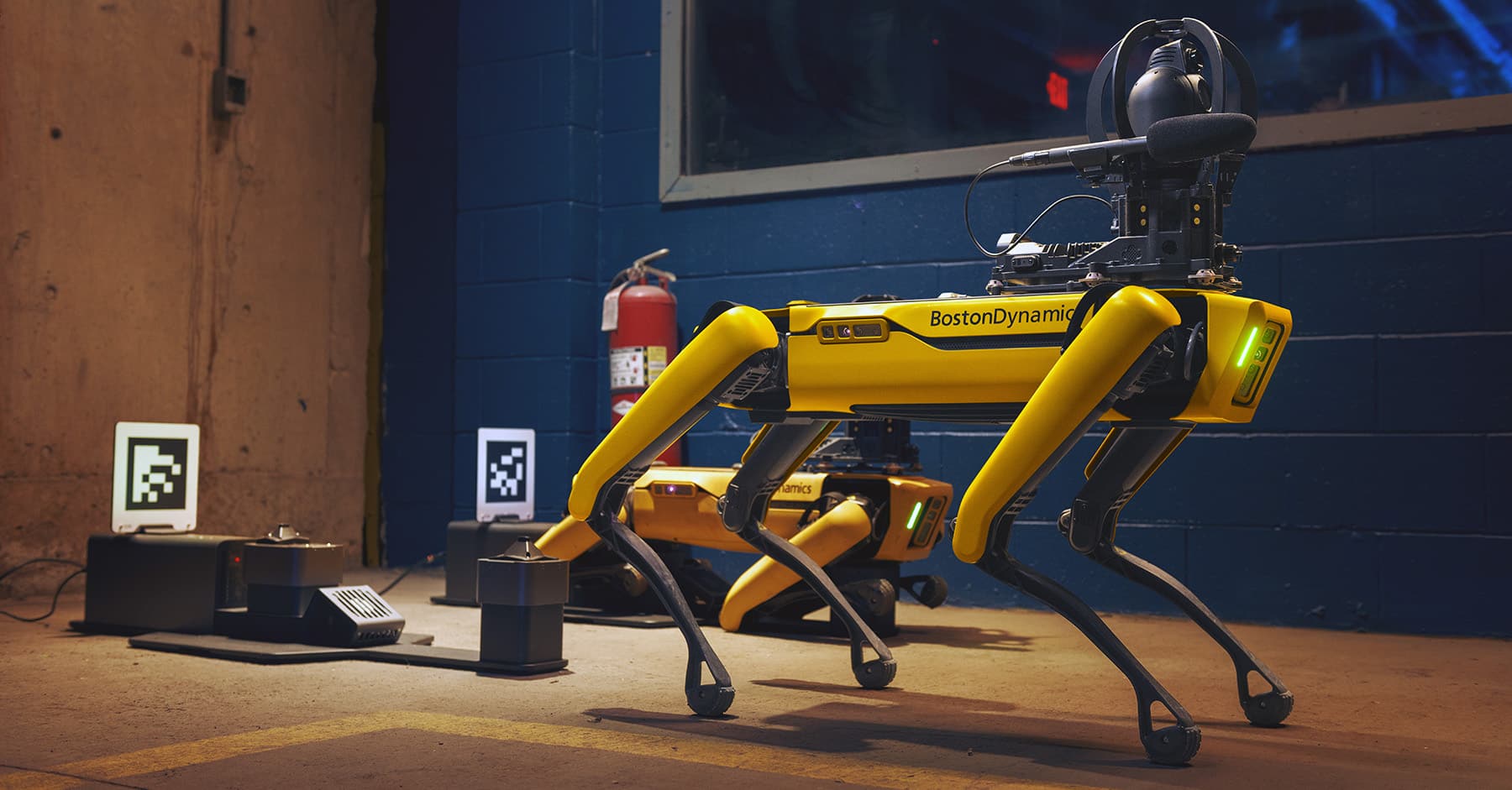
- Competitive Disadvantage vs. Non-Humanoids: Snake-arm robots can navigate through tiny openings. Quadrupeds like Boston Dynamics’ Spot can traverse rubble, climb stairs with superior stability, and crouch to enter low spaces. Drones can access aerial or otherwise inaccessible locations. A humanoid is too large, too unstable, and too generalized for these extreme environments.
- Example: Spot walking through a semi-collapsed building, using its stability and low center of gravity to map the interior and locate survivors, a task for which a bipedal robot would be dangerously unstable.
3. The Ultra-High-Precision Manufacturing Niche:
In settings where nanometer-level precision is required, stability is everything.
- Use Case: Semiconductor manufacturing, micro-assembly, and laboratory automation.
- Competitive Disadvantage vs. Non-Humanoids: A massive, rigid, vibration-dampened robotic arm mounted to a granite base provides the absolute stability required for these tasks. A humanoid, with its compliant joints and constantly balancing body, is a platform of vibration and micro-movements, making it utterly unsuitable.
- Example: The multi-million dollar, fixed-base robotic arms in a cleanroom placing transistors on a silicon wafer—a task where even a human’s heartbeat can introduce disruptive vibrations.
Use Case Segmentation: A Coexistence Model
The future is not a choice, but a segmentation. We can map the automation landscape into distinct domains:
| Use Case Domain | Ideal Morphology | Why It Wins |
|---|---|---|
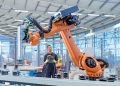
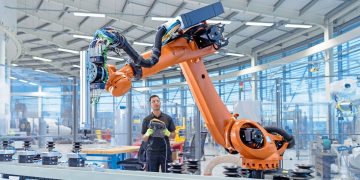
| Structured, Single-Task (e.g., welding, painting, palletizing) | Industrial Robotic Arm | Unbeatable speed, precision, and payload for a repetitive task in a fixed location. |
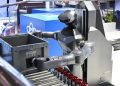
| Structured, Mobile Transport (e.g., warehouse logistics) | AMR / AGV | Supreme efficiency, simplicity, and cost-effectiveness for moving goods on flat surfaces. |
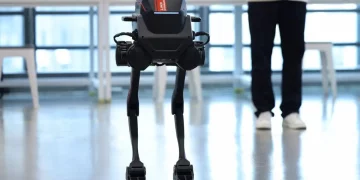
| Unstructured, Mobile Manipulation (e.g., general factory work, MRO) | Humanoid | Unique ability to navigate human spaces and use human tools without environmental modification. |
| Constrained / Hazardous Access (e.g., inspection, search & rescue) | Quadruped, Snake-arm, Drone | Specialized mobility for terrain and spaces inaccessible to wheeled or bipedal platforms. |
| Social & Assistive Roles (e.g., care, customer service) | Humanoid or Humanoid-like | Social facilitation and ability to operate human-centric interfaces (appliances, tools). |
| Extreme Precision & Stability (e.g., semiconductor fab) | Fixed-Base Robotic Arm | Absolute mechanical stability and isolation from environmental vibration. |
Conclusion: The Right Tool for the Robotic Job
The debate between humanoid and non-humanoid robotics is a false dichotomy. The humanoid form is not universally superior; it is a specialized solution to the very specific problem of operating in a world built by and for humans. Its value is in its generality, but generality always comes at the cost of peak efficiency.
The forecast, therefore, points toward a heterogeneous future. We will witness the rise of “polymorphic automation,” where factories, warehouses, and cities deploy optimized fleets of different robotic forms working in concert. A single supply chain might see fixed arms on the production line, AMRs moving materials, quadrupeds performing facility inspections, and humanoids handling the final, complex assembly and quality control that requires a human touch.
The companies that will dominate this future are those that understand this segmentation. They will not be dogmatically committed to a single form factor but will instead master the art of matching the right robotic body to the right economic problem. The ultimate legacy of the humanoid may not be to replace all other robots, but to finally fill the last and most complex niche in the automation puzzle: our own.