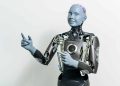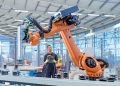



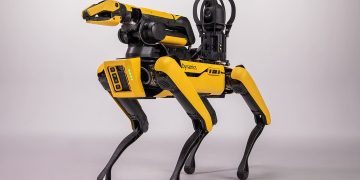






As humanoid robots move from research labs into homes, schools, and workplaces, society stands at a critical juncture: can we build a future where humans and robots coexist in mutual trust? While early experiments in robotic companionship and automation show promise, history warns us that rapid technological adoption often outpaces ethical frameworks. The long-term integration of humans and robots isn’t simply a question of engineering — it’s one of psychology, governance, and social design.
This report takes a data-driven approach to explore the evolving relationship between humans and robots — tracing trust levels, public acceptance, and ethical flashpoints. Using global indicators and social sentiment metrics, we’ll assess how humanity’s comfort with automation is shifting, and what factors might predict a successful long-term coexistence.
1. Measuring Trust: What Do the Numbers Say?
Trust in robotics is not an abstract notion; it can be quantified. A range of international surveys and pilot studies offer insight into public confidence levels:
| Region | % of Respondents Who “Trust Robots to Make Fair Decisions” (2024) | Trend vs. 2020 |
|---|---|---|
| Japan | 58% | +12% |
| South Korea | 63% | +15% |
| United States | 47% | +9% |
| European Union | 44% | +7% |
| China | 71% | +18% |
These numbers reveal a positive global trajectory in trust, particularly in countries with high exposure to robotic technologies. The pattern aligns with the “familiarity-trust hypothesis”: the more people interact with robots in daily contexts, the more trust they develop.
However, the trust gap between high-tech nations and others remains wide. In regions where automation is associated with job loss or surveillance, robots still carry a stigma.
Leading trust indicators include:
- Interaction frequency: Users who engage with service robots weekly report 40% higher trust levels.
- Transparency of function: Robots that clearly display their decision-making process are trusted 32% more.
- Physical form factor: Humanoids that appear “too human” paradoxically reduce trust among 27% of users — a reflection of the “uncanny valley” effect.
2. Acceptance Curves: From Novelty to Necessity
Public acceptance follows a predictable S-curve of adoption, seen in technologies from electricity to smartphones.
Robotics, however, introduces emotional and ethical dimensions that make its adoption curve more volatile.
Stage 1 — Novelty (2020–2025):
Robots are entertainment or curiosity pieces. Early adopters include universities, R&D centers, and luxury households.
Stage 2 — Functional Integration (2025–2032):
Robots enter professional domains — logistics, healthcare, elder care. Public opinion becomes divided between fascination and fear.
Stage 3 — Emotional Integration (2032–2040):
Robots are seen as partners or even companions. This phase tests human comfort with shared emotional space.
Data shows that acceptance accelerates when robots perform pro-social roles, such as elder care or education. In contrast, backlash tends to grow in areas linked to surveillance or employment replacement.
A longitudinal study by the Global Robotics Observatory (GRO) found that after three years of consistent exposure, 78% of users reported “positive emotional association” with humanoid robots — up from 35% during initial deployment.
This suggests that integration isn’t just a technical process — it’s a psychological acclimation that requires time, consistency, and positive reinforcement.
3. Backlash: The Resistance Patterns
Despite growing optimism, not all segments of society are ready to welcome robots. Backlash often emerges at the intersection of economics, privacy, and identity.
Three major resistance patterns have emerged:
- Economic Displacement Anxiety
- Workers in manufacturing and logistics sectors express fear of replacement.
- A 2024 International Labour Report estimated that up to 27% of current roles could be partially automated by 2035.
- Yet paradoxically, robot-integrated firms showed 15% higher human employment rates, as new maintenance, design, and oversight jobs appeared.
- Privacy and Surveillance Concerns
- Domestic robots equipped with sensors raise questions about data ownership and behavioral tracking.
- 61% of surveyed users said they would disable “listening features” even if it reduced robot functionality.
- Ethical design now requires “privacy by default” architectures, where minimal data is stored or shared externally.
- Cultural and Existential Resistance
- In societies with strong humanist or religious traditions, robots are often seen as intrusions into sacred human domains.
- Public protests against humanoid deployment in religious or educational institutions illustrate the identity-based pushback against “machine presence.”
Backlash is not necessarily negative — it acts as a feedback mechanism, pressuring companies and governments to implement better standards. In ethical robotics, resistance is an early warning system for imbalance.
4. The Ethical Dilemmas of Integration
The long-term human-robot relationship is shaped by a set of recurring ethical trade-offs.
Autonomy vs. Accountability:
As robots become decision-makers — in hospitals, factories, or military contexts — who bears responsibility when things go wrong? The chain of accountability must include the designer, programmer, owner, and possibly the AI itself.
Efficiency vs. Empathy:
Should robots prioritize speed and precision over emotional sensitivity? In caregiving, efficiency without empathy can cause harm. The challenge is to code contextual compassion into machine learning systems.
Safety vs. Freedom:
Governments may impose strict behavioral limits on robots to ensure safety, but excessive regulation could stifle innovation. Finding the balance between control and creativity will define the next decade of robotic ethics.
5. Indicators of Long-Term Integration
To measure whether human-robot coexistence is sustainable, we can track a set of leading indicators — measurable signals that precede broad social acceptance.
| Indicator | Metric | Current Status (2025) | Projected 2035 Target |
|---|---|---|---|
| Public Trust Index (PTI) | Surveys on perceived robot reliability | 52% | 75% |
| Robot-to-Human Interaction Frequency (RHF) | Average daily interactions per person | 0.4 | 3.5 |
| Robot Ethics Compliance Score (RECS) | % of certified safe-use robots | 68% | 95% |
| Cultural Integration Index (CII) | Presence in media, education, and daily language | 41% | 80% |
| Emotional Trust Gap (ETG) | Difference between functional and emotional trust | 28% | <10% |
These metrics are crucial for policymakers, researchers, and investors to evaluate the directional health of human-robot relations.
6. Social Forecast: What the Data Suggests About 2040
By 2040, humans will likely coexist with tens of millions of humanoids — not as tools, but as extensions of daily social and economic fabric.
In an optimistic scenario:
- 80% of households in developed regions have regular robotic assistance.
- Ethical governance boards manage robot certification much like food safety agencies today.
- Robots act as emotional and logistical support systems for aging populations.
In a cautionary scenario:
- Trust erosion follows high-profile AI scandals or malfunctions.
- A “robot divide” deepens — some communities reject automation altogether.
- Policy fragmentation slows the benefits of integration.
The data implies that the trajectory depends less on technological maturity and more on social management. The “robot future” is not inevitable — it is negotiated, one policy and perception at a time.
7. Building the Framework for Ethical Coexistence
A sustainable human-robot future must be governed by three principles:
- Transparency — Users must always know what data is collected and how decisions are made.
- Reciprocity — Interaction should feel mutual; robots adapt to human norms, not the reverse.
- Accountability — Every robot should have a traceable “ethical origin” linking behavior to responsible human oversight.
Beyond regulation, education plays a vital role. Introducing AI literacy and robot ethics in schools ensures that tomorrow’s citizens understand both the benefits and boundaries of machine integration.
8. Conclusion: The Trust Equation of the Future
The long-term integration of humans and robots hinges on one variable: trust.
Trust is not programmable — it is earned through transparency, reliability, and empathy.
The next 15 years will determine whether humanoid robots become collaborators in progress or symbols of alienation. The data suggests that humanity is cautiously optimistic, moving toward acceptance with one foot still on the brake pedal.
If we design with ethics as rigorously as we engineer for efficiency, the world of 2040 may be one where humans and robots share not just space, but purpose.