












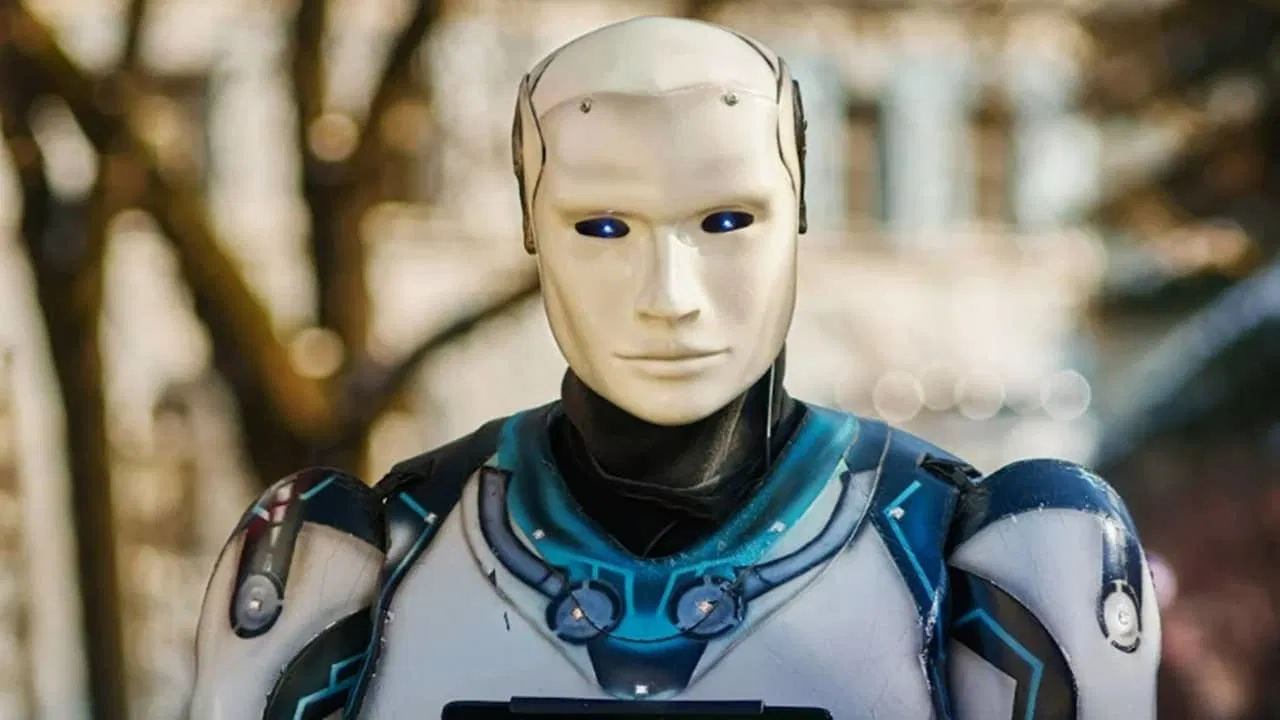
Behind every humanoid robot—no matter how futuristic or lifelike—lies a complex web of manufacturers, component suppliers, and logistics systems. From the precision actuators that move their limbs to the sensors that let them “see” and the batteries that keep them alive, humanoid robots are the end product of thousands of parts moving through dozens of companies and countries.
But as humanoid robots shift from research labs to commercial factories, logistics floors, and even public spaces, supply chain stability has become a strategic issue. Who actually supplies these critical components? Where do the risks and bottlenecks lie? And should humanoid companies vertically integrate, or rely on an open global supply ecosystem?
This article takes a deep look at the humanoid robotics supply chain: who supplies what, where the choke points are, and how different integration strategies could define the next decade of robotic manufacturing.
1. Anatomy of a Humanoid Supply Chain
Building a humanoid robot is like assembling an airplane: thousands of subsystems, each with specific engineering tolerances, sourced from specialized vendors. At a high level, the supply chain divides into five main component groups:
- Actuation & Motion Systems – Motors, gears, harmonic drives, and joint assemblies that move the robot.
- Sensing & Perception Systems – Cameras, LIDAR, IMUs, tactile sensors, microphones.
- Energy & Power Systems – Batteries, battery management systems (BMS), inverters, and power distribution units.
- Compute & Communication – CPUs, GPUs, AI accelerators, networking modules.
- Mechanical & Structural Components – Frames, joints, covers, thermal housings, fasteners, and materials.
Each group has its own supply ecosystem, often spread across continents. Let’s explore these one by one.
2. Actuators: The Core of Movement
Why Actuators Matter
Actuators are to robots what muscles are to humans—they convert energy into motion. In humanoids, each joint typically contains an actuator system: a motor, gearbox (often harmonic or planetary), sensors, and driver electronics. Their performance determines how fluid, strong, and safe a robot’s movement feels.
Key Supplier Landscape
Globally, actuator and motion suppliers fall into three categories:
- High-precision harmonic drive specialists – These include Harmonic Drive Systems (Japan), Sumitomo Drive Technologies, and Nabtesco, who dominate precision gear manufacturing for robotics.
- Motor manufacturers – Industrial motor suppliers like Maxon Motor (Switzerland), Faulhaber (Germany), and T-Motor (China) provide brushless DC and torque motors optimized for robotics.
- Emerging integrated module makers – With humanoids in mind, some newer companies are producing self-contained actuator modules combining motors, sensors, and drives. These integrated actuators are found in robots from companies like Unitree, Agility Robotics, and Tesla’s Optimus.
Bottlenecks and Risks
- Harmonic drives remain a major bottleneck. Their high-precision manufacturing is concentrated in Japan and a few alternative suppliers, leaving the market vulnerable to disruptions.
- Rare-earth magnets for motors (mainly sourced from China) are another choke point, as they depend on rare-earth oxide mining and refining capacity.
- Custom mechanical tolerances make second-sourcing difficult; small design changes can require full recalibration.
Cost and Integration Trends
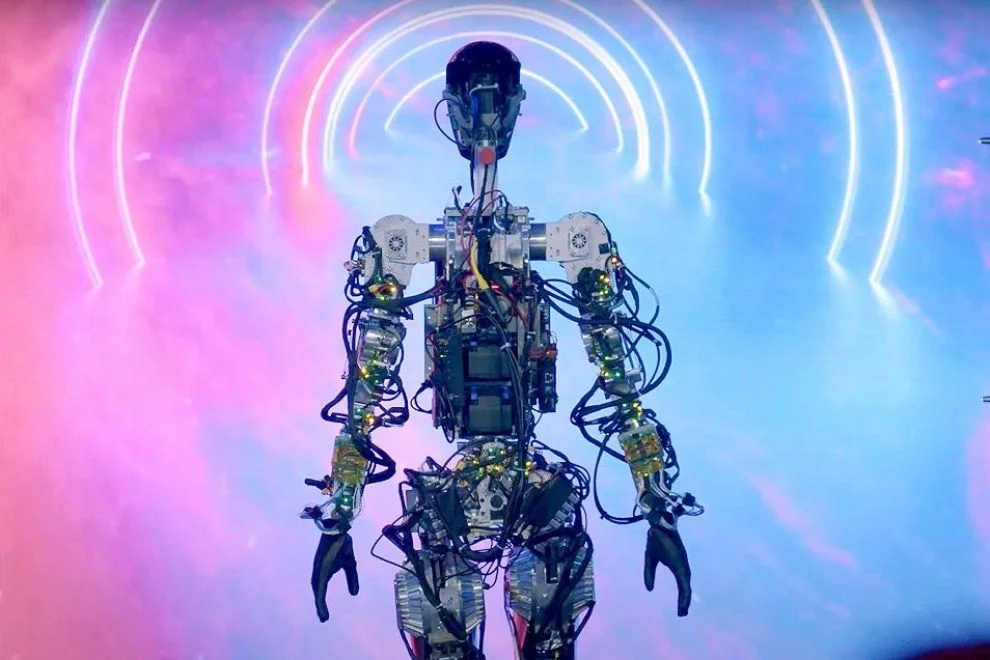
Manufacturers are increasingly vertically integrating actuators to control cost and supply. Tesla, for instance, has designed custom actuators for Optimus, while startups like Sanctuary AI and Figure are pursuing in-house motion systems. This allows tuning performance to the robot’s weight and intended application, but increases capital investment.
3. Sensors: How Robots See, Hear, and Feel
The Sensor Ecosystem
Sensors are the sensory organs of a robot—enabling spatial awareness, balance, and safety. The humanoid sensor stack usually includes:
- Vision sensors (RGB/IR cameras, depth cameras, or stereo setups)
- Range sensors (LIDAR, radar, ultrasonic)
- Inertial sensors (IMUs, gyros, accelerometers)
- Tactile and force sensors (torque sensors, skin arrays, joint load cells)
Key Suppliers
The sensor market benefits from cross-industry overlap:
- Vision & depth sensors – Leveraging smartphone and automotive supply chains, companies like Sony, OmniVision, Luxonis, and Intel RealSense are key players.
- LIDAR manufacturers – Velodyne, Ouster, and Hesai dominate the higher-end segment, while solid-state LIDARs from Livox and Innovusion are lowering prices.
- IMUs and force sensors – Bosch Sensortec, Analog Devices, and InvenSense supply robust IMUs; ATI Industrial Automation and OnRobot offer precise torque sensors for robotics.
Supply Challenges
- Optics and precision calibration — High-end cameras and LIDARs require clean-room conditions; disruptions in semiconductor fabs can delay production.
- Export controls — Some advanced imaging technologies are restricted, affecting supply to certain markets.
- Integration complexity — Each sensor requires precise mechanical alignment and calibration; sourcing from multiple vendors can cause incompatibility.
Integration Trends
To mitigate these issues, robotics firms are modularizing perception systems—developing plug-and-play sensor clusters. There’s also a growing trend toward AI-powered sensor fusion modules, combining multiple inputs (e.g., vision + IMU) into one intelligent unit, reducing the number of suppliers and simplifying calibration.
4. Batteries: The Lifeblood of Humanoids
Energy Requirements
A humanoid’s energy system must deliver enough power for continuous motion, vision processing, and wireless communication. With walking and balancing consuming significant energy, humanoid robots rely on dense lithium-ion packs similar to those used in electric vehicles (EVs).
Supplier Landscape
- Cell manufacturers: CATL, Panasonic, LG Energy Solution, Samsung SDI, and BYD dominate the lithium-ion cell market.
- Battery pack integrators: Robotics-specific suppliers and OEMs (e.g., Epec, Bender, Energus) assemble packs tailored to robotic needs—smaller, modular, and ruggedized.
- Battery management systems (BMS): Companies like Texas Instruments and Analog Devices supply BMS chips crucial for safety and performance.
Supply Risks
- Material concentration: Lithium, cobalt, and nickel sourcing remain heavily concentrated in a few countries (Congo, Chile, Indonesia).
- Thermal safety standards: Battery recalls or safety incidents can slow adoption.
- Cell competition: EV manufacturers often receive priority for high-performance cells, squeezing robotics producers in times of shortage.
Mitigation and Integration Strategies
Some robotics companies now partner directly with EV battery suppliers or design custom battery modules. Others explore solid-state batteries for higher density and safety, though these remain experimental. Vertical integration here can ensure supply security but adds manufacturing complexity.
5. Compute, AI Chips, and Communications
The Computing Core
Brains are nothing without neurons—humanoids rely on powerful computing units to process sensor data and control motion in real time. These typically include:
- CPU boards for system management.
- Edge GPUs or AI accelerators for perception and decision-making.
- Real-time controllers (FPGAs or microcontrollers) for low-level actuation loops.
Suppliers and Ecosystem
- High-performance compute: NVIDIA (Jetson series, Orin), Qualcomm (RB5 robotics platform), and Intel (Edge AI and Movidius chips) dominate the field.
- AI accelerators: Companies like Google TPU, Hailo, and BrainChip are emerging with power-efficient chips optimized for robotics inference.
- Connectivity: Modules from Quectel, u-blox, and Telit provide 5G, Wi-Fi, and Bluetooth connectivity.
Bottlenecks and Trends
- Semiconductor supply volatility: Chip shortages—like those in 2020–2022—highlighted vulnerability in AI hardware supply.
- Export controls and geopolitics: High-performance AI chips are increasingly subject to export restrictions.
- Thermal and power constraints: Robotics environments demand compute that balances performance with heat and power efficiency.
To mitigate this, companies are exploring custom AI SoCs (system-on-chips) and heterogeneous compute architectures that combine low-power AI inference with high-speed control loops.
6. Frames, Materials, and Structural Components
While not as glamorous as AI or sensors, the frame of a humanoid robot dictates durability, balance, and weight efficiency. Most humanoids use aluminum alloys, carbon fiber composites, or magnesium for lightness. Key suppliers here overlap with aerospace and automotive industries.
- Structural materials: Sourced from global metallurgical suppliers in China, Japan, and Europe.
- Fasteners and mechanical parts: Typically standardized (ISO components), sourced locally or from precision vendors.
- Protective casings and skins: Increasingly use thermoplastic polymers, produced by firms specializing in injection molding or 3D printing.
Supply risks here revolve around cost volatility in aluminum and carbon composites, and delays in custom fabrication tooling.
7. Supply Chain Bottlenecks and Systemic Risks
Even as the humanoid industry grows, it faces fragile links in the chain. The most notable bottlenecks include:
- Actuator supply concentration: Overreliance on a few precision gear and motor suppliers creates vulnerability to natural disasters or geopolitical shocks.
- Battery cell allocation: EV dominance means robotics often sit low on supplier priority lists.
- Semiconductor dependency: AI chips and microcontrollers remain exposed to manufacturing bottlenecks and export regulations.
- Specialized labor and QA: High-skill assembly technicians and calibration engineers remain scarce, limiting scaling speed.
- Freight and logistics: Large components like metal frames and battery modules are costly to ship internationally; localization becomes economically critical.
Case in point: During global supply chain disruptions, some humanoid startups reported lead times of 6–12 months for harmonic drives or high-end actuators—stalling entire product lines.
8. Vertical Integration vs. Open Supply: The Great Strategy Debate
The Case for Vertical Integration
- Supply control: Companies like Tesla and Figure AI aim to own actuator design, compute stack, and manufacturing lines, reducing dependence on outside suppliers.
- Cost and performance optimization: In-house designs can reduce overengineering and streamline integration.
- Brand protection: Proprietary modules create defensible IP and differentiation.
Drawbacks: High upfront capital, longer R&D cycles, and slower adaptation to new component innovations.
The Case for Open Supply Ecosystems
- Flexibility: Using off-the-shelf actuators, sensors, and compute modules shortens development cycles.
- Rapid iteration: Companies can swap in next-gen parts without retooling.
- Shared standards: Encourages interoperability and broader market adoption (as seen in the PC or drone industries).
Drawbacks: Vulnerability to supply shocks, limited customization, and potential quality inconsistency.
The Emerging Hybrid Model
Many humanoid companies now pursue selective integration—owning critical parts (like actuators or control firmware) while outsourcing commodities (like sensors and batteries). This hybrid model balances risk management with speed.
9. Supply Chain Localization: The Next Frontier
To avoid cross-border bottlenecks, countries and companies are investing in localized robotics manufacturing clusters:
- United States: Building domestic actuator and AI chip fabrication capacity.
- Europe: Focusing on precision engineering and safety-certified component supply.
- China: Rapidly scaling low-cost actuator, battery, and sensor production for domestic humanoid programs.
- South Korea and Japan: Maintaining leadership in high-precision robotics parts and servos.
Regional diversification could shape the geopolitical map of robotics much like EVs and semiconductors have. Expect strategic alliances and even state-backed funding to secure supply chain sovereignty in the next decade.
10. The Future: Toward a Transparent, Resilient Robotics Supply Chain
By 2035, the humanoid supply chain may look more like today’s automotive industry—tiered, standardized, and software-defined. Key trends shaping this evolution include:
- Standardized actuator platforms: Shared joint modules across multiple manufacturers.
- Digital twin logistics: End-to-end supply monitoring via IoT and blockchain systems.
- Closed-loop recycling: Circular supply chains for motors, metals, and batteries.
- Ethical sourcing mandates: Environmental and labor compliance becoming investor prerequisites.
- AI-driven procurement: Predictive analytics identifying shortages before they occur.
Ultimately, the companies that thrive won’t just build great robots—they’ll build great supply chains. The humanoid revolution won’t be won by code or charisma alone; it will be won in the quiet efficiency of factories, foundries, and logistics networks that keep those machines moving.